

TL;DR
The Jungle Book (1967) is a vibe. It’s the ultimate "low-stakes" Disney movie with some of the best jazz ever put to animation. However, it’s also a product of its time, featuring some outdated racial caricatures that Disney now flags with a content advisory. It’s perfect for kids ages 4+ who just want to dance, but be ready for a quick "we don't talk like that anymore" conversation with the older ones.
Quick Links:
- The Jungle Book (1967) on Disney+
- The Jungle Book (2016 Remake)
- Robin Hood (1973) — Similar "sketchy" animation style
- The Aristocats — More classic Disney jazz
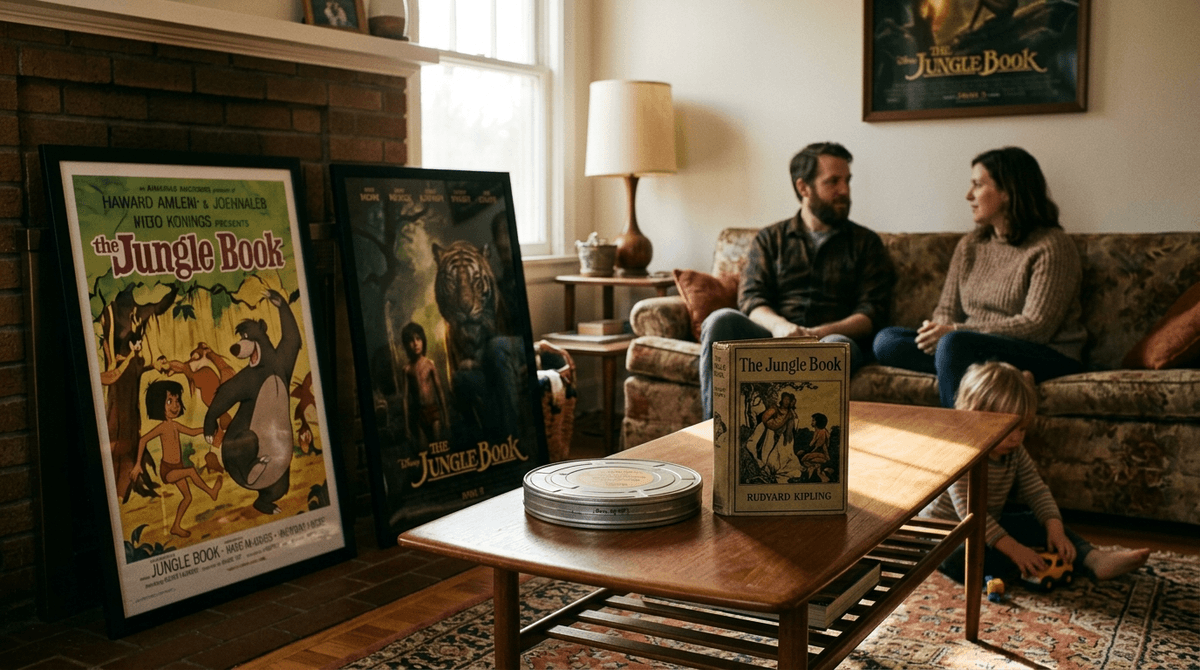
If you grew up in the 80s or 90s, this movie was likely a staple of your VHS collection. It was the last film Walt Disney personally supervised before he passed away, and you can feel his fingerprints on it. It’s loosely—and I mean very loosely—based on Rudyard Kipling’s stories.
The plot is basically a 78-minute road trip. Mowgli, a "man-cub" raised by wolves, has to be escorted to the Man-Village because a tiger named Shere Khan is back in town and has a blood feud with humans. Bagheera (the responsible panther "parent") wants to get him there safely; Baloo (the fun-loving bear "uncle") wants to teach him how to eat ants and nap.
Unlike modern Disney movies like Frozen or Moana, there isn’t a complex emotional arc or a world-ending threat that requires a hero's journey. It’s mostly just a series of musical numbers and encounters with weird animals.
There’s a reason this movie still holds up for the preschool and elementary crowd. Baloo is essentially the first "influencer" of the digital age—he’s all about living your best life with zero effort.
- The Music: "The Bare Necessities" and "I Wan'na Be Like You" are absolute earworms. They aren't the sweeping Broadway ballads of the 90s Renaissance; they are catchy, improvisational jazz.
- The Physical Comedy: Baloo’s big, bouncy movements and the "Hathi’s March" elephants provide that slapstick humor that hits perfectly for the under-7 demographic.
- Low Tension: While Shere Khan is suave and scary, he doesn't actually show up until late in the movie. For kids who get "scaries" from movies like The Lion King, this is a much safer bet.
If you’re deciding between the original and the Jon Favreau remake, here’s the breakdown:
- The 1967 version is a cartoon. It’s bright, colorful, and feels like a storybook.
- The 2016 version is hyper-realistic CGI. Shere Khan is legitimately terrifying, and King Louie is a giant, monstrous ape rather than a goofy orangutan.
For kids under 8, stick to the 1967 original. The 2016 version is great, but it’s more of an action-adventure film that might be too intense for younger kids.
Ages 2-4: They will love the songs and the animals. They won't understand the plot, but they’ll dance to the "monkey song." You might want to skip the scene with Kaa the snake if they are sensitive to "creepy" characters.
Ages 5-7: This is the sweet spot. They’ll get the humor, enjoy the friendship between Mowgli and Baloo, and won't be too traumatized by the fire scene at the end.
Ages 8+: They might find the animation a bit "scratchy" compared to modern Pixar. This is also the age where they’ll notice the "vultures" look like the Beatles and might start asking questions about why the monkeys act the way they do.
We need to talk about the content advisory you’ll see on Disney+. Screenwise is all about being intentional, and that means not just ignoring the weird stuff in old media.
The King Louie Controversy
King Louie is a complicated character. He’s voiced by Louis Prima, a white Italian-American jazz musician, but the characterization of the monkeys has long been criticized for utilizing tropes that were historically used to mock African Americans. They are depicted as "uncivilized" animals who desperately want to be "man" (specifically, they want the secret of "man's red flower"—fire).
In the context of the 1960s, this was a specific type of caricature. You don't have to ban the movie, but if your kids are older, it's a great opening to talk about how movies used to portray different groups of people.
The "Girl" at the End
The ending is... dated. Mowgli, who has spent the whole movie insisting he wants to stay in the jungle, sees a girl from the village fetching water. She bats her eyelashes, drops her jug, and Mowgli follows her into the village like he's been hypnotized. It’s a very 1967 "that’s just what boys do" moment. It’s not offensive, just a bit eye-roll-inducing for modern parents raising kids with more agency.
Learn more about how to talk to kids about stereotypes in old movies
If you’re watching this with your family, you don’t need to give a lecture. But if a kid asks, "Why does the movie say it has 'outdated depictions' at the start?" you can be honest.
- For younger kids: "This movie was made a long time ago, and sometimes people back then made characters that were a little bit mean or made fun of people in ways we don't do anymore."
- For older kids: "The way the monkeys are shown uses some old stereotypes about people who were seen as 'different' or 'less than' at the time. We can still enjoy the music, but it's important to see why that's a bit problematic."
The Jungle Book (1967) is a "Bare Necessity" for a reason. It’s a short, fun, musically brilliant film that represents the end of an era for Disney animation. It’s much less "brain rot" than a lot of the random YouTube garbage kids find today.
If you want more "vintage" vibes without the same level of controversy, I’d also recommend:
- The Many Adventures of Winnie the Pooh — Pure, wholesome, and zero "yikes" factor.
- Robin Hood (1973) — Uses a lot of the same animation cells as Jungle Book! (Watch closely, Baloo and Little John are basically the same bear).
- The Aristocats — If your kids loved the jazz in Jungle Book, they’ll love "Everybody Wants to Be a Cat."
If your kid becomes obsessed with the jungle after watching this, here are some "off-screen" ways to lean into it:
- Read the original: The Jungle Book by Rudyard Kipling is much darker and more intense, but great for ages 10+.
- Listen to the soundtrack: Put on the soundtrack during a rainy afternoon dance party.
- Compare and Contrast: Watch the 1967 version and then the 2016 remake and ask your kids which Baloo they’d rather hang out with.