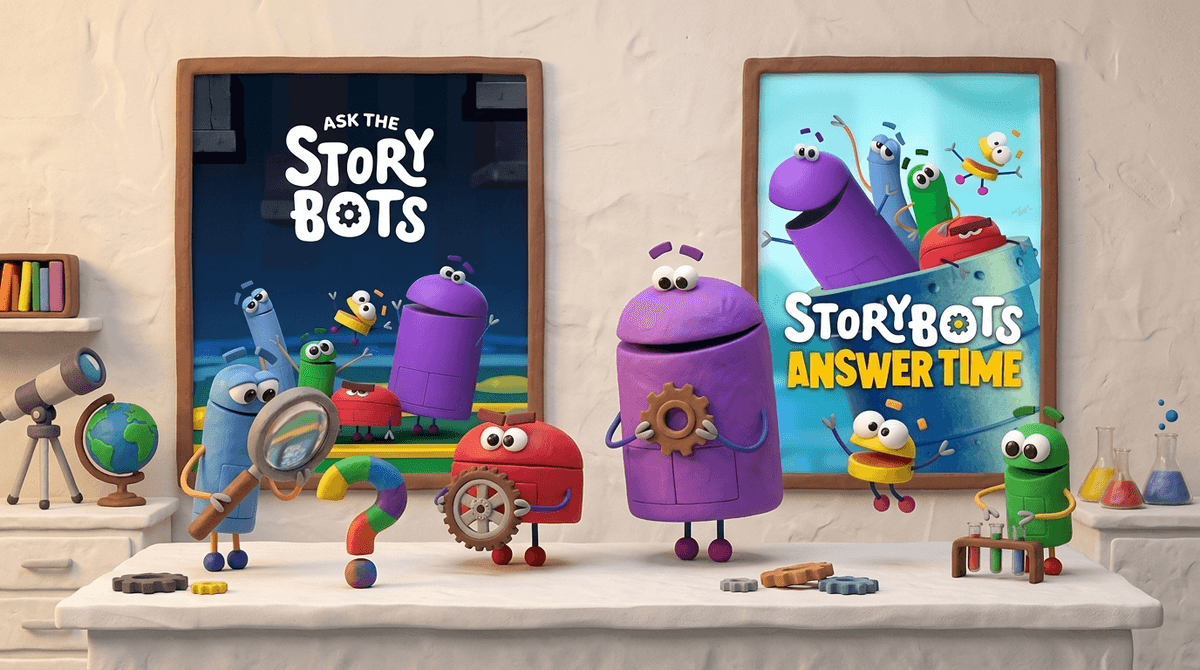
Miniature colorful robots explain the solar system, phonics, and digestion through earworm songs that parents will secretly hum all week.
Storybots
YouTube
2015
85%
WISE Score
26.4M
Subscribers
Miniature colorful robots explain the solar system, phonics, and digestion through earworm songs that parents will secretly hum all week.
Jump to
Also rated on
26.4M
Screenwise Verdict
StoryBots is the gold standard for educational music shorts. Created by the team behind JibJab and later brought into the Netflix fold, it manages to explain how ears hear and how rain forms using legitimate funk basslines and sharp animation.
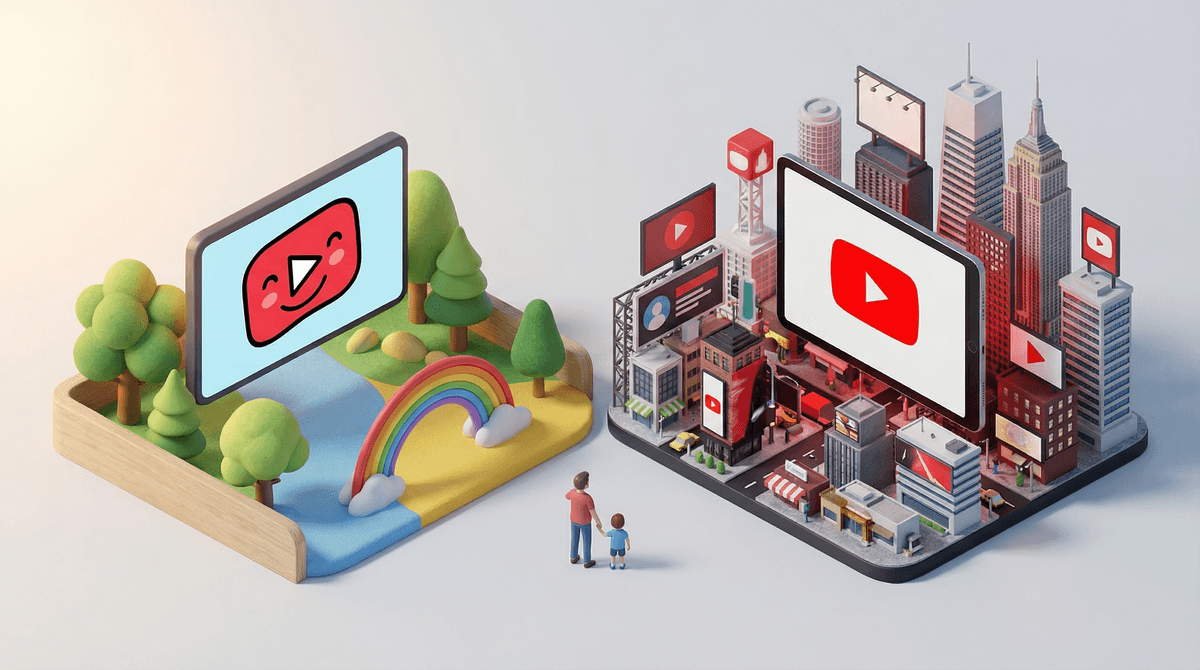
The only real rub here is YouTube itself. Because the official channel was rolled into the broader @netflixjr ecosystem, letting a kid click around unattended invites the usual algorithmic drift. If you use it intentionally by cueing up specific topic playlists like Outer Space or Phonics, it is pure, high-potency learning.
Age Fit
Ages 3 to 8. Toddlers love the colors and beat, but the actual science and phonics humor click best once kids hit kindergarten.
WISE Breakdown
Wholesome
92
Upbeat, cooperative, and driven by healthy curiosity. The little bots ask real questions, model teamwork, and solve problems without snark or mean-spirited humor.
Imaginative
90
Clever visual metaphors blending live action, puppetry, 2D animation, and stop-motion to explain how everything from the solar system to the digestive tract works.
Safe
82
The content itself is pristine with zero violence or inappropriate themes. However, being on YouTube exposes kids to the autoplay rabbit hole and recommendations toward lower-quality content.
Enriching
96
Top-tier STEM concepts delivered through genuinely catchy music spanning hip-hop, rock, and disco. It teaches complex real-world mechanics without talking down to kids.
Parent Info
✓
Why It Might Be Great
Genuinely solid songwriting that treats kids like people with good taste, spanning classic rock, funk, and 90s hip-hop grooves instead of repetitive toddler synth loops.
Real science explained cleanly, answering foundational questions about white blood cells, gravity, and volcanoes using inventive mixed-media visuals.
Bite-sized format makes it easy to watch a three-minute song about dinosaurs or phonics to answer a quick curiosity without signing up for a 30-minute episode.
⚠
What to Watch For
The YouTube platform trap: while the videos themselves are stellar, the open YouTube sidebar or autoplay will happily funnel your kid straight into low-effort toy unboxings or nursery rhyme slop.
Fast-paced sensory load: these clips are rapid-fire, high-energy musical shorts. For wind-down time or sensitive toddlers, the tempo can feel a bit overwhelming.
Conversation Starters
"Which planet from the Solar System song had the coolest trick?"
"How did the robots say our white blood cells protect us when we get a scrape?"
"If you could ask Beep and Boop any question about how the world works, what would it be?"
Deep Dive
Catchy science meets the YouTube platform dilemma
Most preschool music videos rely on nursery rhymes in the public domain and repetitive MIDI tracks. StoryBots went in the opposite direction: hiring real musicians to write genre-spanning bangers about plate tectonics, recycling, and vowels. The songs stick because they are structurally sound pop music paired with snappy, varied animation styles.
The playlist strategy
The original standalone channel was acquired by Netflix and rebranded under the @netflixjr banner, meaning StoryBots shorts now sit alongside a sea of other preschool programming. The cleanest way to watch on YouTube is to bypass the main channel feed entirely and bookmark curated playlists:
Outer Space Songs: eight distinct tracks covering the planets, the moon, and the sun that give kids actual astronomical facts instead of cute fluff.
Learn to Read: phonics clips focusing on individual letter sounds with memorable character sketches.
Human Body: catchy walkthroughs of digestion, bones, and the brain.
Mind the rabbit hole
The content earns its praise, but the platform demands intentionality. YouTube's recommendation engine is tuned to keep eyes on glass, not to prioritize educational depth. Leaving a four-year-old on autoplay means five StoryBots songs can quietly transition into computer-generated toddler nursery rhymes within twenty minutes. Put on specific videos together, search directly for the question your kid asked, or switch over to the long-form Ask the StoryBots series on Netflix if you want a closed, distraction-free environment.