Kids build the games here
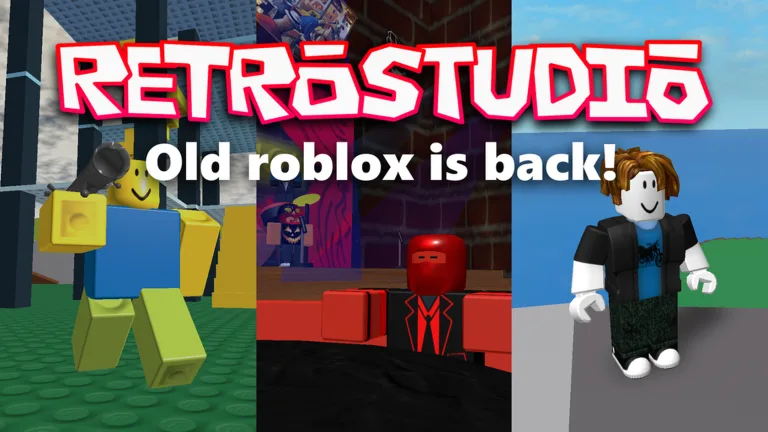
RetroStudio opens on a copy of the old blue-and-white Roblox website. There is a game list, a catalog, an avatar editor, and a Create button that leads into a version of the 2013 Roblox Studio running inside Roblox. Kids place parts, shape a map, and give it rules. When it works, they publish it and other players can join.
Each game can be set to an old Roblox time period between early 2009 and mid 2015, which changes how it looks and feels. That nostalgia is why teens love it. For a younger kid, the useful part is the studio.
Code blocks instead of typed code
Game logic in RetroStudio is built with visual code blocks: when a player touches this, do that; if a score passes a number, open a door. Typed code is off the table there because of Roblox's text filtering, so the blocks do the job. The Retro Dev community wiki documents every block alongside the Luau code it matches, the language Roblox Studio uses.
That makes RetroStudio a good middle step. A kid who has done Scratch will recognize the idea of snapping logic together, and a kid who wants to make real Roblox games later will have the concepts down.
Other players' games come with the territory
RetroStudio comes from the Retro Dev group. It opened in October 2020, went public on Christmas Eve that year, has passed 185 million visits, and was nominated for Roblox's Builderman Award of Excellence in 2022. Players have rebuilt classics like Natural Disaster Survival and Be Crushed by a Speeding Wall, and the game list fills with newer player-made games too.
Those games are where the variety comes in. Most are simple and harmless, some are broken, and Roblox's label notes light cartoon blood and mild violence. The catalog runs on Retrobux, which can be bought with Robux, and passes like Retro Builders Club cost 250 Robux. Building and publishing cost nothing.
For more ways Roblox can be a place to make things, see Roblox and creative problem solving.