Pok Pok Playroom

Pok Pok Playroom

app

Everyone, 2024, Education

WISE
95%

WISE Score

4.6

App Store

A digital Montessori playroom with soft hand-recorded sounds, zero points or timers, and open-ended toys kids can put down without a meltdown.

Screenwise Verdict

Pok Pok Playroom is the rare preschool app that feels built by people who actually understand child regulation. Instead of flooding a toddler's brain with flashing lights, reward stars, and frenetic music, it acts as a peaceful digital box of wooden toys. Kids tap, drag, and fiddle with marble runs, dress-up figures, and drawing boards without an algorithm egging them on.

Because there are no levels to beat or points to lose, kids don't enter that zombie-like hyper-focus state that turns screen removal into a nuclear meltdown. When it's time to turn off the tablet, they generally just put it down.

It isn't cheap—you're paying a monthly or annual subscription—but if you want screen time for a 3-year-old that doesn't feel like digital sugar, this is one of the best choices on any app store.

Age Fit

Best for toddlers and preschoolers ages 2 to 6. Younger toddlers learn basic tap-and-drag interactions, while 4- and 5-year-olds engage with the music sequencer, drawing tools, and logic puzzles.

WISE Breakdown
Wholesome
98

Intentionally designed to keep young kids emotionally regulated with gentle line art, soft colors, and soothing audio instead of manic animations or frantic sound stings.

Imaginative
95

Operates as a digital sandbox filled with open-ended toys—drawing kits, marble runs, dress-up characters, and music wheels—that encourage free exploration rather than rigid instructions.

Safe
98

Completely free of ads, microtransactions, pop-ups, and social feeds. Includes a locked parent area and works fully offline.

Enriching
90

Builds visual logic, cause-and-effect understanding, spatial reasoning, and fine motor control without forcing artificial reward loops.

Parent Info

Why It Might Be Great

  • Low-stimulation design: Soft colors, hand-drawn line art, and actual recorded sounds replace the flashing lights and frantic audio stings common in preschool apps.
  • True open-ended sandbox play: With no levels, points, or win states, toddlers explore digital toys like the marble machine, music sequencer, and dinosaur world at their own pace.
  • Built for calm transitions: The absence of rapid dopamine loops means ending screen time usually happens without the usual screen-removal meltdown.
  • Zero ads or manipulative mechanics: Fully ad-free and locked behind a parent area, with no microtransactions, pop-ups, or social features.

What to Watch For

  • Requires a recurring subscription: After the free trial, it relies on a monthly or annual subscription, which might feel steep if your kid only uses one or two toys.
  • Older kids will outgrow it fast: While marketed up to age 8, kids over 6 usually crave more complex goals or actual game mechanics.

Conversation Starters

  • "How did you get the marbles to roll through that whole track?"
  • "Show me what kind of song you built on the music wheel."
  • "What is happening inside the house you're setting up right now?"

Deep Dive

The Antidote to Hyper-Stimulating Kid Apps

Most apps for toddlers are built like tiny slot machines. Every tap triggers an explosion of confetti, loud sound effects, and high-contrast primary colors designed to lock a two-year-old's attention in place. Pok Pok flips that entirely by taking direct inspiration from Montessori classrooms.

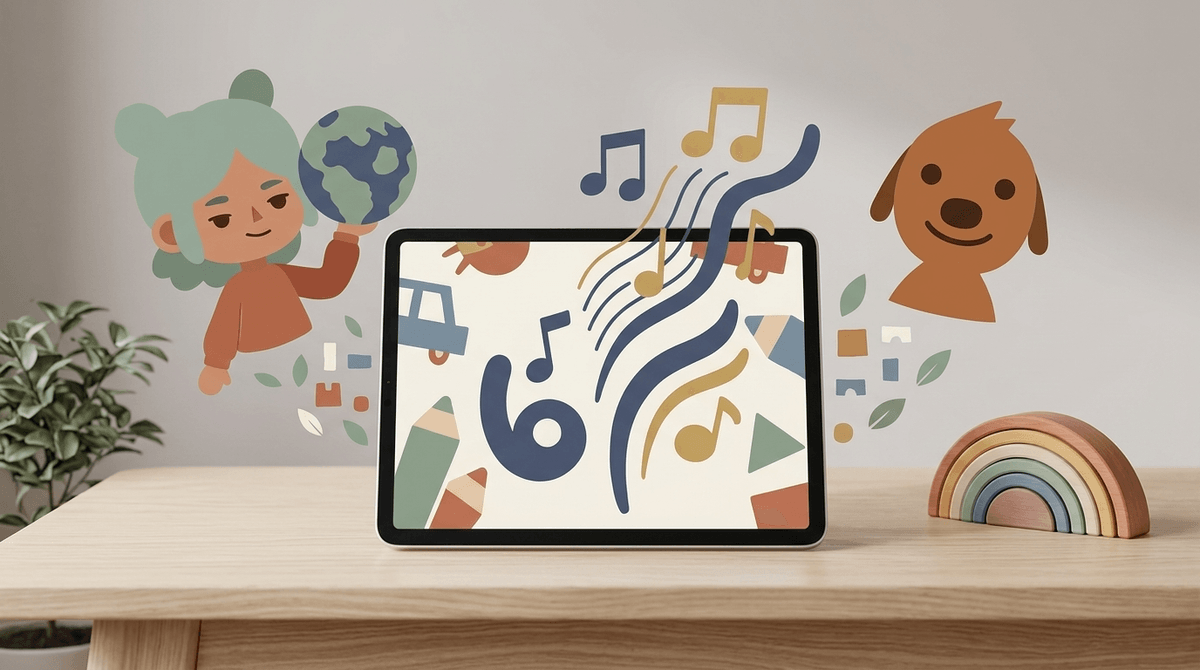
When your kid opens Pok Pok, there are no text menus, voiceovers telling them what to do, or artificial goals. They simply see a visual playroom with digital toys: a busy book, a dress-up closet, a marble machine, a drawing tablet, and a dinosaur park. Everything moves at a human pace, animated with subtle line drawings and quiet, hand-recorded sound effects.

"Pok Pok is a peaceful, sensory-friendly experience thanks to soft, hand-recorded sounds and slow-paced animations."

Why the Lack of Gamification Matters

What makes Pok Pok distinct is what it omits. There are no scoreboards, no stars to collect, no timers, and no cheerleading animations when a kid connects two shapes. This means two things in practice:

  1. Independent exploration: Kids learn to tinker because they want to see what happens, not because the app is rewarding them with virtual stickers.
  2. Easy off-switches: The absence of continuous dopamine rewards means kids don't get trapped in a compulsion loop. When you say "five more minutes," turning off the tablet doesn't trigger the visceral withdrawal meltdown common with fast-paced videos or arcade-style games.

For families looking to introduce a first digital screen without introducing screen addiction, Pok Pok sits in a league of its own alongside classic sandbox apps like Toca Life or Sago Mini, but with a noticeably calmer pulse.

What Parents Ask

Ask Anything

Get a personalized guide on any topic
Related Guides