Pollen, honey and a hive that keeps growing
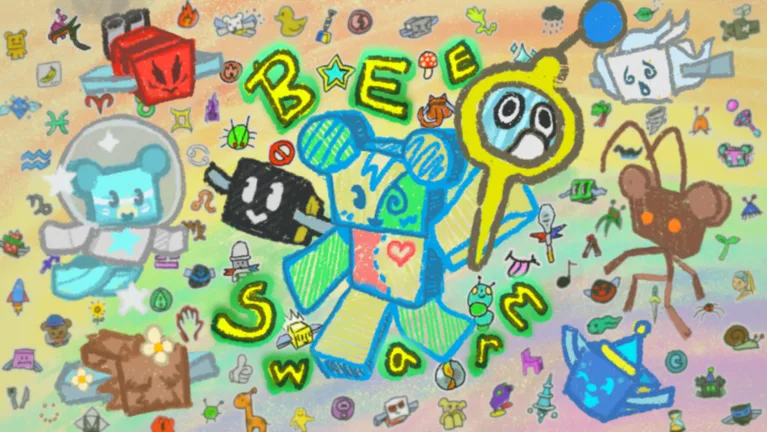
A new player gets a few bees and a field of flowers. The bees gather pollen while the player walks around, the backpack fills, and the pollen turns into honey back at the hive. Honey buys eggs that hatch new bees, plus better tools and bigger backpacks. As the hive grows, gates open to fields further up the mountain.
Bears around the map give quests, from collecting a set amount of one pollen color to defeating certain bugs. Quests are the backbone of the game, and they give a younger kid clear goals instead of an endless loop.
Choosing bees is the puzzle
Dozens of bee types each do something different: some collect a certain color faster, some make tokens, some boost the rest of the swarm. Deciding which bees fill the hive slots, which fields to work and when to spend tickets is where the thinking happens. Later the game adds crafting, gear for individual bees and boss fights that need planning.
That depth suits kids who like strategy (more in How Strategy Games Build Real-World Teamwork), and it is also why the late game runs long.
What costs Robux, and what does not
The game passes, which once doubled pollen and convert speed, are no longer for sale. A Robux shop still sells eggs, tickets and Royal Jelly; Royal Jelly turns a bee into a random type, which works like a loot box. A kid can enjoy the whole game without any of it, and a spending limit in Roblox parental controls settles the question.
If your kid loves the grow-and-collect loop and you want something with more building, Theme Park Tycoon 2 is the strongest Roblox pick. Off Roblox, Stardew Valley has the same patient farming pull with no chat or shop at all.