Our reviews and ratings are 100% unbiased. Screenwise is a Bookshop.org affiliate and an Amazon Associate, so if you buy a book through one of our links, we may earn a commission. Bookshop.org purchases also support independent bookstores.
Screenwise Verdict
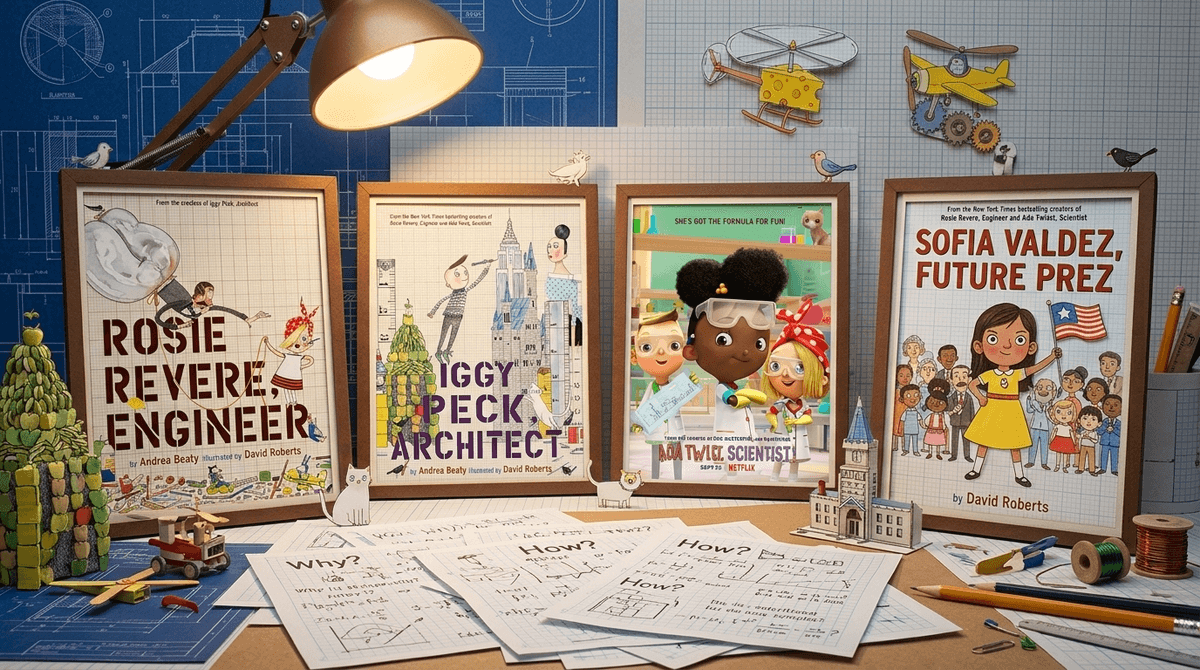
If you have a kid who feels like they don't 'fit' the standard school mold, buy this book. It’s part of the Questioneers universe (Iggy Peck, Rosie Revere), which is basically the gold standard for modern picture books.
It’s not just 'educational'—it’s actually a good story. It tackles dyslexia with a level of grace that’s rare in children's media, making it clear that a struggle with phonics isn't a lack of talent. It’s a beautiful, high-quality read that deserves a spot on the shelf.
Age Fit
Best for ages 4 to 8. It's the sweet spot for kids who are just starting to navigate the social and academic pressures of early elementary school.
WISE Breakdown
Wholesome
95
Emotionally resonant and incredibly supportive. It models a classroom environment where mistakes are okay and a teacher who actually sees a child's struggle without shaming them.
Imaginative
92
The book itself is a celebration of visual storytelling. David Roberts' illustrations are detailed and invite kids to look closer at how art can convey complex emotions that words sometimes can't.
Safe
100
Completely safe. No scary themes, violence, or inappropriate content. It deals with the 'safety' of a child's self-esteem in a school setting.
Enriching
96
A powerhouse for empathy and neurodiversity. It gives a voice to kids with dyslexia and shows that 'smart' doesn't just mean being the fastest reader in the room.
Parent Info
✓
Why It Might Be Great
Validates neurodivergence (specifically dyslexia) without being preachy or clinical.
Part of the Questioneers series, so the quality of rhyme and art is top-tier.
Encourages kids to find their own 'voice,' whether that's through drawing, building, or talking.
The teacher character is a great model for how adults should support struggling learners.
⚠
What to Watch For
The emotional weight of Aaron's struggle might make sensitive kids feel a bit sad before the payoff.
It’s a picture book, but the vocabulary and themes are sophisticated enough that it’s not a 'baby' book.
Conversation Starters
"Why was Aaron so frustrated when he tried to read his story out loud?"
"Can you tell a whole story just by drawing a picture? What would your picture story be about?"
"Does being good at reading mean you're the smartest person in the room? Why or why not?"
"How did Aaron's teacher help him feel better about his work?"