

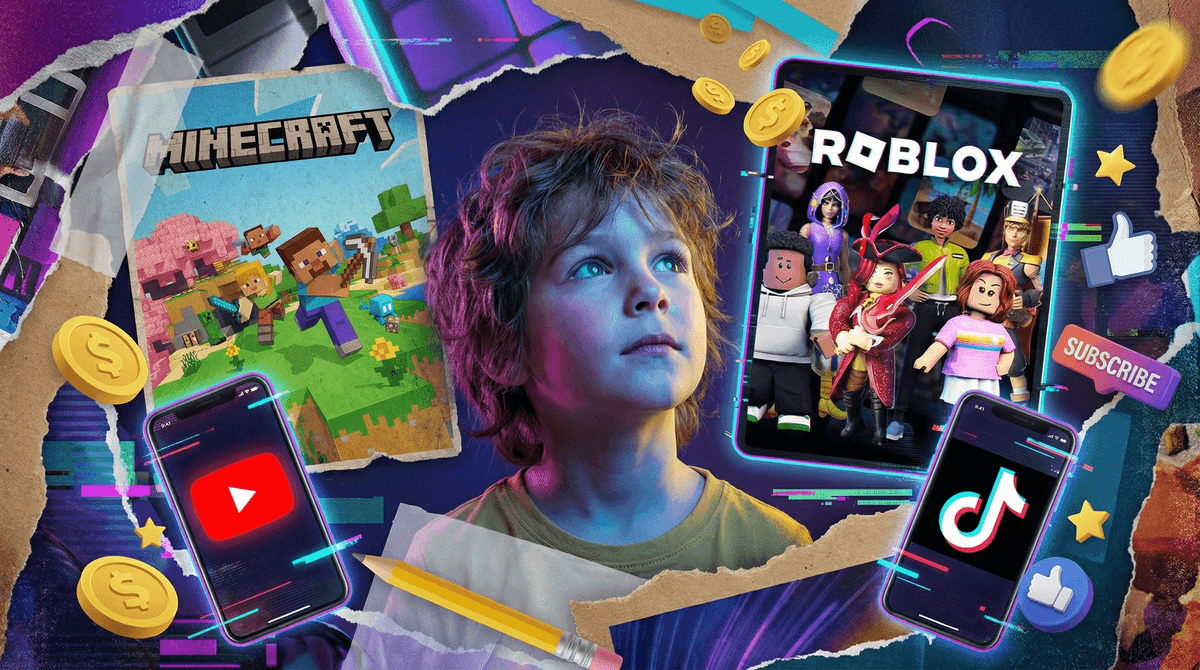
You know that moment when your kid comes running to you, absolutely convinced they need whatever toy/snack/game the YouTuber they've been watching just happened to mention? And you're like "buddy, that's an ad" and they look at you like you just told them Santa isn't real?
Here's the thing: kids don't naturally understand that people are trying to sell them stuff. And in 2026, when their favorite Roblox creator is casually wearing branded merch, their go-to YouTube channel is doing an "unboxing" that's actually a sponsored post, and AI-generated content is serving them hyper-personalized product recommendations... yeah, it's a lot more complicated than the Saturday morning cartoon commercial breaks we grew up with.
The research is pretty clear on this: most kids don't develop the cognitive ability to recognize and critically evaluate advertising until around age 8-12, and even then, they're still learning. And that's for traditional advertising. The influencer marketing, native advertising, and algorithm-driven content they're actually seeing? That's a whole different ballgame.
Traditional TV ads were obvious. There was a clear break, the tone changed, and then your show came back on. Done.
But today's advertising is designed to not feel like advertising. When a Minecraft YouTuber does a server tour that happens to feature a new game, when their favorite TikToker uses a specific product in their morning routine, when Roblox has an entire branded world from a major corporation—kids don't see these as ads. They see them as content from people they trust.
And here's the uncomfortable part: that's exactly the point. The advertising industry has spent billions figuring out how to make marketing invisible to kids.
The research from the American Academy of Pediatrics and others shows that kids under 8 generally:
- Can't distinguish between program content and commercials
- Don't understand persuasive intent
- Take advertising claims literally
- Trust that their favorite creators are just sharing what they genuinely love
Even kids 8-11 struggle with:
- Recognizing native advertising and sponsored content
- Understanding influencer marketing
- Identifying algorithmic manipulation
- Grasping that "free" games make money through in-game purchases
Ages 3-5: Basically zero advertising literacy. They think commercials are just more shows. If Elmo says it, it must be true.
Ages 6-7: Starting to recognize that ads are trying to sell something, but they still don't really get persuasive intent. They think if something is shown on TV or YouTube, it must be good and true.
Ages 8-10: This is when the lightbulb starts to flicker. They can identify obvious ads and understand "they want me to buy this," but they still struggle with:
- Sponsored content that's embedded in regular videos
- Influencer marketing
- In-game advertising
- The concept that algorithms are showing them specific content for a reason
Ages 11-12: Getting better at critical thinking, but still vulnerable to parasocial relationships with creators. They might understand their favorite YouTuber is being paid to promote something , but they still think "yeah, but they wouldn't promote it if they didn't actually like it."
Ages 13+: Developing adult-level advertising literacy, but still more susceptible than adults to influencer marketing and peer pressure. Plus, the algorithms are getting better at targeting them.
The "friend" problem is real. Kids develop genuine emotional connections to YouTubers, streamers, and content creators. When someone you watch for hours a week recommends something, it doesn't feel like advertising—it feels like a friend's suggestion. This is especially true for kids who watch a lot of YouTube or Twitch content.
"Free" is the most expensive word in gaming. When your kid plays Fortnite or Roblox, they're not watching commercials—they are the commercial. The entire experience is designed to make them want skins, items, and upgrades. And it works. The average kid who plays Roblox spends real money, and they often don't fully grasp that Robux equals actual dollars from your account.
The disclosure doesn't help as much as you'd think. Even when influencers say "#ad" or "this is sponsored," research shows most kids either don't notice, don't understand what it means, or don't think it changes the authenticity of the recommendation.
Start early with the basics. Even with young kids (5-7), you can point out: "See how they're trying to make you want that toy? That's their job—to make it look really fun so people will buy it."
Make it a game. When watching YouTube or TV together, play "spot the ad." This includes obvious commercials, but also sponsored segments, product placements, and branded content. Kids learn better through active participation than lectures.
Talk about the money. Be explicit: "This person gets paid when people click their links" or "This game is free because they make money when you buy things inside it." Kids need to understand the business model.
Discuss parasocial relationships. For older kids (10+), have real conversations about the difference between actual friends and people they watch online. "This person seems really nice and fun, but they don't actually know you. Their job is to get you to watch and buy things. That doesn't make them bad, but it means you should think critically about what they recommend."
Set up friction for spending. Make it so kids have to ask before making in-game purchases. This creates a natural moment to discuss whether they really want something or if they're just responding to the game's advertising.
Ages 5-7: Focus on identifying when someone is trying to sell them something. Keep it simple. "That's an ad—their job is to make you want to buy that."
Ages 8-10: Start discussing persuasive techniques. "Notice how they made that look? That's called advertising. Let's think about whether it's really as cool as they made it seem."
Ages 11-13: Introduce concepts like sponsored content, algorithmic recommendations, and influencer marketing. "Did you notice they said 'thanks to [brand] for sponsoring this video'? That means they got paid to talk about that product."
Ages 14+: Have sophisticated conversations about data collection, targeted advertising, and how platforms make money from attention. They're ready for the full picture.
Your kid thinking their favorite YouTuber is their actual friend and that every product recommendation is genuine? That's not a failure of parenting—that's their brain developing exactly as it should. The advertising industry is just way ahead of their developmental curve.
The good news: media literacy is teachable. Kids who grow up with parents pointing out advertising techniques, discussing persuasive intent, and creating friction around spending develop much better critical thinking skills.
You're not going to shield them from all advertising (impossible), and you're not going to make them immune to persuasion (they're human). But you can help them develop the skills to recognize when someone is trying to sell them something—even when that someone is their favorite creator in their favorite game.
- Watch together and narrate: Point out advertising techniques in real-time as you watch content together
- Set up purchase approval systems: Make sure kids need permission before spending in games or apps
- Have the Robux talk: If your kids play Roblox, read up on how the Robux economy actually works
- Check out media literacy resources: Common Sense Media has excellent age-by-age guides for teaching advertising literacy
- Remember: This is a years-long conversation, not a one-time talk. Keep bringing it up, keep pointing it out, keep discussing it
And maybe, just maybe, your kid will eventually stop asking for every single thing they see on YouTube. (Just kidding—they're still going to ask. But at least they'll understand why you're saying no.)