

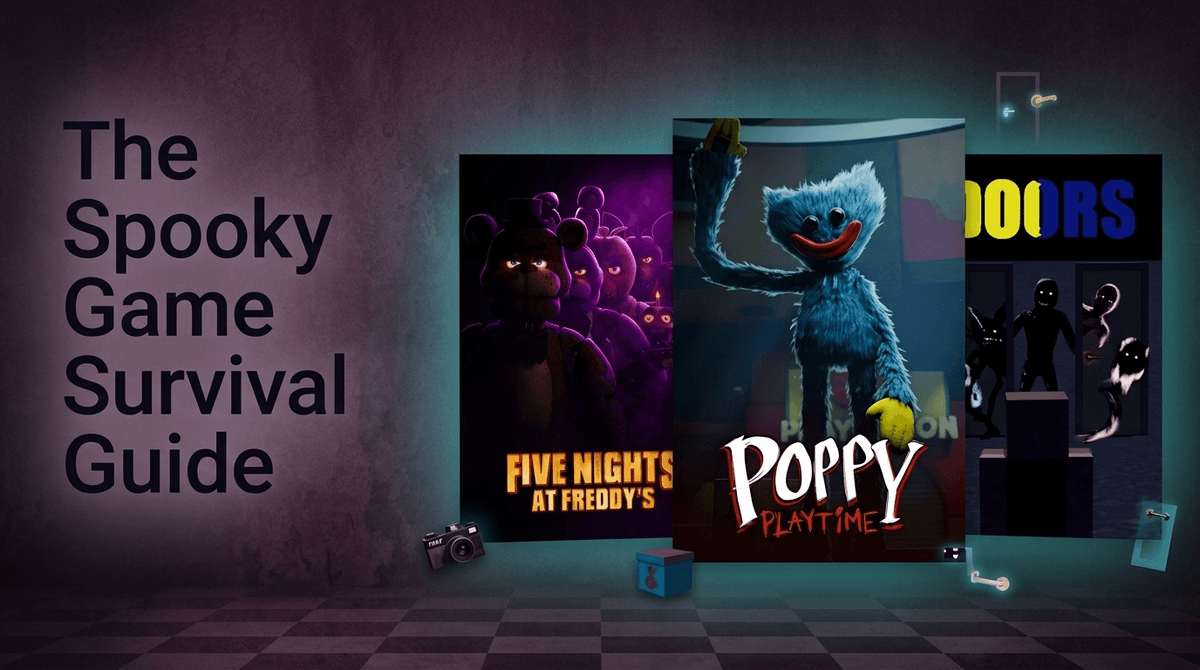
TL;DR: Mascot horror is the dominant genre for kids in 2026. If your kid is asking about Five Nights at Freddy’s or Poppy Playtime, they’re looking for a mix of adrenaline-pumping jump scares and deep, "detective-style" lore. Most kids are ready for the "fun-scary" vibe around age 9 or 10, but the "lore" videos on YouTube can often be darker than the games themselves.
Quick Links for the "Am I Ready?" Starter Pack:
- The Gateway: Goosebumps (books) or Luigi's Mansion 3
- The Big One: Five Nights at Freddy's (FNAF)
- The Roblox Entry Point: Doors
- The "Proceed with Caution": Poppy Playtime
If you’ve seen a blue, long-limbed creature with way too many teeth (Huggy Wuggy) or a creepy animatronic bear (Freddy Fazbear) on a t-shirt at Target, you’ve met the mascots.
Mascot Horror is a specific sub-genre of games and media that takes childhood-adjacent settings—pizzerias, toy factories, daycares—and turns them into a gauntlet of jump scares. Unlike the slasher films we grew up with, these aren't usually about gore. They are about the tension of being chased and the "jump" when you finally get caught.
In 2026, this isn't just a game genre; it’s a lifestyle. Kids aren't just playing Garten of Banban; they are watching 40-minute video essays explaining the "lore" (the back-story) of why the giant bird monster is sad.
It’s easy to dismiss this stuff as "brain rot," but there’s actually a lot going on under the hood:
- The Adrenaline Rush: For an 8-year-old, surviving a level in Doors feels like a major accomplishment. It’s a safe way to experience fear and mastery.
- The Lore: This is the secret sauce. Modern horror games are like puzzles. The story isn't told to you; you have to find notes, hidden tapes, and environmental clues. It rewards kids for being observant and analytical.
- Social Currency: If everyone at the lunch table is talking about the new Poppy Playtime: Chapter 4 trailer, your kid wants to be in the loop. It’s the "did you see the game last night?" of the elementary school set.
See the difference between FNAF lore and Poppy Playtime lore
Not all "scary" content is created equal. Here is how to navigate the levels of intensity, from "spooky fun" to "might need to sleep with the lights on."
Level 1: The Gateway Spooks (Ages 7-9)
These are great for testing the waters. They feature "creepy" atmospheres but rarely lean into genuine terror.
- The gold standard. It’s spooky, it’s atmospheric, but it’s essentially a Pixar movie where you vacuum up ghosts. If they can’t handle this, they definitely aren't ready for Freddy.
- The classics still work. They provide a narrative framework for fear that helps kids process "scary" in a controlled way.
- A masterpiece of "unsettling" rather than "scary." It’s a great litmus test for whether your kid enjoys the "creepy" aesthetic.
Level 2: The Mascot Giants (Ages 10-12)
This is where the jump scares become the primary mechanic.
- The OG. You sit in a room and watch security cameras. It’s tense, but there is zero movement—just resource management and jump scares. The FNAF Movie is actually quite tame (PG-13) and acts as a great entry point for fans of the game.
- Currently the king of Roblox horror. It’s incredibly well-made. It teaches pattern recognition (you have to learn the sound cues for different monsters). It’s scary, but because you play with friends, the fear is shared and lessened.
- A stylized, 1930s-cartoon-gone-wrong vibe. It’s more of a traditional action-adventure game with a horror skin. Very popular with the "theater kid" demographic of gamers.
Level 3: The "Proceed with Caution" Zone (Ages 12+)
These games lean harder into disturbing imagery or more intense chase sequences.
- While the characters look like toys, the actual gameplay can be quite intense. The "death" screens and the sound design are specifically engineered to be more jarring than FNAF.
- This is a beautiful, grotesque puzzle-platformer. It doesn’t rely on jump scares as much as a deep, lingering sense of dread and "wrongness." It’s brilliant, but it’s heavy.
- To be honest? This game is kind of a mess. It’s clearly designed to sell plushies and capitalize on the mascot horror trend. It’s weird, often nonsensical, and while kids love it, it’s the definition of "junk food" gaming.
Check out our guide on the best horror games for middle schoolers
Every kid is different, but here’s a general roadmap based on how most community members are navigating this:
- Under Age 7: Generally, avoid. The line between fiction and reality is still a bit blurry at this age. A jump scare in Poppy Playtime can lead to weeks of "monsters under the bed" talk.
- Ages 8-10: The "Curiosity Phase." This is when they start seeing the characters on YouTube or Roblox. If they want to try horror, start with "Co-op" horror like Doors where you can play with them.
- Ages 11-13: The "Lore Hunter" phase. They are likely more interested in the theories and the community than the actual scares. This is usually the sweet spot for the FNAF universe.
The "Nightmare Test": If your kid is consuming this content but then can't walk to the bathroom at night without every light in the house being on, they aren't "handling it"—they’re just addicted to the dopamine hit of the scare. It might be time to dial it back to Level 1 content.
Here is the "No-BS" truth: The games themselves are often less scary than the YouTube content surrounding them.
Channels like Game Theory are generally great—they treat the games like a science project or a history mystery. However, there is a whole ecosystem of "content farms" that take these characters and put them in disturbing, violent, or weirdly sexualized scenarios to bait clicks.
If your kid is into mascot horror, you need to check their YouTube history. Look for:
- LankyBox: High-energy, loud, and generally harmless, but definitely "brain rot" territory.
- Horror Animations: Some fan-made animations of FNAF or Poppy Playtime go way further than the games ever do in terms of violence.
Instead of just saying "that looks creepy, turn it off," try to engage with the why.
- Ask about the mechanics: "What happens if the monster catches you? Do you lose your items, or just restart the level?" This shifts their brain from "emotional/fear" mode to "analytical/gaming" mode.
- Explain the "Jump Scare": Talk about how movie and game makers use loud noises and sudden movement to trick our brains. Once a kid understands the trick, the scare loses some of its power.
- The "Mascot" Irony: Talk about why it’s creepy to have a "scary" toy. It’s a great entry point into discussing the "Uncanny Valley"—that feeling when something looks almost human (or almost friendly) but is just "off."
Mascot horror is the campfire story of the digital age. It’s how kids today test their courage and bond over shared "trauma" (the fun kind).
If your kid is asking to play Five Nights at Freddy's, they aren't becoming a dark, twisted person. They’re likely just looking for a challenge and a seat at the lunch table conversation. Start slow, watch a few "Let's Play" videos together, and keep an eye on the sleep quality.
If they’re still sleeping through the night, let them hunt for the lore.
- Do a "Vibe Check": Watch 10 minutes of Doors gameplay on YouTube. Does it seem like something your kid can handle?
- Set YouTube Boundaries: If they are into horror, ensure they are watching reputable creators rather than weird "Elsagate-style" content farms.
- Play Together: Seriously. Sit down and let them lead you through a round of a scary Roblox game. Your presence turns a "scary" experience into a "bonding" experience.