

Co-Viewing: Why Watching Together is Better Than Any Parental Control
Turn screen time into quality time by sharing the remote and sparking conversations about the shows and videos your kids love.
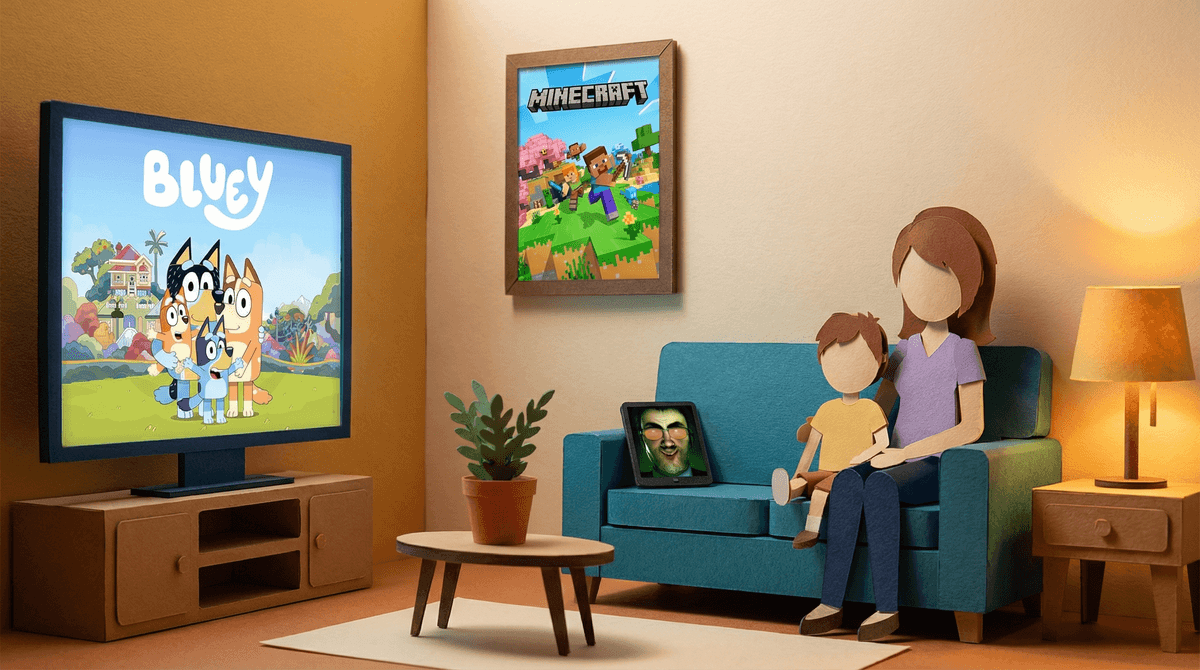
Co-viewing is exactly what it sounds like: watching screens with your kids instead of just managing their screen time from a distance. It's sitting on the couch during Bluey, watching them build in Minecraft, or scrolling through YouTube together instead of handing over the iPad and walking away.
And here's the thing—it's not about helicopter parenting or turning into the screen time police. It's about being present for what's actually happening in your kid's digital world, the same way you'd be present for their soccer game or school play.
Look, parental controls are great. They're a tool. But they're the digital equivalent of childproofing your house—necessary, but not sufficient. You wouldn't just lock up the cleaning supplies and call it a day on teaching your kid about safety, right?
Co-viewing does what no filter can do:
-
It opens up conversation. When you watch that weird Skibidi Toilet video together, you can actually talk about why it's funny (or disturbing, or both). You can't have that conversation if you just blocked it.
-
It builds media literacy. Kids who watch with parents learn to think critically about what they're consuming. They start asking questions like "Is this real?" or "Why did they make the girl character act that way?" Because you're there modeling that thinking.
-
It makes you the trusted source. When something confusing or scary pops up online—and it will—kids who've been co-viewing are more likely to come to you first. You've already established yourself as someone who gets their world.
-
It's actually enjoyable. Real talk: some of this stuff is genuinely good. The Last of Us isn't just a kids' show—it's prestige TV that happens to be based on a video game. Avatar: The Last Airbender has better character development than most adult dramas. You might actually have fun.
Research backs this up too. Studies consistently show that kids who watch media with engaged parents show better comprehension, less fear response to scary content, and more critical thinking about what they see. The American Academy of Pediatrics specifically recommends co-viewing as a key strategy for healthy media use.
This doesn't mean you need to watch every single thing. That's not realistic and honestly, nobody wants to sit through six hours of Roblox gameplay videos.
Start with these approaches:
For younger kids (ages 4-8): Watch together regularly. Ask questions during the show. "Why do you think she did that?" "How do you think he's feeling?" Make it interactive. This is when you're building the foundation.
For tweens (ages 9-12): Check in on what they're watching. Watch a few episodes of their current obsession. Ask them to explain the lore to you—kids love being the expert. Join them for movie nights. Stay curious about their YouTube favorites.
For teens (ages 13+): This gets trickier because they need privacy and independence. But you can still watch new shows together, have conversations about what they're into, and occasionally ask "Can you show me what you're watching?" The key is being genuinely interested, not interrogating.
When you're watching together, you get natural opportunities to talk about big stuff:
- During a show with mean characters: "Why do you think they're acting that way? Have you ever felt like that?"
- When advertising pops up: "What do you think they're trying to sell us? Do you think that game is really that fun?"
- After a scary scene: "That was intense. Are you okay? Want to talk about it?"
- When representation shows up: "It's cool to see a character like that, right? We didn't have that when I was a kid."
You're not lecturing. You're just... talking. Like humans do.
Parental controls are training wheels. Co-viewing is teaching your kid to actually ride the bike.
The goal isn't to watch every screen with them forever—it's to build a relationship where they want to share what they're watching with you, where they trust you to help them make sense of confusing content, and where you actually understand their digital world instead of just fearing it.
Plus, you might finally understand why everyone's obsessed with Bluey. (Spoiler: it's because it's genuinely excellent television that will make you cry about parenting.)
This week, try this: Pick one show or game your kid loves and ask them to show it to you. Don't critique it. Just watch. Ask questions. Be curious. See what happens.
Need show recommendations that are actually co-viewing friendly? Check out our best shows to watch with kids guide, organized by age.
Want to understand what your kid is watching better? Our guide to YouTube Kids vs. regular YouTube breaks down what's actually going on in those endless video feeds.
The remote is right there. Grab it. Sit down. Watch together. It's the simplest—and most powerful—thing you can do.