

TL;DR
Virtual economies are the "company stores" of the 21st century. They teach kids the basics of supply and demand, but they also use predatory psychological tricks to separate you from your hard-earned cash.
- The "Business School" Picks: Roblox (for creators), Animal Crossing: New Horizons (for low-stakes debt management), and Stardew Valley (for the value of hard work).
- The "Digital Casino" Warnings: Genshin Impact (heavy "gacha" mechanics), Fortnite (FOMO-driven skin cycles), and any game with "Loot Boxes."
- Best Analog Alternative: Monopoly or The Game of Life.
If you’ve ever stood in the checkout line at Target while your kid begged for a $25 Roblox gift card, you’ve felt the tension. It feels like you’re paying real money for... nothing. Air. Digital pixels.
But to your kid, that "nothing" is a "legendary" neon pet in Adopt Me! or a "Skibidi" emote that keeps them from being the "Ohio" kid at school (which, for the uninitiated, basically means being weird or cringey).
The question is: are these games teaching our kids how to be the next Elon Musk, or are they just training them to be lifelong gamblers? The answer is a messy "both."
At its simplest, a virtual economy is a system where digital goods are exchanged, often using a proprietary currency like Robux, V-Bucks, or Minecoins.
The "trick" of these economies is obfuscation. Developers don't want your kid to see a skin and think, "That costs $10." They want them to think, "That costs 800 V-Bucks." By adding a layer of fake currency between the bank account and the purchase, the brain's "spending pain" receptors don't fire as hard. It’s why casinos use chips instead of cash.
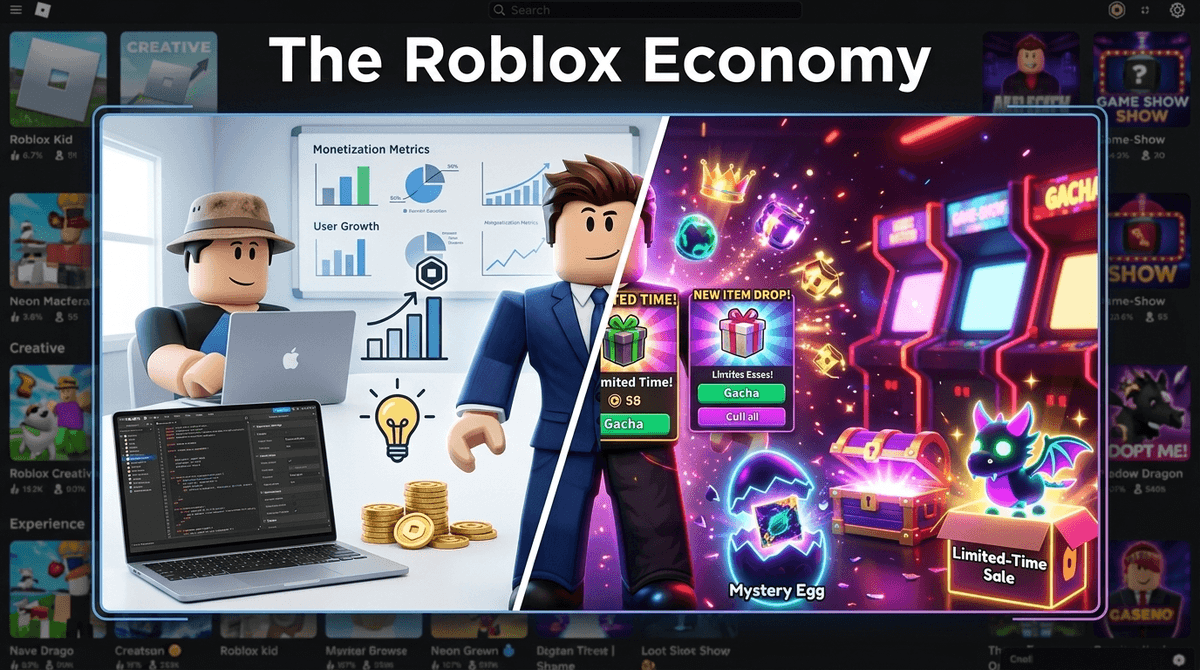
Roblox is essentially a massive, unregulated labor market for children. While that sounds dystopian, it does provide a legitimate platform for kids to learn entrepreneurship.
In games like Adopt Me! or Pet Simulator 99, kids are constantly:
- Evaluating Scarcity: Why is a "Shadow Dragon" worth more than a "Cat"?
- Negotiating: They have to talk other kids into trades, spotting "lowball" offers and scammers.
- Understanding Inflation: When a game drops a million new coins into the system, prices for items go up.
If your kid is actually making games on Roblox using Roblox Studio, they’re learning real-world coding and monetization. They are the shopkeepers, not just the shoppers. That’s the "Business School" side.

Then there’s the other side. Many modern games use "Gacha" mechanics—named after Japanese toy vending machines. You don't buy the item you want; you buy a chance to win the item you want.
This game is beautiful, the music is top-tier, and the gameplay is deep. It’s also a slot machine disguised as an epic adventure. To get the best characters, you have to "pull" for them using currency that is very hard to earn for free but very easy to buy. This is predatory, full stop. It teaches kids that if they don't get what they want, they should just keep pulling the lever.
Fortnite doesn't use loot boxes (anymore), but it perfected FOMO (Fear Of Missing Out). The "Item Shop" rotates every 24 hours. If you don't buy that Marvel skin today, it might be gone for months. This creates a sense of urgency that overrides a child's developing impulse control.
A favorite for the 8-12 crowd. It’s fast, fun, and colorful, but the "Brawl Pass" and constant "Special Offers" are designed by psychologists to make kids feel like they are "missing a deal" if they don't spend.
If you want your kids to learn about money without the predatory "gotcha" mechanics, look toward these titles.
Ages 6+ This is the gold standard for "Baby's First Economy." You move to an island, you take out a massive loan from a tanuki named Tom Nook, and you pay it back by picking fruit and selling shells. There are no microtransactions. If you want the cool sofa, you have to save up "Bells." It teaches patience and the literal "fruit" of one's labor.
Ages 10+ The ultimate "work hard, get paid" simulator. Kids learn that planting pumpkins is a better investment than parsnips, but they take longer to grow. It’s a masterclass in resource management and long-term planning. Plus, it’s just a cozy, beautiful experience.
Ages 7+ While Minecraft has a "Marketplace" now, the core gameplay is still about gathering resources. If you want a diamond sword, you have to find diamonds. You can't just buy your way to the "End Dragon" with a credit card (usually).
Ages 8+ Sometimes the old ways are best. Sitting around a table and physically handing over $400 for Boardwalk hurts a lot more than clicking a button on an iPad. It makes the transaction tangible.
Grades K-2 (Ages 5-8)
At this age, the concept of "digital money" is too abstract. They see a button and they press it.
- The Rule: No "real money" stores. Stick to games like Toca Life World where you might buy a pack once, but there’s no ongoing "currency" to manage.
- Education: Use physical board games to teach the "I give you this, you give me that" exchange.
Grades 3-5 (Ages 8-11)
This is the "Roblox Prime" era. They will be pressured by friends to have certain skins.
- The Rule: A fixed digital allowance. "You get $10 of Robux a month. When it’s gone, it’s gone."
- Education: Talk about "Skin-flation." Ask them, "Is that digital shirt going to be cool in two weeks, or is it just 'preppy' for today?"
Middle School & Up (Ages 12+)
This is where the Fortnite and Genshin Impact pressures hit hard.
- The Rule: They should start contributing their own money (chore money, birthday money) if they want high-tier items.
- Education: Discuss the "Sunk Cost Fallacy." Just because they’ve spent $50 on a game doesn't mean they have to keep playing it or spend another $50 to "make it worth it."
The biggest weapon a parent has against digital casinos is the 24-hour clock.
Most "bad" digital purchases are impulsive. When your kid sees a "Limited Time Offer" in Brawl Stars, tell them: "If you still want this 24 hours from now, we can talk about it."
90% of the time, the dopamine hit fades, the "Limited Time" timer expires, and they realize they didn't actually want the "Mega-Neon-Giga-Cat" that badly. They just wanted the feeling of winning it.
Is Roblox a business school? Maybe, if your kid is curious about how systems work. Is it a casino? Absolutely, if they are just consuming what’s on the front page.
The goal isn't to ban digital spending—that’s a losing battle in 2026. The goal is to move them from being passive consumers who get tricked by flashy buttons to active participants who understand the value of a dollar, even when that dollar is shaped like a gold coin with a "V" on it.
- Audit the Apps: Look at your "Purchase History" on your phone. How much did you actually spend on "Small Bags of Gems" last year? The number might shock you.
- Turn off "One-Tap Buy": Make it so every purchase requires a password. That friction is your best friend.
- Play with them: Sit down and watch them trade in Adopt Me!. Ask them why they made a certain trade. You’ll quickly see if they’re learning negotiation or just getting fleeced.