

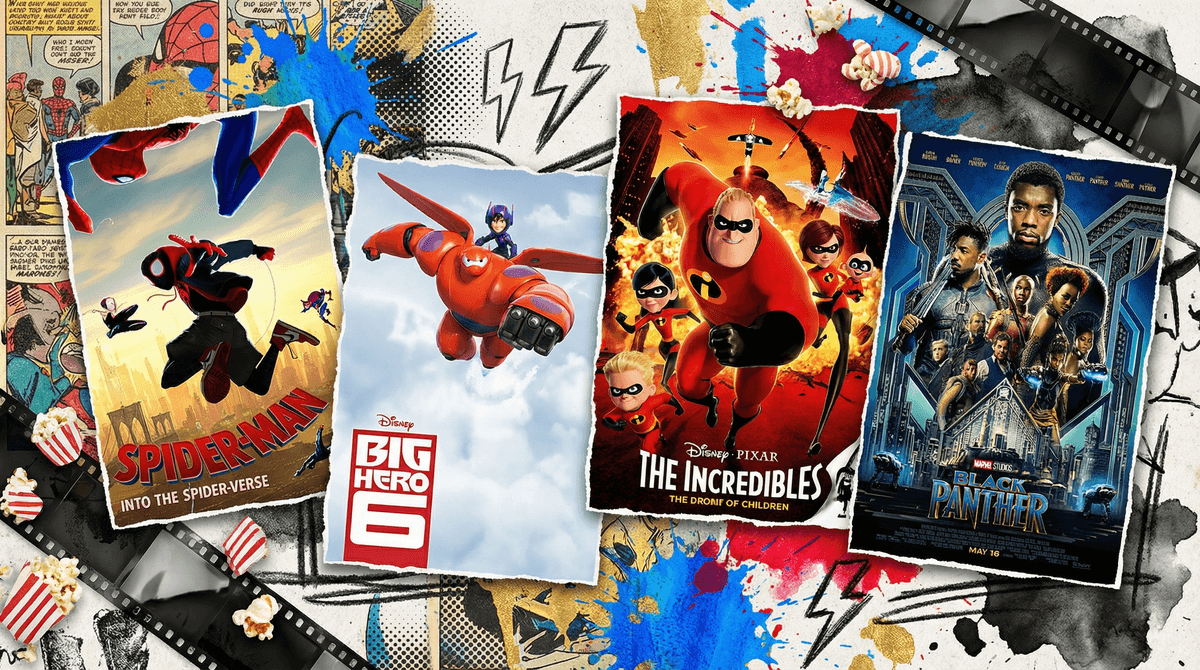
The Ultimate Guide to Superhero Movies for Family Movie Night
TL;DR: Not all superhero movies are created equal for family viewing. The Incredibles and Spider-Man: Into the Spider-Verse are gold standards, while The Batman is absolutely not for your 8-year-old no matter how much they beg. Here's how to navigate the cape-and-cowl chaos.
Quick picks by age:
- Ages 5-7: The Incredibles, Big Hero 6
- Ages 8-10: Spider-Man: Into the Spider-Verse, Shazam!
- Ages 11-13: Black Panther, Thor: Ragnarok
- Ages 14+: The Dark Knight, Logan
Superhero movies are the dominant force in family entertainment right now, but the genre spans everything from genuinely thoughtful animated films to three-hour CGI slugfests with body counts that would make a war movie blush. The PG-13 rating has become essentially meaningless in this space—some PG-13 superhero movies are fine for a 9-year-old, others feel like they should be R-rated.
The good news? There are legitimately excellent superhero films that work for family viewing. The key is knowing which ones actually deliver on being "family-friendly" versus which ones are just marketed that way.
The Incredibles (Ages 6+)
This is the superhero movie that understands what makes the genre work for families. It's got genuine wit, a story about family dynamics that doesn't feel forced, and action sequences that are thrilling without being traumatizing. The villain (Syndrome) is menacing but not nightmare-inducing, and the movie trusts kids to understand themes about identity and purpose without dumbing anything down.
The sequel (Incredibles 2) is equally solid, though it leans harder into the action sequences. Some younger kids found the hypnosis/screen-control villain a bit intense, so maybe preview if you've got a particularly sensitive viewer.
Spider-Man: Into the Spider-Verse (Ages 8+)
Visually stunning, emotionally resonant, and genuinely funny. This is the movie that made a lot of parents go "oh, superhero movies can actually be art." The multiverse concept is surprisingly easy for kids to grasp, and Miles Morales is one of the most relatable superhero protagonists out there.
There's one character death that hits hard emotionally (not graphic, but sad), and the dimensional-glitching villain Kingpin is pretty imposing. Most 8-year-olds handle it fine, but know your kid.
Across the Spider-Verse is even better visually but more intense and ends on a cliffhanger that might frustrate younger viewers who want resolution.
Big Hero 6 (Ages 6+)
Disney's take on Marvel is gentler than most superhero fare. It's really a story about grief and healing wrapped in a superhero package, with the most huggable robot sidekick ever created. The action is there but never overwhelming, and the emotional beats land without being manipulative.
Perfect for families who want superhero tropes without the Marvel Cinematic Universe's escalating stakes and destruction.
Shazam! (Ages 9+)
This is the most genuinely kid-friendly live-action superhero movie in years. It's literally about a 14-year-old who becomes a superhero, so the humor and perspective feel age-appropriate. There are some scary moments with the demon villains (the Seven Deadly Sins are legitimately creepy), but nothing gratuitous.
The foster care/found family themes are handled well, and it doesn't take itself too seriously. Shazam! Fury of the Gods is fine but forgettable—stick with the first one.
Black Panther (Ages 11+)
Thoughtful, gorgeous, and culturally significant. The violence is there but not gratuitous, and the movie actually has things to say about power, responsibility, and colonialism. Killmonger is one of Marvel's best villains because his motivations make sense, which leads to great family discussions afterward.
Some intense battle scenes and a few deaths (mostly off-screen), but nothing that feels exploitative. This is the MCU movie that feels most like it's about something beyond punching.
Thor: Ragnarok (Ages 10+)
The funniest MCU movie by a mile, with a killer '80s aesthetic and Jeff Goldblum being Jeff Goldblum. Director Taika Waititi turned Thor from the most boring Avenger into the most entertaining. There's violence but it's stylized and often played for laughs (gladiator battles, etc.).
The humor works for both kids and adults without feeling like it's trying too hard. Cate Blanchett's Hela is a great villain—powerful and threatening but not scary in a way that'll cause nightmares.
Spider-Man: Homecoming (Ages 10+)
Tom Holland's Spider-Man movies are the most teen-focused of the MCU, which makes them more relatable for younger viewers. Homecoming especially feels like a high school movie that happens to have superheroes in it. The Vulture is a grounded, blue-collar villain (not a world-ending threat), and the stakes feel appropriately sized for a 15-year-old hero.
The ferry scene is intense, and there's one great jump-scare moment, but overall this is MCU-lite in the best way.
These are good movies, but they're darker, more violent, or more complex than their marketing suggests:
The Batman (Ages 14+)
This is basically a three-hour noir detective thriller that happens to star Batman. It's excellent, but it's also genuinely dark—serial killer plot, people getting murdered in disturbing ways, and an overall oppressive atmosphere. The PG-13 rating is doing a lot of heavy lifting here.
If your teen loves true crime podcasts and darker storytelling, they'll probably love this. If they're expecting The Lego Batman Movie, they're in for a rough time.
Guardians of the Galaxy (Ages 11+)
The humor and soundtrack make this feel lighter than it is, but there's a lot of violence, some disturbing imagery (especially with the villain's experiments), and the opening scene deals with a parent's death from cancer. Great movie, but preview it before showing it to sensitive 10-year-olds.
The sequels get progressively darker—Vol. 3 has some genuinely upsetting animal experimentation scenes.
Wonder Woman (Ages 11+)
Empowering and well-made, but it's a World War I movie with all the violence that implies. There are battlefield scenes with people getting shot, stabbed, and gassed. The themes are mature (war, trauma, the nature of humanity), and while it's not gratuitous, it's heavier than most superhero fare.
Most of Zack Snyder's DC Movies
Man of Steel, Batman v Superman, and Justice League (both versions) are joyless slogs that treat superhero mythology with the gravitas of a war crimes tribunal. They're also incredibly violent for PG-13 movies—the destruction in Man of Steel alone is apocalyptic.
These movies fundamentally misunderstand what makes Superman and Batman work as characters, and they're not even fun as spectacle. Your kids will be bored, you'll be annoyed, and nobody wins.
Suicide Squad (Either Version)
The 2016 version is a chaotic mess with a terrible villain and a tone that can't decide what it wants to be. The Suicide Squad (2021) is better made but also significantly more violent and gross-out humor-focused. Neither is appropriate for kids despite the superhero branding.
Venom Movies
These want to be edgy and dark but end up being neither scary enough to be horror nor fun enough to be action-comedy. The violence is weirdly brutal for what's ostensibly a PG-13 superhero movie (people getting eaten, heads bitten off). They're also just not very good.
The MCU Avengers films are a mixed bag for family viewing:
- The Avengers (Ages 10+): Still holds up, relatively light on graphic violence, fun team dynamics
- Age of Ultron (Ages 11+): Darker, more violent, Ultron is genuinely creepy
- Infinity War (Ages 12+): The bad guy wins and half of everyone dies (temporarily, but still). Emotionally heavy.
- Endgame (Ages 12+): Three hours long, major character deaths, requires having seen like 20 previous movies
These work best as a family journey if you're doing the whole MCU thing together, not as standalone family movie night picks.
Ages 5-7: Stick with animation. The Incredibles, Big Hero 6, and The Lego Batman Movie are your best bets. These have action without graphic violence and themes that don't require a lot of context.
Ages 8-10: You can start introducing lighter live-action fare like Shazam! and Spider-Man: Homecoming. Spider-Verse is perfect for this age range—sophisticated enough to be engaging, not so dark it's scary.
Ages 11-13: Most MCU movies work here, with previews recommended for the darker entries. Black Panther, Thor: Ragnarok, and Wonder Woman are solid choices. Start having conversations about the difference between fantasy violence and real-world consequences.
Ages 14+: Pretty much everything is on the table, though you might still want to skip the Snyder DC movies because life's too short. The Dark Knight, Logan, and The Batman are genuinely excellent films that happen to be superhero movies.
The PG-13 rating is meaningless in this genre. There's a massive difference between Ant-Man (genuinely light and fun) and Doctor Strange in the Multiverse of Madness (surprisingly horror-adjacent with some disturbing imagery). Check Common Sense Media ratings or watch yourself first if you're unsure.
Not all superhero violence is equal. Stylized, cartoonish violence (Thor: Ragnarok) hits differently than realistic combat (The Batman) or mass destruction (Man of Steel). Know what your kid can handle and what might be too intense.
The post-credits scenes can be confusing. If you're not doing the whole MCU journey, you can skip these. They're mostly teases for future movies and don't add anything to the story you just watched.
Representation matters. Black Panther, Shang-Chi, Ms. Marvel (the Disney+ show), and Spider-Verse have been genuinely meaningful for kids who don't see themselves in the typical white-guy-in-a-cape formula. These aren't just "diverse casting"—they're stories where cultural identity is central to the narrative.
The best superhero movies for families are the ones that remember they're supposed to be fun. The Incredibles and Spider-Verse are legitimate masterpieces that work on every level. Shazam! and Thor: Ragnarok understand that superhero stories can be funny without being dumb.
Meanwhile, the grimdark Snyder-verse movies and the increasingly bloated MCU entries forget that not every superhero story needs to be about the end of the universe. Sometimes a teenager learning to be a hero is enough.
Start with animation, work your way up to live-action, and don't be afraid to say "this one's too intense for now." Your 10-year-old doesn't need to see The Batman just because their friend did—different kids have different thresholds, and that's fine.
And if you want to dig deeper into how superhero movies have changed over time or why the MCU became so dominant, those are genuinely interesting conversations to have with older kids who are starting to think critically about the media they consume.