

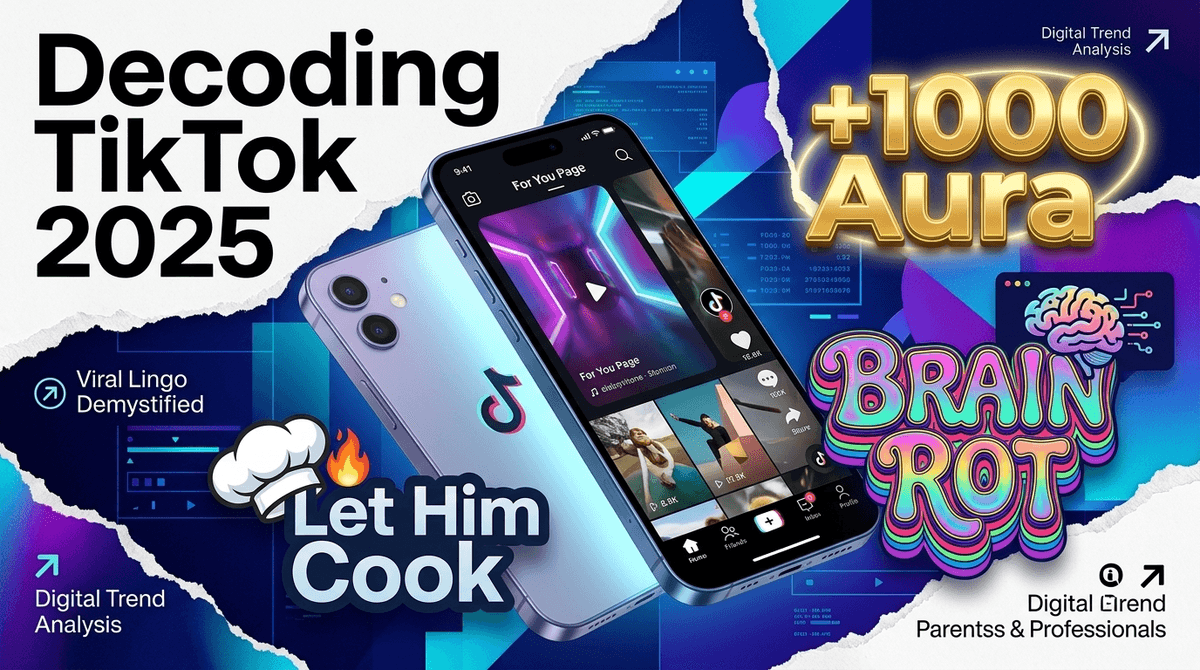
TL;DR: TikTok in 2026 is a chaotic blend of "Brain Rot" surrealism and a new social currency called "Aura." While most of the slang is just the modern version of an inside joke, the high-speed algorithm remains the primary thing for parents to monitor. If your kid says you have "-1000 Aura," they’re calling you cringe; if they tell you to "Let him cook," they’re actually being supportive.
Quick links for the current TikTok ecosystem:
- TikTok - The source of the madness.
- YouTube - Where "Brain Rot" content like Skibidi Toilet often migrates.
- CapCut - The editing tool kids use to make these viral videos.
- Instagram - Where trends go to die (or where parents finally see them three weeks late).
If you feel like you need a translator just to understand what’s happening at the breakfast table, you aren’t alone. TikTok moves at a speed that makes the 24-hour news cycle look like a snail. We’ve moved past the era of simple dance challenges and entered the era of "lore"—deeply layered, often nonsensical humor that defines an entire generation's digital identity.
In 2026, TikTok isn't just an app; it’s the primary search engine for Gen Z and Gen Alpha. They aren't Googling "how to do a tie-dye shirt"; they’re searching TikTok. They aren't looking at reviews for The Wild Robot; they’re watching 15-second emotional reaction clips of people crying in the theater.
Let’s get the vocabulary out of the way so you can stop nodding and smiling while having no idea what’s being said.
Aura Points
Think of "Aura" as a gamified version of "coolness" or social capital.
- +1000 Aura: You did something impressive, stoic, or effortlessly cool.
- -500 Aura: You tripped in public, your phone went off in class, or you used "old person" slang. It’s basically a way for kids to narrate their lives like they’re characters in a video game. It’s mostly harmless, though it can lean into a bit of self-consciousness.
Brain Rot
This is a self-aware term kids use for content that is completely nonsensical, overstimulating, and arguably "low-quality." The poster child for this is Skibidi Toilet, but it extends to any video with five different things happening on screen at once (like a Minecraft parkour video playing underneath a clip of Family Guy). The verdict: It’s not actually rotting their brains any more than Ren & Stimpy or SpongeBob did ours, but it is designed to be incredibly addictive.
"Let Him Cook"
This means "let him do his thing" or "give him space to show his talent." If your son is trying to land a trick in Roblox and his friend says "Let him cook," it’s actually a vote of confidence.
Ohio and Sigmas
"Only in Ohio" has become shorthand for anything weird or "cursed." (Sorry, Buckeyes, you’re just the internet’s designated weird state now). A "Sigma" used to mean a "lone wolf" or a dominant person, but in 2026, it’s often used ironically to describe someone who is trying too hard to be cool.
Ask our chatbot for a full list of current TikTok slang definitions
The appeal of TikTok isn't just the content; it’s the community of the absurd. When a kid uses "Brain Rot" slang, they are signaling that they belong to the "in-group." They understand the joke, and you don't. That’s a powerful feeling when you’re 12.
However, the "Aura" economy matters because it reflects how much weight kids are putting on their digital reputation. In 2026, a kid’s "digital footprint" isn't just about what they post; it’s about how they are perceived in the comments section.
While most trends are just silly words, some require an actual conversation.
1. The "Looksmaxxing" Trend
This is a trend where kids (primarily boys) give each other advice on how to become more attractive. While some of it is basic hygiene, it can spiral into "mewing" (a specific tongue position to define the jawline) or, more concerningly, "bonesmashing" (which is exactly what it sounds like and is incredibly dangerous). Read our guide on the looksmaxxing trend and body image
2. "Doom-Scrolling" and the FYP
The "For You Page" (FYP) is the most sophisticated dopamine delivery system ever created. In 2026, the concern isn't just "inappropriate content" (though that exists); it's the velocity of content. Transitioning from a video about a war zone to a video of a cat dancing in three seconds is a lot for a developing brain to process.
3. Financial "Hacks" and AI Scams
With the rise of ChatGPT and AI video tools, TikTok is flooded with "get rich quick" schemes targeting teens. Whether it's "dropshipping" or "crypto plays," kids are being sold a dream of entrepreneurship that is often just a scam.
Learn more about how AI scams target teenagers on social media
Screenwise data shows that while TikTok is officially 13+, about 35% of 5th graders are already using it or watching "TikTok Reels" reposted on YouTube.
- Ages 9-12: At this age, the "Brain Rot" humor is peak comedy. If they aren't on TikTok, they are seeing it on YouTube Kids or Roblox. This is the time to talk about why these videos are so hard to stop watching.
- Ages 13-15: This is the "Aura" and "Sigma" phase. Social status is everything. This is when you need to keep an eye on the algorithm and ensure they aren't falling down "incel" or "extreme diet" rabbit holes.
- Ages 16+: They are likely the ones creating the trends. At this point, the conversation should shift toward digital literacy—can they spot a deepfake? Do they know why a certain "viral" product is suddenly all over their feed?
Look, TikTok is a mixed bag. It’s where your kid might learn a cool new recipe or how to use Scratch to code a game. It’s also where they can be exposed to some of the most toxic body-image content currently in existence.
The app’s "Restricted Mode" is okay, but it’s not a silver bullet. It often misses things that are "borderline." The best tool you have is actually your kid’s "Aura." If you can make "not being a slave to the algorithm" seem like a high-aura move, you’ve won.
How to talk about it at dinner:
Instead of saying "What is this trash you're watching?", try:
- "I heard someone talking about 'Aura points' today. How many points did I lose by wearing these socks?"
- "What’s the weirdest 'Brain Rot' video you’ve seen this week?"
- "I saw a video about MrBeast today—is he still the king of TikTok or is he 'cooked'?"
TikTok in 2026 is less about the "what" and more about the "how much." The slang is a phase, the memes will change by next Tuesday, but the habit of constant, high-speed consumption is what sticks.
If your kid is obsessed with "Brain Rot," don't panic. They aren't losing their mind; they're just participating in a very weird, very fast cultural moment. Just make sure they’re also spending time in places like Stardew Valley or reading Percy Jackson—places where the pace of life is a little more human.
- Check the settings: Go into your kid's TikTok settings and look at "Content Preferences" to filter out specific keywords.
- Audit the FYP: Sit with them for 10 minutes and just watch what the algorithm thinks they like. It’s the fastest way to understand their digital world.
- Set a "Scroll Limit": Use the built-in "Screen Time" features to ensure TikTok isn't the last thing they see before bed.
Check out our guide on setting up TikTok parental controls
Ask our chatbot for alternatives to TikTok for younger kids