

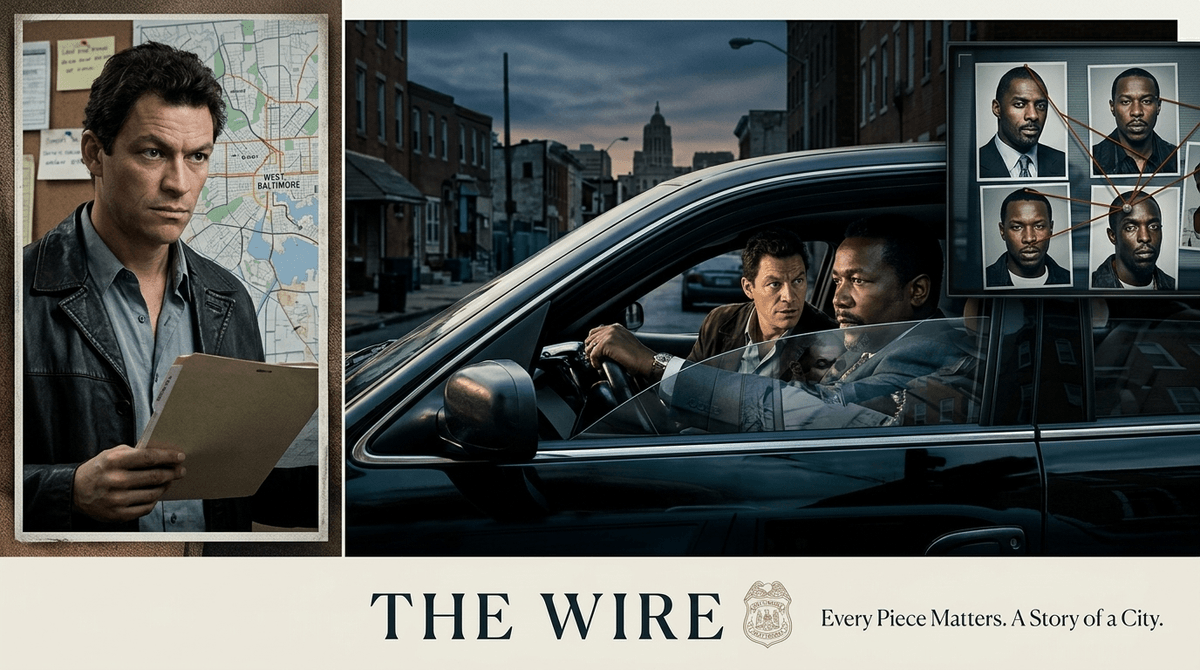
The Wire is a heavy lift—it’s brilliant, brutal, and definitely not something you put on for a casual Friday night with a middle schooler unless you want to explain the intricacies of the mid-Atlantic drug trade and systemic institutional failure before the popcorn is even finished. If your teen is under 16, it’s probably a "not yet," but for older teens who are starting to ask real questions about how the world actually works, it’s a masterclass in storytelling that makes most other "prestige" TV look like a cartoon.
TL;DR: The Wire is rated TV-MA for a reason—wall-to-wall profanity, gritty violence, and heavy drug themes—but it’s also widely considered the greatest television show ever made. If you have an older teen (16+) who loved Breaking Bad or is interested in sociology, politics, or filmmaking, this is the gold standard. Just be prepared to debunk those viral AI-generated "Season 6" trailers currently clogging up TikTok.
Originally airing on HBO from 2002 to 2008, The Wire is a sprawling crime drama set in Baltimore. But calling it a "cop show" is like calling the iPhone a "calculator." Created by former police reporter David Simon, the show spends five seasons deconstructing a different institution in the city: the illegal drug trade, the shipping port and labor unions, the city government and bureaucracy, the school system, and finally, the print news media.
It’s famous for its "slow burn" pace and its refusal to give viewers easy "good guys" and "bad guys." In the world of The Wire, the police are often as hamstrung by red tape and ego as the drug dealers are by the violence of the street. It’s a show where "all the pieces matter," and it demands your full attention.
It’s 2026, and The Wire is having a massive "renaissance" moment. You might be seeing your teen scroll past gritty, 4:3 aspect ratio clips on social media, or they might have asked you if "Season 6" is finally coming out.
Let’s clear the air: There is no Season 6.
What your kids are seeing are high-fidelity AI-generated trailers and "leaked" clips that have gone viral on YouTube and TikTok. These AI projects use deepfake technology to show what characters like McNulty or Omar would look like in 2026 Baltimore, dealing with modern tech and fentanyl. While they look incredibly real, David Simon has been very clear that the story is over. If your teen is hyped for a "reboot," you’ll have to be the one to tell them they’re watching a very sophisticated fan project.
That said, the show’s themes of surveillance, "juking the stats," and the struggle of the individual against a broken system are more relevant now than they were twenty years ago. Teens today are digitally native and highly skeptical of institutions; The Wire speaks that language fluently.
If you’re wondering if you can watch this with your kid, you need to know what’s actually in the "package." This isn't a Marvel movie where the violence is bloodless and the heroes always win.
The Language
It’s legendary. There is a famous scene in Season 1 where two detectives investigate a crime scene and the only word they speak for five minutes is a certain four-letter word starting with "F." If your family has a strict "no swearing" policy, The Wire will break that policy in the first thirty seconds. According to our tracking, about 85% of parents of 17-year-olds are fine with this level of language for "artistic realism," but it’s definitely not background noise for the dinner table.
The Violence
The violence in The Wire isn't "fun" or stylized. It’s often cold, sudden, and deeply tragic. Characters you love will die—often for no good reason. It deals heavily with the reality of the drug trade, which means seeing the physical toll of addiction and the consequences of "the game."
The Complexity
This is the real "intensity" factor. The Wire is dense. It doesn't do "previously on" segments that hold your hand. If your teen is used to "brain rot" content or fast-paced TikTok edits, they might find the first three episodes boring. But once it clicks, it really clicks.

I know, telling a teen a show is "educational" is the fastest way to make them never watch it. But The Wire functions as a visual novel.
- Systemic Thinking: It teaches kids to look at the "why" behind the "what." Why is the school system failing? Why do kids join gangs? It’s never just "because they’re bad people."
- Media Literacy: Season 5 is a brutal critique of how the news is made and how "the truth" can be manipulated—a vital lesson in the age of AI and deepfakes.
- Empathy: It forces viewers to empathize with characters they would normally judge—addicts, low-level dealers, and corrupt politicians.
If your teen wants a gritty drama but isn't quite ready for the heavy themes of The Wire, consider these:
- The Bear: Intense, high-stress, and great dialogue, but centered on a kitchen rather than a drug corner.
- All American: Deals with similar themes of class and neighborhood dynamics but through a much more accessible "teen drama" lens.
- Sherlock (BBC): If they just want the "brilliant detective" fix without the nihilism of Baltimore.
If you do decide to watch it with your older teen, don't just sit there in silence. This show is built for discussion.
- "Who is the real 'villain' of this season?" (Hint: It’s usually the institution, not a person.)
- "What do you think of 'The Game'?" The characters often refer to their lives as "The Game." Ask your teen what the rules of that game are and why it’s so hard to quit.
- "How would this be different with 2026 technology?" This is a great way to address those AI rumors. Would McNulty be using AI to track burners? Would the dealers be using encrypted apps?
Check out our guide on talking to teens about systemic issues in media
Q: What age is The Wire appropriate for?
The Wire is best suited for older teens, ages 16 and up. While some mature 15-year-olds can handle the content, the show's complexity and gritty realism require a level of emotional and intellectual maturity that most younger kids haven't developed yet.
Q: Is there a lot of nudity in The Wire?
Yes, there is occasional graphic nudity and sexual content, primarily in the context of the characters' personal lives or in "strip club" settings used as fronts for the drug trade. It is not as pervasive as in a show like Game of Thrones, but it is definitely present and earns the TV-MA rating.
Q: Is the new 'The Wire: Season 6' trailer on YouTube real?
No, those trailers are AI-generated fan projects. There is no official Season 6 of The Wire in production, and the original creators have stated the story is complete.
Q: Is The Wire better than Breaking Bad?
This is the ultimate TV debate! While Breaking Bad is more of a "thrill ride" focused on one man's transformation, The Wire is a broader sociological study of an entire city. Both are masterpieces, but The Wire is often considered more "realistic" and intellectually demanding.
The Wire isn't just a show; it's an experience. It’s the kind of media that changes how you look at the evening news and your own community. If you have an older teen who is ready to move past "brain rot" and engage with something that treats them like an adult, this is it. Just keep an eye out for those AI fakes—and maybe keep a dictionary handy for all that Baltimore slang.
Learn more about how to navigate TV-MA content with your family