

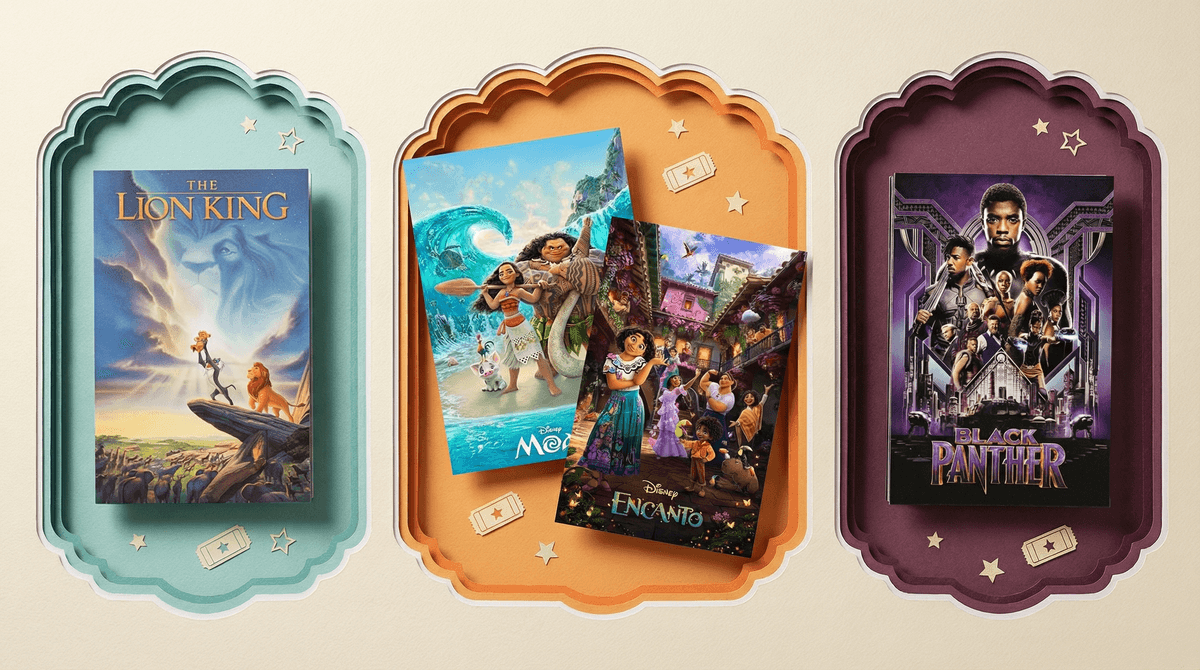
Look, we all grew up thinking Disney = safe for kids, full stop. But if you've ever had a 4-year-old traumatized by Mufasa's death or a 7-year-old asking uncomfortable questions after watching Encanto, you know that Disney movies span a much wider range than most parents realize.
The MPAA ratings system gives us G, PG, and PG-13 as guideposts, but here's the thing: a G rating doesn't mean "appropriate for all ages," and PG-13 doesn't automatically mean "too mature for your 10-year-old." Disney's catalog includes everything from gentle sing-alongs to movies with genuine peril, complex themes, and yes, some surprisingly intense moments.
This guide breaks down what those ratings actually mean in practice, which Disney films push the boundaries of their ratings, and how to match movies to your specific kid's age and sensitivity level.
G (General Audiences): Theoretically means nothing that would offend parents for viewing by children. In Disney's world, this includes classics like The Lion King, which features patricide and a stampede death scene. So yeah, G doesn't mean "no scary parts."
PG (Parental Guidance Suggested): May contain some material parents might not like for their young children. This is where most modern Disney and Pixar films land. Think Moana, Encanto, Frozen. Some mild peril, thematic elements, brief action.
PG-13 (Parents Strongly Cautioned): Some material may be inappropriate for children under 13. This is where you'll find most Marvel movies, the live-action remakes with more intense action, and films like Pirates of the Caribbean.
The problem? These ratings don't account for individual kid sensitivity or developmental readiness. A 6-year-old who's fine with action might be wrecked by emotional scenes about loss. An 11-year-old might handle PG-13 action but not be ready for romantic subplots or scary imagery.
Here's what drives parents crazy: Disney markets itself as family entertainment, but their films regularly include:
- Parent death/loss (Bambi, The Lion King, Finding Nemo, Frozen, Big Hero 6)
- Genuine peril and scary villains (Sleeping Beauty's Maleficent, The Little Mermaid's Ursula, Coco's skeletons)
- Complex themes (generational trauma in Encanto, grief in Coco, colonialism in Pocahontas)
- Intense action sequences (basically every Marvel film, even the "lighter" ones)
None of this makes these movies bad. Many are masterpieces. But the Disney brand creates an assumption of universal kid-friendliness that doesn't match reality.
Ages 2-4: The Gentlest Options
At this age, kids are still learning to distinguish fantasy from reality and can be frightened by things adults find silly. Best bets:
- Winnie the Pooh (2011) - genuinely gentle
- Toy Story - some kids find Sid scary, but mostly sweet
- Early Mickey Mouse shorts
- Bluey: The Movie (okay, technically not Disney-made but on Disney+)
Skip: The Lion King (death), Bambi (mother's death), Snow White (scary witch), Pinocchio (nightmare fuel honestly).
Ages 5-7: Classic Disney Territory
This is when most kids can handle mild peril and sad moments, though individual sensitivity varies wildly.
Good starting points:
- Moana - some scary lava monster scenes but mostly adventurous
- Frozen and Frozen 2 - emotional but not traumatic
- Encanto - complex family themes but beautiful
- Lilo & Stitch - deals with loss but in a gentle way
Proceed with caution:
Ages 8-11: Opening Up the Catalog
Most kids this age can handle PG films and even some PG-13 content, depending on what they're sensitive to.
Generally solid:
- Most Pixar films (Inside Out, Turning Red, Soul)
- Adventure-focused Disney (Raya and the Last Dragon, Strange World)
- Early Marvel films if they're into action (Ant-Man, Spider-Man: Homecoming)
Know your kid:
- Black Panther - PG-13 for action and some intense scenes, but many 9-10 year olds handle it fine
- The Incredibles - surprisingly intense villain moments
Ages 12+: Most of the Catalog Opens Up
At this point, most PG-13 Disney content is on the table, though you might still want to screen Marvel films for violence levels and Star Wars for intensity.
The rating doesn't tell you about:
- Emotional intensity: Inside Out is PG but emotionally complex in ways that might be harder for some kids than PG-13 action.
- Scary imagery: The Black Cauldron is PG but genuinely dark and scary.
- Thematic sophistication: Zootopia deals with prejudice and systemic discrimination—heavy stuff for a "kids' movie."
- Cultural sensitivity: Some older Disney films have aged poorly (Peter Pan, Dumbo, Pocahontas).
Your kid's specific sensitivities matter more than the rating. Some kids are fine with action but can't handle emotional scenes. Others are the opposite. You know your kid better than the MPAA does.
Disney movie ratings are a starting point, not a finish line. The G-to-PG-13 spectrum is more of a suggestion than a rule, and individual movies within each rating vary wildly in what they contain and how intense they feel.
The best approach?
- Use the rating as a baseline, not a final answer
- Read parent reviews on sites like Common Sense Media or check out our Disney movie guides for specifics
- Know your kid's triggers—scared of the dark? Skip Brave's bear scenes. Sensitive about parent loss? Maybe hold off on Finding Nemo until they're older.
- Co-watch when trying something new, especially with younger kids or sensitive topics
Remember: there's no prize for exposing your kid to age-inappropriate content early, and there's no shame in waiting until they're ready. Disney movies aren't going anywhere.
Want to dig deeper into specific Disney films? Check out our guide to the best Disney+ movies by age or explore alternatives to Disney movies if you're looking for something different.
And if you're trying to figure out if a specific movie is right for your kid, See if any Disney film is appropriate for your kid and get personalized guidance based on your family's values and your kid's sensitivities.