

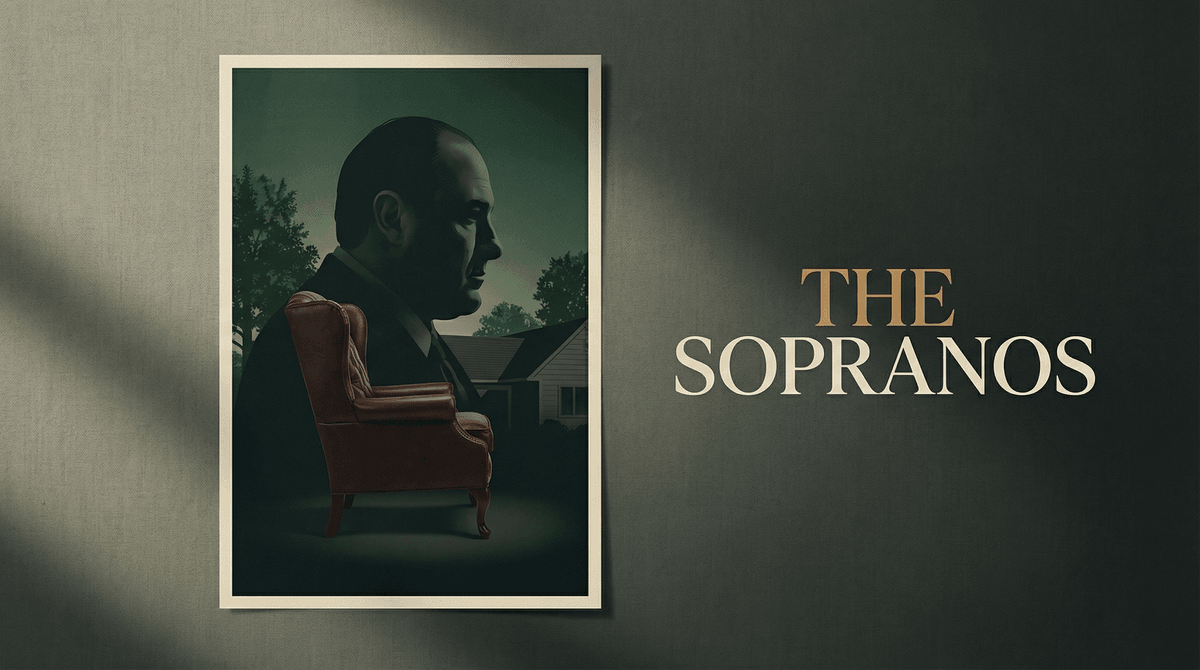
The Sopranos: How David Chase's Mother Inspired TV's Most Influential Mob Drama
TL;DR: Before The Sopranos, TV was a wasteland. David Chase created the show that launched prestige television by channeling his complicated relationship with his mother into Tony Soprano's therapy sessions. If your teen is suddenly interested in this 25-year-old show (it's having a massive Gen Z resurgence), here's what you need to know about the origin story—and why it still matters.
Your 15-year-old is watching The Sopranos. Not Breaking Bad, not The Wire—those are "old people shows" now apparently. The Sopranos is having this wild second life on TikTok, with kids obsessing over Tony's therapy sessions, Carmela's moral compromises, and that ending everyone still argues about.
So when they ask to watch it, you need context. Not just "is it appropriate?" (we'll get there), but why this show fundamentally changed what television could be—and why understanding David Chase's origin story actually helps you talk about it with your kid.
David Chase didn't set out to revolutionize television. He wanted to make a movie about his mother.
For years, Chase had been a successful TV writer and producer—he worked on The Rockford Files, created shows that went nowhere, and generally felt creatively stifled by network television's limitations. He was in his 50s, bitter about the industry, and kept circling back to this one story: his relationship with his mother, Norma.
Norma Chase was, by all accounts, impossible. Narcissistic, manipulative, impossible to please, and yet somehow the center of her son's emotional universe. Chase has said in interviews that she never showed him affection, criticized everything he did, and made him feel like a failure even as he succeeded professionally. She died in 1995, and Chase was left with this complicated grief—anger, guilt, relief, sadness, all tangled up.
His original pitch was a movie called "The Sopranos" about a mobster in therapy dealing with panic attacks triggered by his mother. Every studio passed. Too weird. Too dark. Who wants to watch a mob boss cry to a psychiatrist?
HBO said yes—but only as a series.
Here's the irony: Chase thought TV was garbage. He wanted to make movies. But the series format became the secret ingredient that made The Sopranos revolutionary.
A movie would have been a tight 2-hour character study. The series format gave Chase 86 episodes across 7 years to explore Tony Soprano's psyche, his family dysfunction, his mother's toxicity, and the impossible contradictions of being a violent criminal who also has panic attacks and cries in therapy.
The pilot episode, which Chase wrote and directed, introduces us to Tony passing out at a family barbecue. His mother, Livia (played by Nancy Marchand in a performance that's basically Norma Chase with a New Jersey accent), is the source of his panic attacks. She's manipulative, plays the victim, pits her children against each other, and eventually—spoiler for a 25-year-old show—literally tries to have Tony killed.
Chase channeled decades of therapy and unresolved maternal trauma into Livia Soprano. Every awful thing she does on screen, every guilt trip, every manipulation—Chase has said these were things his own mother did. The show became his therapy, and we all got to watch.
Before The Sopranos premiered in January 1999, TV dramas were procedurals and soap operas. Good guys caught bad guys. Doctors saved patients. Everyone learned a lesson by the end of the episode. Characters didn't really change.
The Sopranos said: what if the main character is a murderer, a cheater, a liar, and also deeply human and relatable? What if we don't tie everything up neatly? What if therapy doesn't fix him? What if his mother is the villain, not some external mob threat?
The show proved that TV could be as complex, artistic, and morally ambiguous as the best films. It paved the way for Breaking Bad, Mad Men, The Wire, and basically every prestige drama your teen might want to watch now.
Chase didn't invent the antihero—but he made the antihero the protagonist of long-form television storytelling in a way that stuck.
The therapy scenes between Tony and Dr. Jennifer Melfi (Lorraine Bracco) are the beating heart of the show—and the part your kid is probably most interested in, honestly. Gen Z is therapy-fluent in ways previous generations weren't, and watching Tony Soprano struggle with emotional vulnerability, toxic masculinity, and generational trauma is weirdly relatable to them.
Chase used these scenes to do something TV had never really done: show a character's internal life in real-time, with all its contradictions and self-deceptions. Tony lies to his therapist. He makes progress and then regresses. He has insights and then ignores them. Just like real therapy.
The show doesn't moralize about whether therapy "works" for Tony. It just shows him trying, failing, and trying again. For kids growing up in a world where mental health is destigmatized and therapy is normalized, this resonates.
Content-wise: This show is violent, sexual, and full of language that would make a sailor blush. It's rated TV-MA for very good reasons. There's domestic violence, infidelity, murder, drug use, and toxic masculinity on full display.
But here's the thing: The show doesn't glorify any of it. Tony Soprano is fascinating, but he's not aspirational. The violence has consequences. The infidelity destroys families. The toxic masculinity makes everyone miserable. Chase is showing you a world, not endorsing it.
Age-appropriate? Probably 16+, and even then, it depends on your kid's maturity level and your family's values. If they're interested in psychology, storytelling, or film/TV production, this is genuinely educational—but it's also genuinely intense.
The real value: If you watch it together (or at least discuss it), The Sopranos becomes an incredible conversation starter about:
- Family dysfunction and generational trauma
- Toxic masculinity and emotional repression
- The gap between who we want to be and who we actually are
- How therapy works (and doesn't work)
- Moral complexity and the absence of easy answers
Without spoiling it: the series finale is deliberately ambiguous in a way that drove people absolutely insane in 2007 and still sparks arguments today. Chase refused to give viewers closure or easy answers, which is very on-brand for a show about a guy who never really changes despite years of therapy.
Your kid will have opinions about what the ending means. Let them. It's one of those rare pieces of media that rewards analysis and interpretation—kind of like discussing the themes in The Last of Us.
David Chase made a show about his mother and accidentally invented modern prestige television. The Sopranos is violent, profane, and morally complex—but it's also a genuine work of art that changed what TV could be.
If your teen wants to watch it, they're not just being edgy or obsessed with mob violence. They're interested in one of the most influential pieces of storytelling in the last 30 years, created by a guy who turned his therapy sessions into television gold.
Is it appropriate for your family? That's your call. But if you decide yes, watch it with them. The conversations you'll have about Tony, Livia, therapy, family, and moral complexity are worth way more than worrying about the language.
- Preview it yourself first: Watch the pilot episode before deciding if it's right for your teen
- Set expectations: This isn't a mob action show—it's a psychological drama that happens to involve mobsters
- Use it as a conversation starter: The show raises questions it doesn't answer, which makes for great discussions
- Explore the context: Other shows that changed television

And if your kid asks why everyone's obsessed with a show about some guy's mom issues—well, now you know. Sometimes the most personal stories become the most universal.