

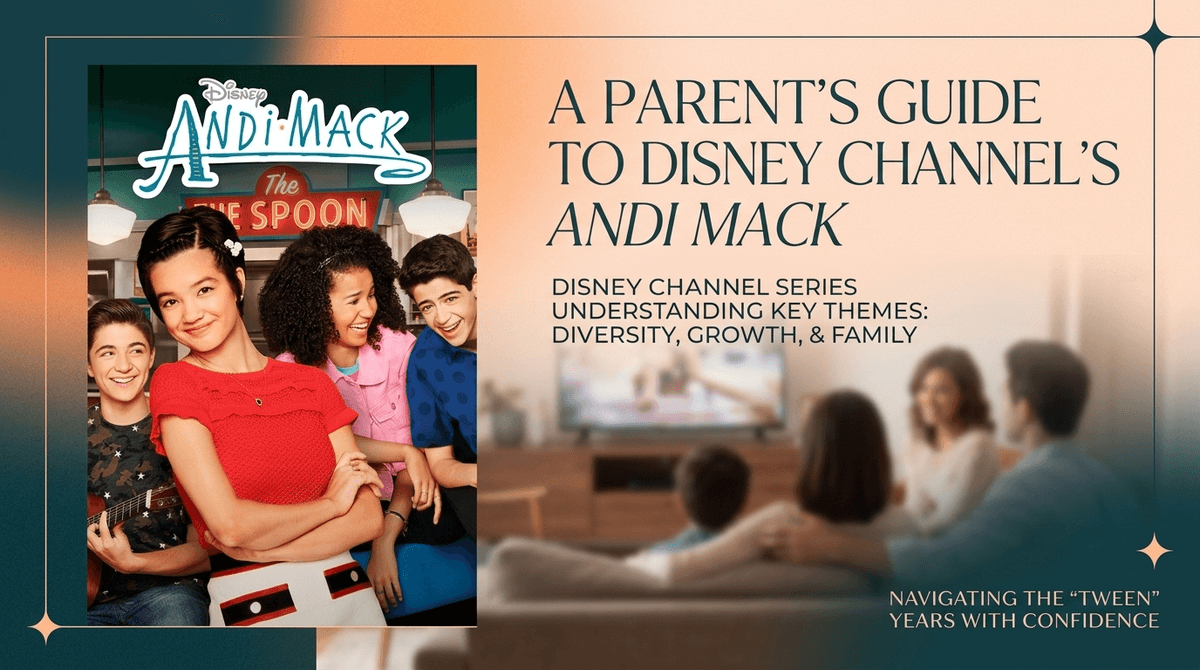
TL;DR: Andi Mack is the Disney Channel show that finally grew up. It’s famous for featuring Disney's first-ever coming-out journey, but it also tackles complex family structures (like finding out your "sister" is actually your mom) with more grace than most adult dramas. It’s the perfect bridge for parents of 10-14 year olds to discuss identity, inclusion, and the reality that "normal" families come in all shapes and sizes.
Find more shows that handle LGBTQ+ themes well
If you grew up on Lizzie McGuire, you’ll recognize the DNA here—Terri Minsky created both. But where Lizzie was dealing with training bras and mean girls, Andi Mack dives into much deeper waters.
The series starts with a massive "bomb" dropped on the protagonist's 13th birthday: Andi discovers that her cool, older, "traveling" sister, Bex, is actually her biological mother, and the woman she thought was her mom is actually her grandmother.
From that point on, the show isn't just about middle school crushes and "The Spoon" (their local diner hangout); it’s about deconstructing what makes a family and how we define ourselves when our world gets flipped upside down. It ran for three seasons and remains one of the most critically acclaimed shows in Disney's history because it treats its audience like they have functioning brains and empathetic hearts.
For a long time, kids' TV lived in a bubble where every problem could be solved in 22 minutes and everyone’s parents were happily married and slightly incompetent. Andi Mack popped that bubble.
It matters because it’s one of the few pieces of media for the "tween" set that mirrors the actual diversity of the world they’re living in. Whether it’s unconventional family structures, learning how to be a good ally, or navigating the anxiety of coming out, the show provides a blueprint for conversations that many parents find awkward to start on their own.
The Groundbreaking LGBTQ+ Storyline
The show made history with Cyrus Goodman, one of Andi’s two best friends. Over the course of the series, Cyrus realizes he has feelings for the same boy Andi likes. This wasn't a one-off "special episode" moment. It was a slow, realistic, and incredibly moving multi-season arc.
When Cyrus eventually says the words "I'm gay" to his friend Buffy, it marked the first time those words were ever spoken by a recurring character on Disney Channel. It was handled with such tenderness and lack of "drama" that it set a new standard for how we talk to kids about sexual orientation: it’s just a part of who someone is, and the best response is a simple "Okay, cool. You're still you."
Learn more about the history of LGBTQ+ representation in kids' media
While the LGBTQ+ storyline got the most press, the family dynamics are arguably just as impactful. The show explores:
- Unplanned Pregnancy and Non-Traditional Families: The Bex/Andi/Celia triangle is a masterclass in showing how secrets can hurt, but honesty can heal. It doesn't demonize Bex for being a young mom, nor does it make Celia a villain for wanting to protect Andi.
- Grandparent Dynamics: It shows the tension that happens when roles shift—when a grandmother has to step back and let the biological mother actually parent.
- Cultural Identity: The show subtly integrates Andi’s mixed-race heritage (Asian-American) without making it a "cultural lesson" episode. It’s just their life.
It’s not just "important"—it’s actually good TV.
- The "Goodhair" Vibes: The friendship trio of Andi, Cyrus, and Buffy is goals. They are supportive, funny, and they actually talk to each other about their feelings.
- Middle School Realism: It captures that specific "Ohio" feeling of middle school (to use the Gen Alpha slang for "weird" or "cringe")—the awkwardness of first dances, the shifting alliances of friend groups, and the feeling that every small mistake is a life-ending catastrophe.
- The Humor: Cyrus Goodman is genuinely one of the funniest characters in the Disney pantheon. His dry wit and neurotic energy make the heavier themes go down easy.
We recommend Andi Mack for Ages 10-14.
While the show is rated TV-G, the themes are sophisticated. A 7-year-old might find the "who is the mom?" plot confusing or boring, and they might not have the context to understand the weight of Cyrus’s journey.
For middle schoolers, however, this is their sweet spot. They are already having these conversations at school or seeing these topics on TikTok. Watching it together gives you a chance to "set the record" on your family’s values before the internet does it for you.
If you’re sitting down to watch this with your kid, here are a few things to keep in mind:
It’s a Conversation Starter, Not a Lecture
You don't need to pause the show to explain "The Significance of Identity." Just let the story play out. Your kid will likely have questions, or better yet, they’ll have observations. Listen more than you talk.
The "Coming Out" Scene is a Model
When Cyrus comes out to Buffy, her reaction is: "You've always been weird, but you're no different." It’s a great moment to discuss what it means to be a supportive friend. You can ask your kid, "How do you think Cyrus felt before he told her? Why was Buffy’s reaction so good?"
Dealing with "The Secret"
The initial plot point of Andi's parentage can be a bit shocking. If your family has a complex history, this show might hit close to home. It’s a good opportunity to talk about how families aren't always defined by marriage licenses, but by who shows up and does the work.
If your family enjoyed the themes in Andi Mack, here are a few other titles that handle identity and family with similar care:
If your kid likes fantasy, this animated series features a great LGBTQ+ romance and themes of "found family" that resonate deeply with the Andi Mack crowd.
A bit more "mature" (best for ages 13+), this show follows a teen navigating his identity and a complicated family life after moving to a new city. It’s the natural evolution for a kid who has outgrown the Disney Channel vibe.
This one is meta, funny, and features several prominent LGBTQ+ characters and storylines handled with modern sensibility.
The ultimate "feel-good" show about teen identity. It’s incredibly wholesome and focuses on the joy of discovery rather than just the trauma of being different.
Andi Mack isn't "brain rot." It’s the opposite. It’s "brain fuel." It encourages empathy, rewards emotional intelligence, and proves that Disney can actually handle "the real world" without losing its magic.
In a digital landscape where kids are often bombarded with polarized views on identity and inclusion, Andi Mack offers a middle ground. it shows that while growing up is complicated and sometimes messy, having a "Space Otter" (the show's fictional band) hoodie and a group of friends who love you exactly as you are makes it all manageable.
Next Steps:
- Watch the first two episodes of Andi Mack with your tween.
- Pay attention to their reaction to the "Bex is the mom" twist—it’s a great litmus test for their emotional maturity.
- If they want to keep going, let them. This is one of the "safe" ones.