

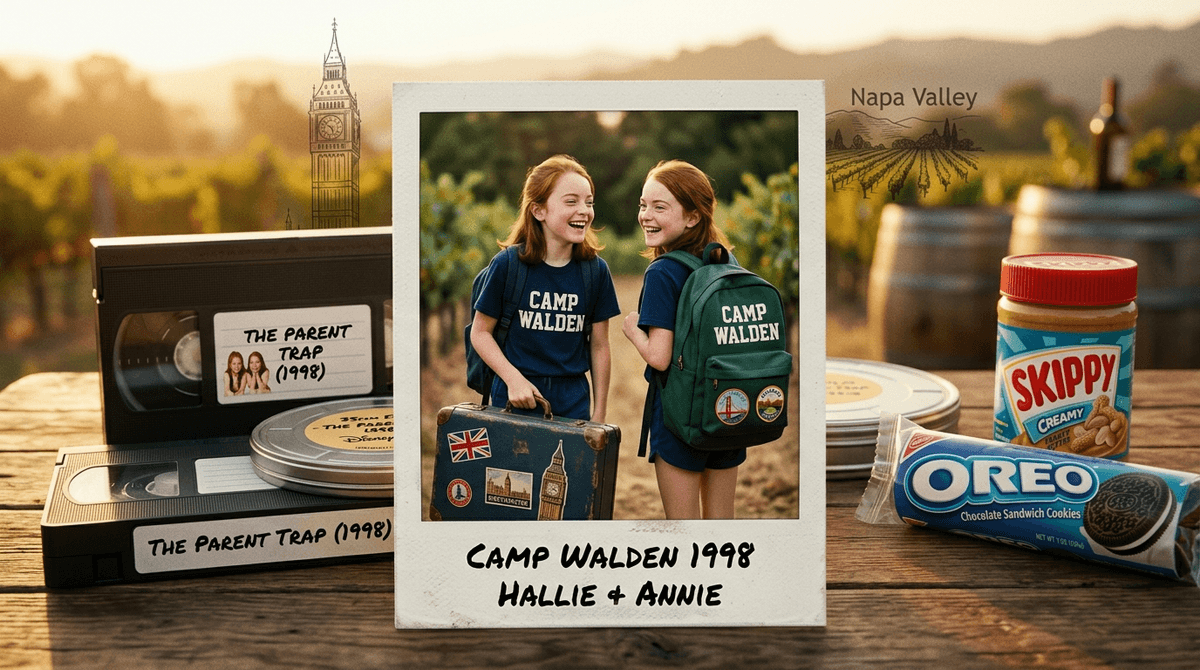
TL;DR: The Parent Trap (1998) is a nostalgia powerhouse that holds up surprisingly well, but it’s built on a foundation of "reunion fantasy" that can be tricky for kids of divorce. It’s a great family movie night pick for ages 7+, provided you’re ready to talk about why separating twins at birth is actually a pretty unhinged parenting choice.
Quick Links for Family Movie Night:
- The Parent Trap (1998) - The Lindsay Lohan classic.
- The Parent Trap (1961) - The Hayley Mills original for the purists.
- It Takes Two - The Mary-Kate and Ashley "twin swap" alternative.
- Mrs. Doubtfire - Another "divorce-themed" classic that hits differently as an adult.
Whether you grew up wanting to eat Oreos with peanut butter or trying to master that elaborate handshake with a fictional butler, The Parent Trap is likely a core memory for you. It’s the ultimate "what if" story: What if I had a secret twin? What if I could trick my parents into falling back in love?
But watching it in 2026 as an intentional parent is a very different experience than watching it as a kid in the 90s. While we’re busy admiring the Nancy Meyers interiors (seriously, that London townhouse is a mood), our kids are absorbing a very specific narrative about family dynamics, divorce, and the "evil" step-parent trope.
For the uninitiated (or those who haven't seen it since the VHS era), the 1998 remake follows Hallie Parker and Annie James, two girls who meet at summer camp and realize they are identical twins. Their parents—Nick, a California winemaker, and Liz, a London wedding dress designer—divorced shortly after their birth and decided (in a move that would definitely involve a CPS investigation today) to each take one twin and never tell them the other existed.
The girls decide to swap places to meet the parent they never knew, eventually hatching a plan to get their parents back together. Standing in their way is Meredith Blake, Nick’s young, blonde, and "cruel" fiancée.
There’s a reason this movie remains a staple in the 8-12 age bracket. According to Screenwise community data, about 45% of 4th and 5th graders have watched The Parent Trap at least once, often discovering it on Disney+.
- The Secret Twin Fantasy: Every kid, at some point, feels misunderstood by their family. The idea that there is a "perfect" version of you out there who totally gets you is peak wish-fulfillment.
- The Power Shift: Hallie and Annie are the smartest people in the room. They successfully deceive every adult in their lives. For a kid, watching children outsmart grown-ups is pure dopamine.
- The Aesthetic: Between the posh London lifestyle and the California ranch vibes, the movie is visually delicious. It’s "lifestyle porn" for the pre-teen set.
Here is where we need to get real. For kids whose parents are divorced or separated, The Parent Trap feeds directly into the "Reunion Fantasy."
Psychologists have long noted that many children of divorce harbor a secret hope that their parents will reconcile. Most movies handle this by eventually showing the child that while the parents won't get back together, they both still love the kid. The Parent Trap does the opposite. It tells kids that if they are clever enough, manipulative enough, and cute enough, they can actually fix their broken family.
If your family is navigating a divorce, this movie can be a bit of a landmine. It’s not that you shouldn't watch it, but you need to be aware that it validates a dream that, for 99% of kids, will never come true.
Check out our guide on talking to kids about divorce in media
Let’s talk about Meredith Blake. In the context of the movie, she’s the villain. She’s "gold-digging," hates kids, and wants to send the twins to boarding school.
As adults, we can see Meredith is a 26-year-old woman who is being pranked and harassed by two children while her fiancé stands by and laughs. But for kids, she reinforces the "Evil Stepmother" archetype. If you are currently introducing a new partner to your children, Meredith Blake is the last ghost you want haunting your dinner table.
It’s worth pointing out to your kids that the movie goes out of its way to make Meredith look bad so the "reunion" feels justified. In real life, step-parents are often just people trying their best to navigate a complicated situation.
If The Parent Trap were made today, the plot would last exactly four minutes.
This is actually a great conversation starter about digital footprints and how the world has changed. You can ask your kids, "How would Hallie and Annie have found each other today?" It’s a low-stakes way to talk about how the internet makes it much harder to keep secrets (for better or worse).
Ages 0-6: They might enjoy the slapstick humor (the lizard on the water bottle, the cabin pranks), but the nuances of the divorce and the twin-swap will likely go over their heads.
Ages 7-12: The "Sweet Spot." This is the target demographic. They will love the fashion, the camp rivalry, and the scheme. This is also the age where they are most susceptible to the "reunion fantasy" and the "evil step-parent" tropes.
Ages 13+: They’ll likely find it "cringe" but might enjoy it for the nostalgia or the irony. It’s a good "comfort movie" for teens.
Let’s be honest: Nick and Liz (the parents) are kind of terrible. They made a pact to split their children and never speak again. As an adult, it’s hard not to watch this movie and think, “Wait, you guys are the real villains here.”
When you watch this with your kids, you don't have to pretend their behavior is normal. You can say, "Hey, what the parents did in this movie—splitting up the sisters and lying about it—is actually really hurtful and not how healthy families handle things."
Specific Concerns:
- Deception: The entire movie celebrates lying to parents. If you have a kid who struggles with honesty, you might want to emphasize that while it’s funny in a movie, it would be a major breach of trust in real life.
- Alcohol: There is a fair amount of wine drinking (Nick owns a vineyard, after all), but it’s portrayed in a sophisticated, "adult" way rather than as "party" drinking.
- Pranks: Some of the camp pranks (moving beds onto roofs, etc.) are borderline dangerous. Remind your kids that YouTube prank culture is already a mess and they don't need to add "Parent Trap" stunts to their repertoire.
If you’re looking for a way to turn movie night into a "Screenwise moment," try these questions:
- "Why do you think Hallie and Annie wanted their parents to get back together so badly?"
- "Do you think it was fair for the parents to keep the sisters a secret from each other?"
- "If you were Nick (the dad), how would you have handled Meredith and the girls differently?"
- "How would this movie be different if the girls had iPhones?"
The Parent Trap (1998) is a high-quality family film that is lightyears better than the "brain rot" content often found on YouTube Kids today. It’s well-acted, funny, and genuinely charming.
However, it’s also a product of a specific era of filmmaking that prioritized "the happy ending" over psychological realism. Enjoy the camp scenes, laugh at the butler, but keep the conversation open about what real family love and honesty look like.
- Looking for more twin-themed media? Check out Sister, Sister or Liv and Maddie.
- Want more Nancy Meyers vibes? Father of the Bride is a great next step for this age group.
- Need to navigate the "Evil Stepmom" talk? Get tips on introducing new partners to kids