

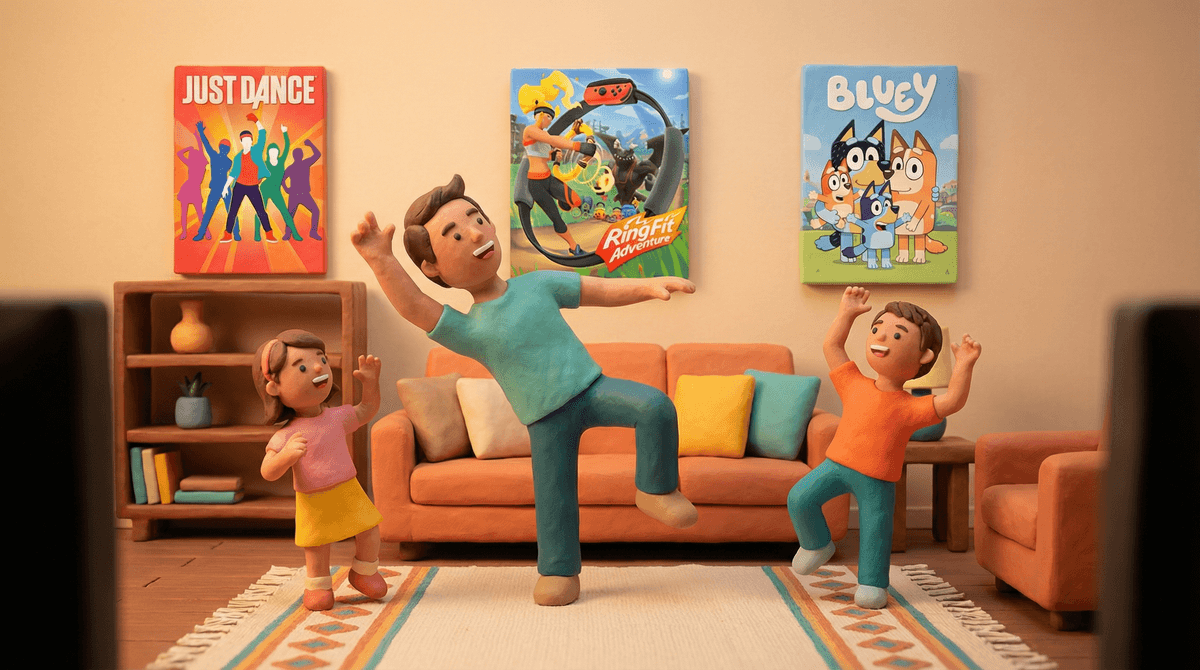
Look, I'm going to level with you: this isn't technically a guide about an app or a game or the latest YouTube drama. But here's the thing—when we talk about screen time and digital wellness, we're really talking about what our kids aren't doing when they're glued to devices. And one of the biggest casualties? Movement. Dancing. The pure, unselfconscious joy of just moving your body because it feels good.
So yeah, this is a guide about dancing and movement, but it's absolutely a digital wellness topic. Because the best "parental control" for excessive screen time isn't another app—it's making the alternative so appealing that kids actually want to do it.
The research here is honestly wild. Physical movement—especially rhythmic, music-based movement like dancing—doesn't just tire kids out (though, let's be real, that's a nice bonus). It actually:
- Rewires the brain in ways that improve executive function, emotional regulation, and memory
- Releases the same feel-good chemicals that games and social media are designed to trigger, but in a healthier, more sustainable way
- Builds body confidence that can counteract some of the comparison culture happening on Instagram and TikTok
- Creates genuine social connection without the performance anxiety of being on camera
Here's what gets me: we've somehow created a world where kids will spend hours learning TikTok dances to post online, but the idea of just dancing for fun, without an audience, feels... weird? That's backwards.
And it's not just kids. How many of us parents are modeling a lifestyle where we sit at computers all day, then sit on couches all evening, then wonder why our kids don't want to go outside? (I'm not judging—I'm right there with you. But we gotta talk about it.)
When researchers study what actually helps kids self-regulate their screen use, physical activity consistently shows up near the top of the list. Not because it's a distraction, but because it meets similar needs:
Boredom relief - Just like scrolling provides something to do, dancing gives your body and brain something engaging to focus on
Mood regulation - That dopamine hit from leveling up in Fortnite? Movement triggers similar (and more lasting) neurochemical responses
Social belonging - Group dance or movement activities create real connection, which is what kids are often seeking on social platforms
Mastery and progression - Learning new moves or improving flexibility gives that same sense of achievement that games provide through unlocks and achievements
The difference? Movement doesn't come with algorithmic manipulation, comparison metrics, or predatory monetization. It's just... good for you.
Ages 3-7: Make It Silly
- Dance parties with Bluey-style "dance mode" (literally just turn on music and go wild)
- Freeze dance, animal movement games, "dancing like a robot vs. dancing like spaghetti"
- The goal here is pure joy and zero self-consciousness—protect this stage as long as possible
Ages 8-12: Add Structure (But Keep It Fun)
- Just Dance is actually great for this age—it's a video game, yes, but it gets them moving
- YouTube dance tutorials for songs they actually like (not what we think they should like)
- Sports that emphasize movement over competition: martial arts, climbing, parkour, skating
- Family walks where you play music and occasionally break into spontaneous dance (yes, they'll think you're embarrassing; do it anyway)
Ages 13+: Respect Their Autonomy
- Gym memberships or class passes they can choose (dance, yoga, boxing, whatever speaks to them)
- Concert tickets—live music creates movement naturally
- VR games like Beat Saber that combine gaming and physical activity
- If they're into TikTok dances, great! But encourage them to learn them for themselves, not just for content
You can't force joy. If you turn movement into another chore or requirement, you've lost the plot. The goal is to make it so normal and accessible that it becomes a natural part of life.
Model it yourself. I know, I know. But kids need to see adults moving their bodies in non-exercise ways. Dancing while cooking dinner. Stretching during TV commercials. Taking walking meetings. It doesn't have to be performative or impressive.
Music is the cheat code. Very few people naturally want to "exercise," but most people will move when the right song comes on. Build playlists together. Let kids control the music sometimes. Spotify family plans exist for a reason.
Screen time isn't the enemy of movement—sedentary time is. If your kid wants to play Ring Fit Adventure or Pokemon Go, that counts. If they're watching YouTube tutorials to learn choreography, that's different from passive scrolling.
Create low-barrier opportunities. A basketball hoop in the driveway. A speaker in the kitchen. Comfortable clothes that make movement easy. The fewer obstacles between impulse and action, the more likely it'll happen.
We spend so much energy trying to limit, control, and optimize our kids' screen time. And sometimes we need to. But we also need to spend energy making the alternative so good, so accessible, so normal that screens become less appealing by comparison.
Dancing and movement aren't going to solve all your digital wellness challenges. Your kid is still going to want to play Roblox with their friends. They're still going to get sucked into YouTube rabbit holes. That's fine.
But if you can build a family culture where bodies move regularly, where music plays, where physical joy is just part of the daily texture of life? That's not a restriction—that's an expansion. That's giving them something screens can't fully replicate.
Start small. Like, really small:
-
This week: Put on one song and dance in your kitchen. Alone or with your kids, doesn't matter. Just do it.
-
This month: Find one movement activity your family can do together. A walk with a good playlist. A Just Dance tournament. A trip to a trampoline park. Anything.
-
This season: Notice when your kids are restless, bored, or dysregulated, and experiment with movement as a first response instead of screens. Not as punishment, just as an option.
You're not trying to raise Olympic athletes. You're just trying to raise humans who remember that their bodies are good for more than holding their heads up while they scroll.
That's it. That's the whole thing.
Now go put on a song and see what happens.