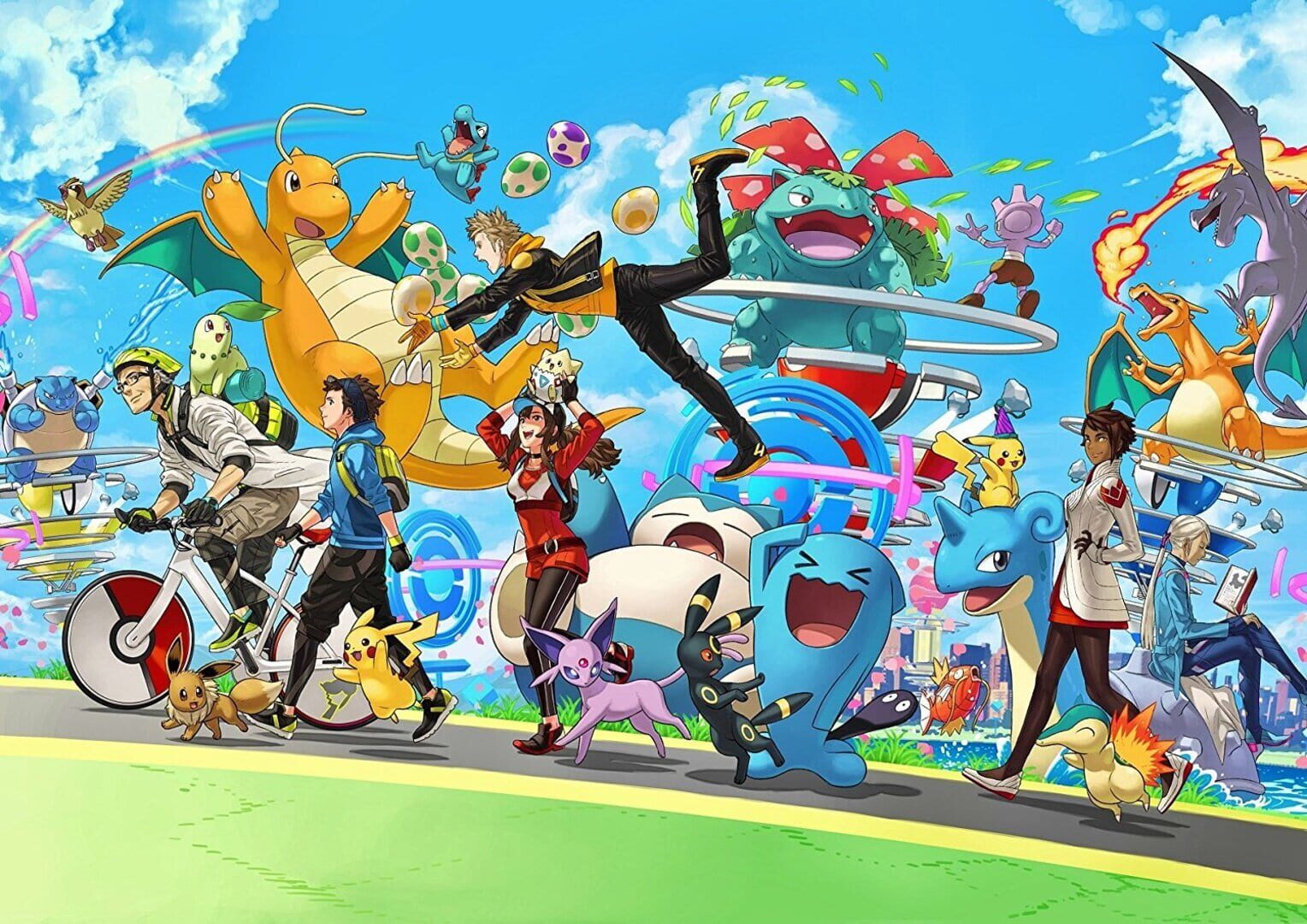

Pokémon GO is the "old reliable" of the mobile world. Even in 2026, it remains the only app that can reliably convince a kid that a three-mile hike is a reward rather than a chore. If you have a child who would usually prefer to spend their Saturday in a dark room, this is the ultimate "stealth exercise" tool. It turns your boring neighborhood sidewalk into a high-stakes scavenger hunt, and honestly, it’s still the gold standard for active video games.
The Inventory Management Simulator
While the marketing is all about "catching 'em all," the actual day-to-day gameplay is about 40% inventory management. Your kid will spend a surprising amount of time agonizing over which digital monsters to "transfer" (read: delete) to make room for new ones. This is actually a decent lesson in resource management, but it can also lead to the "just five more minutes" trap. They aren't just playing; they're organizing.
If your kid is the type who loves the meticulous sorting and collecting of Minecraft, they’ll find a similar rhythm here. We see a lot of overlap in active games for kids who love Minecraft, where the drive to "mine" resources translates perfectly to hitting every Pokestop on the block.
The "Free" Price Tag
Don't let the $0 download fee fool you. Niantic has mastered the art of the "nudge." Whether it’s a $1 ticket for a special Saturday event or the constant pressure to buy more "Remote Raid Passes" so they can play with friends from the couch, the game is designed to be a slow leak in your bank account.
The most aggressive move is the limited-time nature of everything. If you miss a "Community Day," that specific rare Pokemon might not show up again for a year. That FOMO (fear of missing out) is what drives kids to ask for "just one pack of PokeCoins." It’s worth sitting down and managing in-game purchases before they get deep into the raid circuit.
Navigating the Real World
The safety concerns with this game aren't about "stranger danger" in a chat room—there isn't even a built-in chat for kids. The risk is much more physical. It’s the "distracted walking" that became a meme years ago and is still a reality today. Kids will walk into a signpost or, worse, toward a busy intersection because they saw a silhouette of a rare "Larvitar" on their radar.
You also have to deal with the fact that the game’s "Gyms" and "Pokestops" are fixed locations. Sometimes that’s a beautiful public library; sometimes it’s a slightly sketchy parking lot or a neighbor’s driveway. You’ll want to set clear "geofence" rules about where they are allowed to go solo. For a deeper dive on setting those boundaries, check out our guide on making Pokémon GO safer.
Why It Still Works
Despite the aggressive monetization and the data tracking, Pokémon GO is one of the few "phygital" experiences that actually delivers on the promise. When you see twenty people of all ages gathered at a local park for a "Raid Hour," it feels like a genuine community moment that most apps can't replicate. It’s a great bridge for balancing screen time with physical play because the screen is the tool, but the park is the playground. Just keep an eye on the "Niantic Kids" dashboard to keep the privacy settings tight, and you've got a solid reason to get the whole family outside.