

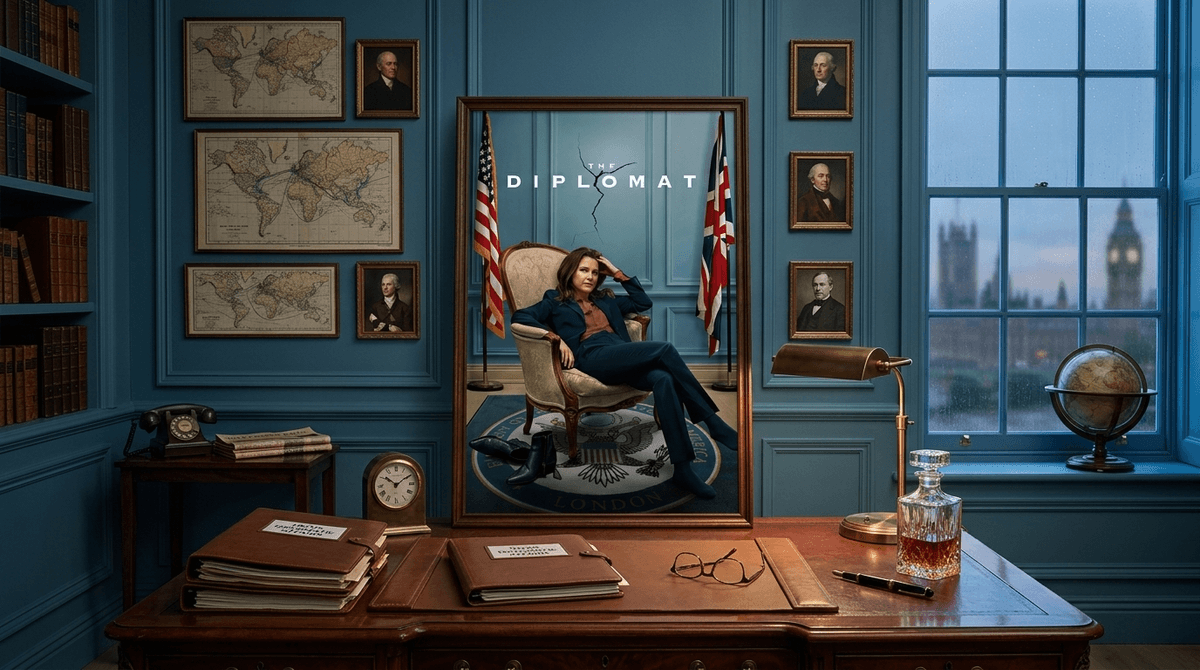
The Diplomat is a high-speed, high-stakes political thriller that feels like The West Wing met Veep and they both started swearing like sailors. It is fantastic television, but for a family watch, it is strictly for the high school crowd—specifically the ones who can keep up with a nuclear-level plot and don't mind a "fuck" every thirty seconds.
TL;DR
The Diplomat is a sharp, fast-paced political drama starring Keri Russell that is perfect for teens interested in international relations or high-stakes crisis management. It earns its TV-MA rating primarily through constant profanity and complex adult relationships rather than graphic violence. If your high schooler liked The West Wing or Madam Secretary, this is the natural, grittier next step.
The show follows Kate Wyler (Keri Russell), a career diplomat who wants to go to Afghanistan but gets diverted to the Court of St. James as the U.S. Ambassador to the UK. It’s a "fish out of water" story if the fish was a brilliant, unbrushed-hair strategist and the water was a pool of British aristocrats and ticking time bombs.
The dialogue is the main attraction. It’s dense. If you look at your phone for three minutes, you will have no idea why the Prime Minister is suddenly threatening to invade a sovereign nation. For a high schooler who enjoys being treated like the smartest person in the room, this is a feature, not a bug. It’s a show that respects its audience’s intelligence, which is why it lands so well with 16-year-olds who are tired of the sanitized drama in typical "teen" media.
Let’s be direct: the profanity in The Diplomat is atmospheric. It isn't just a few stray words; it is the primary linguistic currency of the characters. They swear when they’re angry, when they’re happy, and when they’re describing a trade agreement.
If your family has a "no-go" policy on the F-word, this show is a non-starter. But if you’ve already crossed that bridge with your high schooler, the swearing actually serves a purpose. It makes the world feel urgent and the characters feel like real, stressed-out humans rather than polished statues. Beyond the language, the "adult" content is mostly focused on the complicated, often messy marriage between Kate and her husband Hal (Rufus Sewell). There is some sexual content, but it’s usually more about the power dynamics and the emotional fallout than being graphic for the sake of it.
The relationship between Kate and Hal Wyler is one of the most interesting things on TV right now. Hal is a legendary diplomat who is now "the spouse," a role he is spectacularly bad at. He’s charming, manipulative, and constantly undermining Kate while trying to "help" her.
For a teen, watching this isn't just about entertainment; it’s a masterclass in seeing how professional and personal lives bleed together. It’s a great entry point for talking about partnership, ego, and what it looks like to support a spouse’s career when you’re used to being the one in charge.
As of June 2026, we’ve seen Kate navigate international crises and domestic betrayals through three intense seasons. Season 4 is set to drop later this year, and based on the cliffhangers involving Allison Janney’s Vice President Grace Penn, the stakes will likely shift from "preventing a war" to "surviving the internal politics of the White House." The trailer suggests we'll see Kate pushed even further out of her comfort zone, potentially moving from the embassy to a more permanent—and more dangerous—role in Washington.
If your kid is hooked on the "room where it happens" energy of The Diplomat, don't let the momentum die. There are plenty of other ways to feed that interest in strategy and power.
The gold standard. It’s more optimistic than The Diplomat, but the walk-and-talk energy is identical. It’s the best way to learn how the U.S. government is supposed to work, even if it rarely does.
If the British setting and the intersection of "duty vs. desire" were the parts that clicked, The Crown is the move. It’s slower, but the political maneuvering is just as sharp.
If they loved the cynicism and the creative swearing, Veep is the unfiltered version. It’s a comedy, but many real-world D.C. insiders say it’s the most accurate depiction of how politics actually functions.
For the kid who wants to actually do the diplomacy, this is the ultimate strategy game. You manage resources, negotiate treaties, and try not to get nuked by Gandhi. It’s the perfect companion to a political thriller obsession.
Watching this with a high schooler? Use these to turn the "brain rot" into a bridge:
- The Ethics of "The Lesser Evil": Kate often has to choose between two bad options. Ask: "When is it okay to lie to the public to prevent a larger disaster?"
- The Hal Problem: Hal is brilliant but toxic. Ask: "Is Hal actually helping Kate, or is he just addicted to the game?"
- Soft Power vs. Hard Power: The show highlights how a dinner party can be more effective than a drone strike. Ask: "Why does the U.S. spend so much on embassies if we have the biggest military?"
The biggest friction point isn't the politics—it’s the pacing. This is not a "background noise" show. If you’re watching this with your teen, put the phones away. The plot moves via fast-paced dialogue, and if you miss one conversation about a "non-paper" or a "backchannel," the rest of the episode won't make sense. It’s a great show for building active listening and narrative complexity skills, but it requires buy-in.
Q: Is The Diplomat okay for a 14-year-old? It depends on the 14-year-old. Content-wise, it's mostly profanity and complex relationships. The real barrier is the "boredom factor"—if they aren't interested in geopolitics, they'll be lost in ten minutes. If they are, it's a great "step up" show.
Q: How much swearing is actually in it? A lot. It’s one of the "f-bomb-iest" shows on Netflix. If that’s a dealbreaker for your household, skip it.
Q: Do I need to know about international politics to enjoy it? No, the show does a decent job of explaining the stakes as it goes, but you do need to pay attention. It’s a show that rewards focus.
The Diplomat is top-tier prestige TV that treats its audience like adults. For a high schooler interested in power, strategy, or just a really well-written thriller, it’s a winner. Just be prepared for the language—and the inevitable hour-long debrief about why the UK Prime Minister is acting like a lunatic.
- Check out our digital guide for high schoolers for more mature-rated picks that actually respect their intelligence.
- Explore the best shows for kids for alternatives if the TV-MA rating is a bit too much for your family right now.
- Find more shows like The Diplomat
