

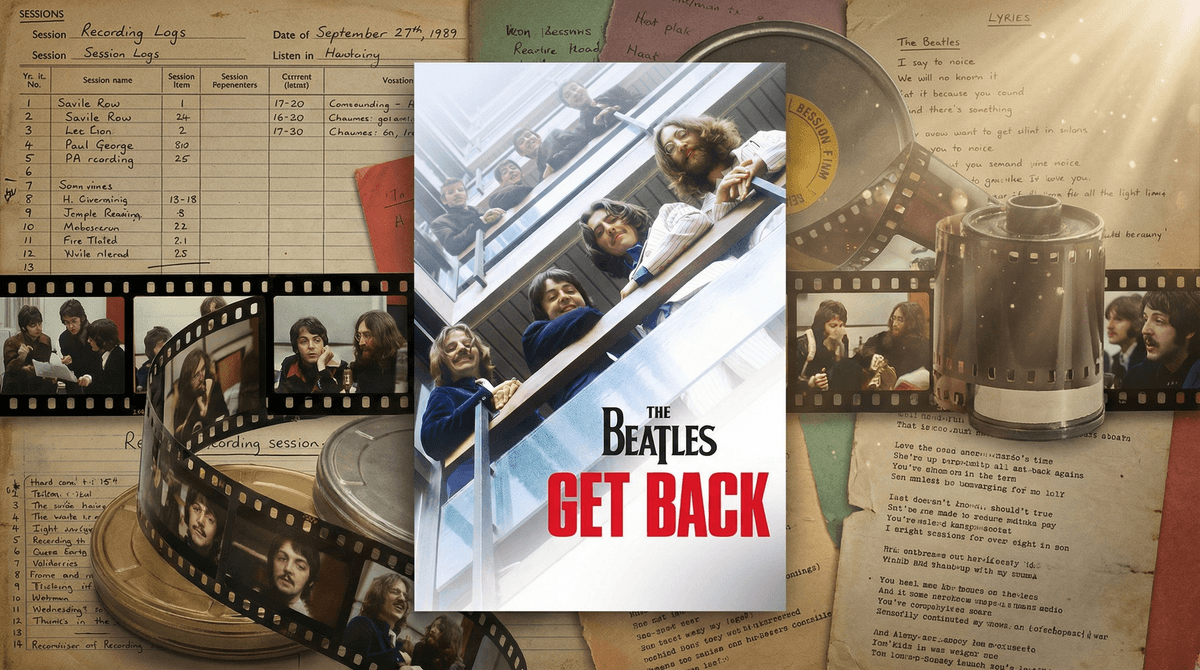
The Beatles: Get Back – Is It Appropriate for Kids?
Peter Jackson's The Beatles: Get Back is a fascinating documentary for music-loving families, but it's long (nearly 8 hours across three episodes), slow-paced, and features constant cigarette smoking, occasional strong language, and adult conversations. Best for ages 10+ with genuine interest in music history or The Beatles specifically. Younger kids will be bored within 15 minutes unless they're already superfans.
Content concerns: Frequent smoking, some profanity (mostly British slang), adult themes about business disputes and relationship tension, zero action or narrative structure.
The upside: Incredible fly-on-the-wall access to creative genius, surprisingly funny moments, and a masterclass in collaboration and problem-solving under pressure.
The Beatles: Get Back is Peter Jackson's 2021 documentary series on Disney+ that chronicles The Beatles in January 1969 as they attempt to write, rehearse, and perform an entire album's worth of new material in just three weeks. It's built from 60 hours of never-before-seen footage shot by Michael Lindsay-Hogg for the original 1970 film Let It Be.
The result is nearly 8 hours of footage across three feature-length episodes showing John, Paul, George, and Ringo working through creative differences, goofing around, writing songs that would become classics, and ultimately delivering the legendary rooftop concert atop Apple Corps headquarters in London.
This isn't a traditional documentary with talking heads and narration. It's raw, unfiltered footage of four guys in a room (and later a studio) making music. Think of it as reality TV from 1969, except the reality is watching arguably the greatest band in history at a pivotal moment.
If your kid is into music—like actually into it, not just listening to Taylor Swift on repeat (though no shade there)—this documentary offers something genuinely unique: watching creativity happen in real time.
You see Paul McCartney literally invent "Get Back" from nothing, humming a bass line and building it into a complete song within minutes. You watch George Harrison quietly work out the guitar parts to "Something" in the background while the others mess around. You witness the moment "Let It Be" goes from a fragment to a finished piece.
For kids who play instruments, write songs, or are curious about the creative process, this is gold. It demystifies genius—these aren't untouchable legends, they're four guys figuring it out, making mistakes, getting frustrated, cracking jokes, and occasionally having breakthroughs.
The documentary is also surprisingly funny. There's a running bit where Paul does impressions, moments of pure silliness, and the band's chemistry is infectious even 50+ years later.
Smoking. So Much Smoking.
Everyone smokes. Constantly. In every scene. It's 1969, so this was normal, but it's jarring to modern eyes. If you're sensitive to seeing cigarette use on screen—or worried about your kid seeing it normalized—this is something to consider. There's no way around it; it's in virtually every frame.
Language
The language is mostly fine by today's standards, but there are occasional British profanities that might catch you off guard. You'll hear "bloody," "sod off," some casual use of "Christ" and "God," and a few scattered stronger words. It's not constant, and it's never aggressive or mean-spirited, but it's there.
The American rating is TV-14, which feels about right. Nothing that would shock a middle schooler, but maybe not ideal for younger elementary kids.
Adult Themes and Tension
The documentary doesn't shy away from the business and personal conflicts happening within the band. You see George temporarily quit the band. You hear discussions about money, management disputes, and the strain of fame. There's subtext about relationships—Yoko Ono is present for much of the filming, which was controversial at the time and is addressed.
None of this is explicit or inappropriate, but it's adult subject matter. Younger kids won't have the context to understand why these tensions matter or what's at stake. They'll just see guys being occasionally snippy with each other.
Pacing and Length
This is the biggest barrier for most kids: nothing happens. There's no plot, no villain, no stakes that a child can grasp. It's three feature-length films of people sitting around, talking, playing music, and working through creative problems.
Even many adults find it slow. Kids without a pre-existing investment in The Beatles or music history will be bored out of their minds within 20 minutes.
Ages 6-9: Probably not. Even if your kid loves music, the length, pacing, and adult themes make this a tough sell. The smoking alone will prompt questions you might not want to navigate yet. If they're curious, show them the rooftop concert clips on YouTube instead—it's the highlight anyway.
Ages 10-12: This is where it becomes viable if your child has genuine interest in The Beatles, music history, or the creative process. Watch it together so you can provide context about the era, the band's significance, and what's happening behind the scenes. Be prepared to pause and explain, or to bail if they're not engaged.
Ages 13+: Totally appropriate for teens who are interested. The TV-14 rating is spot-on. Teens will appreciate the humor, understand the interpersonal dynamics, and potentially find inspiration in watching creative collaboration at the highest level. This is also a great age to discuss the smoking as a historical artifact and why it was so normalized then vs. now.
It's Educational (Really)
Beyond the music, this documentary offers lessons in collaboration, conflict resolution, and creative problem-solving. You watch four people with strong personalities and different working styles navigate disagreements, compromise, and ultimately create something extraordinary together. That's valuable stuff.
There's also historical and cultural context—discussions about Vietnam, the state of rock music in 1969, and the pressures of fame. For older kids, it's a window into a pivotal moment in 20th-century culture.
You Don't Have to Watch All 8 Hours
Seriously. Even as a Beatles fan, 8 hours is a commitment. Episode 3 (which includes the rooftop concert) is the most engaging and works as a standalone. You can also skip around to specific songs or moments if you're just looking for highlights.
Disney+ has timestamps for when specific songs are performed, which makes it easier to curate the experience for your family.
It's a Different Kind of Documentary
If your kid is used to fast-paced Netflix documentaries with dramatic music and cliffhangers, this will feel alien. Jackson's approach is observational and patient. There's no narrator telling you what to think or feel. It's a fly-on-the-wall experience, which is part of its charm but also part of why it's not for everyone.
If your kid is interested in music documentaries but Get Back feels like too much, consider:
- Summer of Soul (PG-13): A vibrant documentary about the 1969 Harlem Cultural Festival. More dynamic pacing, incredible performances, and important cultural history.
- Coco (PG): Not a documentary, but a beautiful film about music, family, and creativity that's appropriate for younger kids.
- The Beatles: Eight Days a Week (PG-13): Ron Howard's documentary about the band's touring years. More traditional structure, shorter runtime, still some smoking but less pervasive.
For kids interested in the creative process more broadly, check out our guide to documentaries about creativity and making things.
The Beatles: Get Back is a remarkable documentary that offers unprecedented access to creative genius, but it's not for every kid—or even every adult. The length, pacing, constant smoking, and adult themes make it best suited for ages 10+ with genuine interest in music or The Beatles specifically.
If your child is a budding musician, already loves The Beatles, or has shown interest in "how things are made," this could be a meaningful watch-together experience. You'll want to co-view to provide context and be ready to fast-forward through slower sections.
For younger kids or those without existing interest, skip it. There are more engaging ways to introduce them to great music and the creative process. But for the right kid at the right age? This is a gift—a chance to witness history and see that even legends are just people figuring it out one day at a time.
Worth noting: If you make it through all 8 hours together, you'll have "Get Back" stuck in your head for approximately three weeks. You've been warned.
- Start with Episode 3 to see if it clicks with your family before committing to the full series
- Watch the rooftop concert on YouTube as a litmus test for interest
- Check out our guide to music documentaries for families for more options
- Curious about other Beatles-related content for kids?
Have questions about whether this is right for your specific kid? See if Get Back is age-appropriate for your child .
.