

It's that thing we all do when we realize our kid has been watching Bluey for three hours straight and we suddenly panic-Google "is my child's brain melting?"
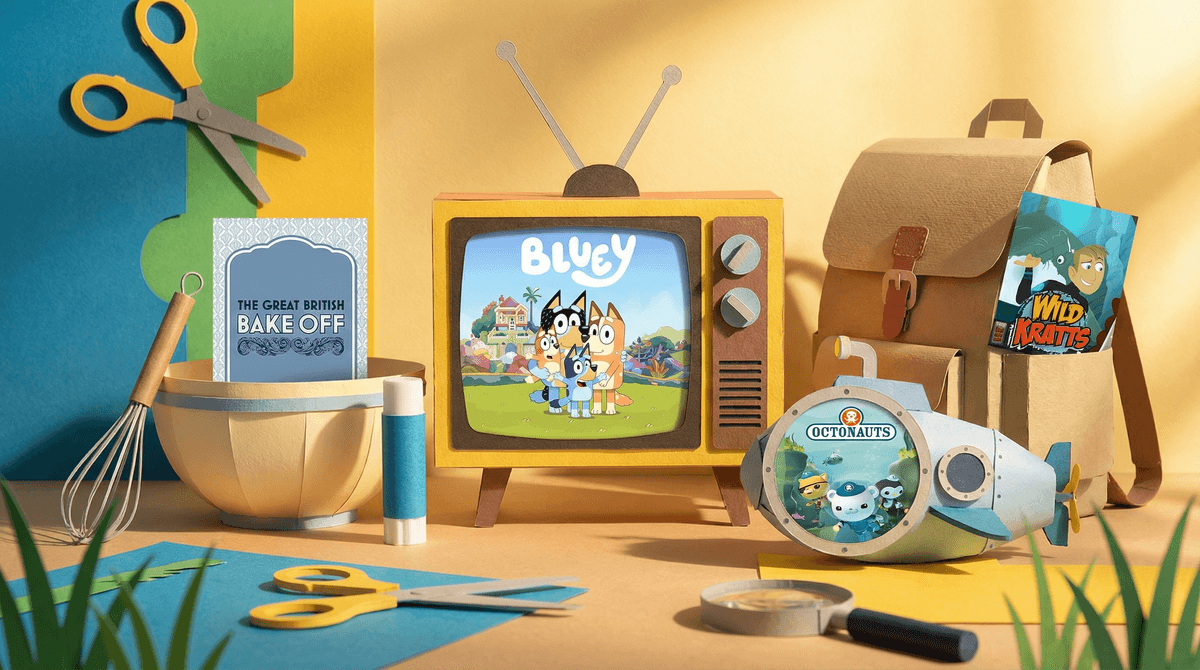
But here's the thing: summer TV doesn't have to be the enemy. The magic happens when you treat shows as jumping-off points rather than babysitters. We're talking about using what kids watch as inspiration for what they do next — turning passive screen time into active family time.
This isn't about becoming a Pinterest parent who builds elaborate crafts after every episode. It's about being intentional with a few simple connections that make screen time feel less like a guilt trip and more like part of a balanced summer.
Kids' brains are wired to engage with stories. When they watch something compelling, they're not just zoning out — they're absorbing characters, plots, problems, and solutions. The issue isn't the watching itself; it's when the engagement stops the moment the screen turns off.
When you connect what they watch to what they do, you're:
- Extending the learning and creativity beyond the couch
- Showing them that ideas can move between digital and physical worlds
- Creating natural conversation opportunities (way better than "how was your day?")
- Building memories that aren't just "remember that summer we watched a lot of TV?"
Plus, let's be real: summer is long. You're going to use TV. You might as well make it work for you.
Step 1: Choose shows with built-in activity potential
Not all TV is created equal for this. Bluey is basically a 7-minute instruction manual for imaginative play. The Great British Baking Show makes kids want to bake. Avatar: The Last Airbender inspires martial arts interest and philosophical conversations about balance.
Meanwhile, some shows are just... empty calories. Not every show needs to be educational, but if you're going to build activities around what they watch, pick shows that naturally spark curiosity or creativity.
Step 2: Keep a running list of "inspired by" ideas
Stick a note in your phone or a piece of paper on the fridge. When your kid mentions something from a show, jot it down. "Wants to make slime like in Nailed It." "Interested in space after A World Beyond." "Won't stop talking about the dogs in Bluey."
You don't have to act on every idea immediately. But when you're stuck on a random Tuesday afternoon, you've got a menu of things you know they're actually interested in.
Step 3: Make it low-pressure
The activity doesn't have to be elaborate. If they watched a cooking show, you don't need to recreate a three-tier cake. Make boxed brownies together. If they're into Wild Kratts, you don't need to plan a zoo trip — go look for bugs in the backyard for 15 minutes.
The goal is connection and engagement, not Instagram-worthy productions.
Ages 3-6:
- Bluey → Play the games they play in episodes (Keepy Uppy, Magic Xylophone, etc.)
- Octonauts → Bath time ocean rescue missions with toys
- Tumble Leaf → Nature walks to collect leaves and rocks
- Daniel Tiger's Neighborhood → Practice the songs/strategies in real situations
Ages 7-10:
- The Great British Baking Show → Weekly baking challenges (even just from a mix)
- Avatar: The Last Airbender → Martial arts videos on YouTube, or just making up "bending" moves in the yard
- Nailed It → Attempt the disasters, laugh together
- Wild Kratts → Research the animals featured, visit local nature centers
Ages 11-14:
- The Great British Baking Show → Actually follow recipes, experiment with techniques
- Alone → Backyard "survival" challenges (build a shelter, start a fire safely, etc.)
- Chef's Table → Try cooking cuisines from featured chefs
- Our Planet → Environmental projects, documentaries leading to activism
This isn't about eliminating screens. It's about making screen time one ingredient in a fuller summer experience. Some days, they'll just watch TV. That's fine. The goal is to create enough "inspired by" moments that screens feel like part of the mix, not the whole meal.
Let kids lead. If you're forcing activities they don't care about, you've lost the plot. The whole point is to follow their natural interests sparked by what they're already watching. If they're not interested in baking after Nailed It, don't push it. Find what does spark something.
Quality matters more than quantity. One good 30-minute show that leads to an hour of backyard play is infinitely better than four hours of random YouTube Kids content that leads nowhere.
Co-viewing is underrated. When you watch with them (at least sometimes), you understand what's capturing their attention. You can ask better questions. You can suggest better activities. And honestly, some of these shows are genuinely good. Bluey will make you cry. The Great British Baking Show is soothing. Avatar holds up for adults.
Summer TV doesn't have to be a guilty compromise. When you treat shows as inspiration rather than just entertainment, screen time becomes a launchpad instead of a black hole.
You're not trying to be perfect. You're trying to be intentional. Pick a few shows with activity potential, keep a running list of ideas, and act on them when it feels natural. Some days will be heavy on screens, some days won't. That's called summer.
The goal isn't to eliminate TV. It's to make sure that when your kids look back on summer, they remember more than just what they watched.
- Audit your current rotation: Look at what your kids are actually watching. Which shows naturally inspire activities? Which ones are just... there?
- Try one "inspired by" activity this week: Pick the easiest, most obvious one. Don't overthink it.
- Check out alternatives to YouTube Kids if you're looking for more purposeful viewing options
- Set up a simple system: Whether it's a note in your phone or a conversation at dinner, create a way to capture what your kids are interested in from what they watch
And if you want to dig deeper into specific shows and whether they're worth your family's time, explore our media ratings and parent reviews — because not all TV is created equal, and you deserve to know what's actually worth watching.