

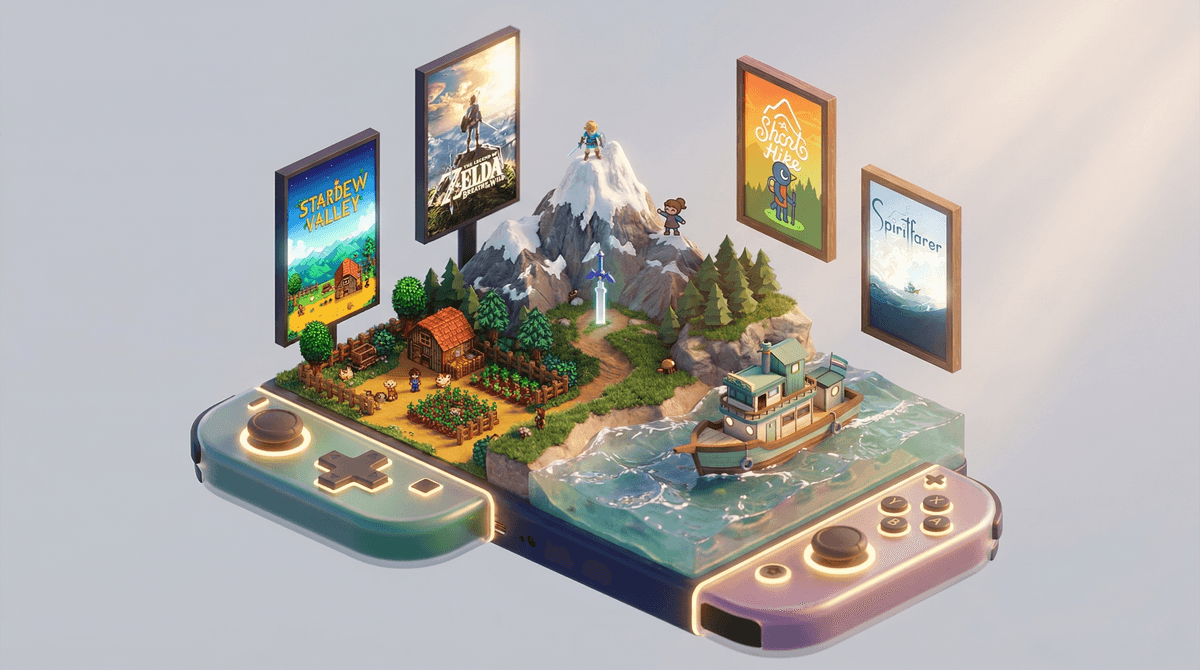
Story-driven games are exactly what they sound like—video games where the narrative is the star of the show. Think of them as interactive books or playable movies where your kid isn't just button-mashing through levels, but actually making choices that affect characters, plot, and outcomes.
On the Nintendo Switch, these games range from cozy adventures like Stardew Valley to epic quests like The Legend of Zelda: Breath of the Wild. The Switch is particularly great for story games because you can play on the TV together as a family or your kid can curl up with it in handheld mode—making it feel more like reading than traditional "gaming."
Here's the thing that might surprise you: about 55% of families in our community have gaming consoles, and many are discovering that not all screen time is created equal. Story-driven games occupy this interesting middle ground between passive entertainment and active reading.
Kids are drawn to story games for the same reason they binge-read a good book series—they get invested in the characters and want to know what happens next. Games like Spiritfarer (about helping spirits pass on) or A Short Hike (a gentle exploration game) create emotional connections that stick with them.
For parents, these games offer something rare: screen time you might actually feel good about. They encourage reading (many have substantial dialogue), problem-solving, and even empathy as kids navigate moral choices. Plus, they have natural stopping points—you can't just mindlessly play for hours like you might with Fortnite.
The Switch's portability also means kids can play during car rides or downtime, and the parental controls actually work well for setting time limits. (Our community data shows families average about 4.2 hours of screen time per day across all devices, with weekends slightly higher at 5 hours—story games can be a more intentional part of that mix.)
Ages 6-9:
- Animal Crossing: New Horizons - Building a community on an island with adorable animals
- Pokemon Legends: Arceus - More story-focused than traditional Pokemon games
- Luigi's Mansion 3 - Spooky but not scary, with charm and humor
Ages 10-13:
Ages 14+:
- The Witcher 3 - Complex fantasy world (mature themes, parental discretion advised)
- Fire Emblem: Three Houses - Strategy game with deep character relationships
- Xenoblade Chronicles - Epic JRPG with philosophical themes
The reading factor is real. Many story-driven games have more text than your kid's assigned reading for English class. Ni no Kuni has a full novel's worth of dialogue. This isn't passive consumption—they're actively reading, comprehending, and making decisions based on what they understand.
Not all story games are created equal. Some have mature themes that might not match your family values. The ESRB ratings are helpful, but you can also dig deeper into specific content to make informed choices.
Co-playing is underrated. Story games are perfect for playing together. You can take turns making decisions, discuss character motivations, or just enjoy watching the story unfold together. It transforms "screen time" into "story time."
They cost money upfront, but... Unlike Roblox or Fortnite with their endless microtransactions, most story-driven games are one-time purchases. You pay $30-60 and get the complete experience. No surprise charges, no pressure to buy skins or battle passes.
Story-driven games on the Switch aren't going to replace books (and they shouldn't), but they're not the enemy of literacy either. They're a different medium for storytelling—one that happens to be interactive and engaging for kids who might otherwise be doomscrolling TikTok or watching random YouTube content.
With 55% of families in our community already using gaming consoles, the question isn't really "should we allow gaming?" but rather "what kind of gaming makes sense for our family?" Story-driven games offer a middle path—they're still screen time, but they're intentional screen time with narrative depth, emotional resonance, and actual endings.
- Check your Switch's parental controls and set time limits that work for your family
- Browse the Nintendo eShop together and read reviews on sites like Common Sense Media
- Consider starting with a shorter game (like A Short Hike, which takes 1-2 hours) to test the waters
- Explore how story games compare to other gaming options for your family's needs
The goal isn't perfection—it's making choices that align with your family's values while acknowledging that gaming is part of modern childhood. Story-driven games might just be the bridge that makes that balance a little easier to find.