

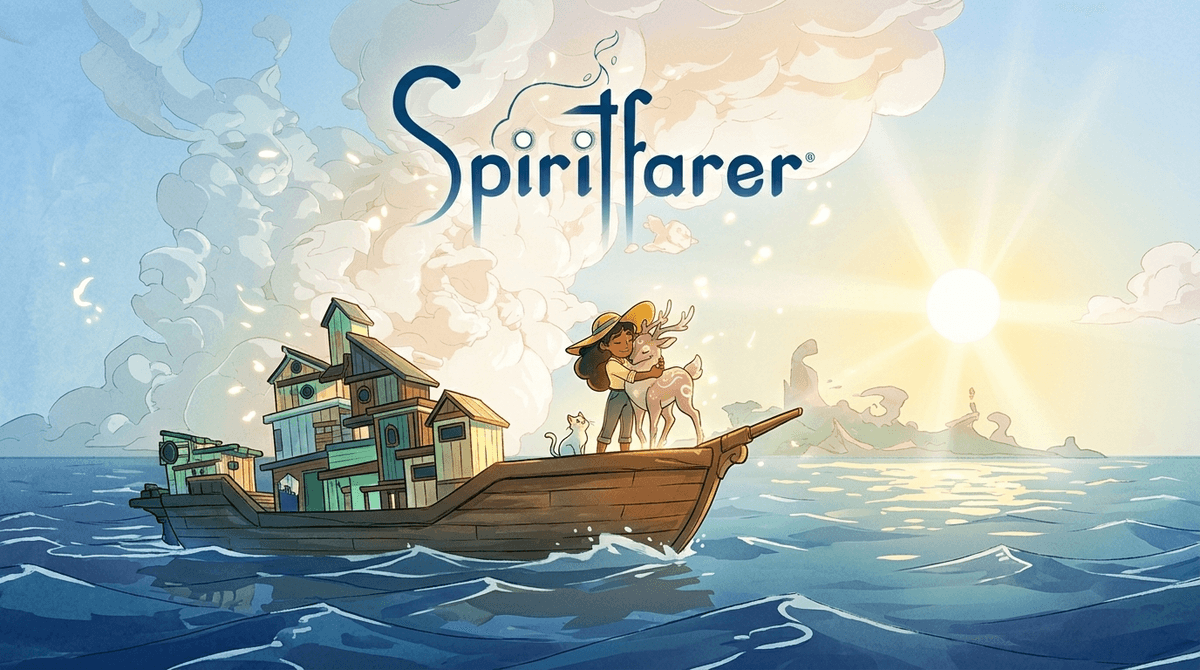
TL;DR: Spiritfarer is a rare masterpiece that manages to be a "cozy" management sim while tackling the heaviest topic there is: death. It’s a beautiful, non-violent way to introduce themes of grief and empathy to kids (ideally ages 10+). Think Animal Crossing: New Horizons meets Coco, but on a boat.
If your kid is into "cozy games," you’ve probably seen them hunched over a Switch, obsessively decorating a farm in Stardew Valley or organizing a digital room in Unpacking. Usually, these games are about low-stakes vibes—maximum relaxation, zero "brain rot," and definitely no one getting "eliminated" in a battle royale.
But then there’s Spiritfarer.
It looks like a Studio Ghibli movie come to life. It’s got a gorgeous hand-drawn art style, a cat you can pet, and a boat you can customize. But underneath the "aesthetic" exterior, it’s doing something much more profound. It’s teaching kids how to say goodbye.
In a world where most video games treat death as a "Game Over" screen or a reason to respawn and try again, Spiritfarer treats death as a transition that requires care, chores, and—most importantly—hugs.
You play as Stella (and a second player can play as her cat, Daffodil), who has taken over the job of the mythical Charon. You are the new "Spiritfarer." Your job is to sail around a vast ocean, find lost souls, bring them onto your massive ferry, and take care of them until they are ready to pass through the "Everdoor" into the afterlife.
The gameplay loop is familiar to anyone who’s played Minecraft or Terraria. You’ll spend hours:
- Building houses on your boat for your spirit friends.
- Fishing, farming, and cooking their favorite meals.
- Exploring islands to find resources like wood and ore.
- Managing the needs and moods of your passengers.
But here’s the kicker: eventually, every character you’ve bonded with will tell you they are ready to go. You then have to sail them to the Everdoor, have one last conversation, give them one last hug, and watch them leave. It is, quite frankly, an emotional gut-punch, but in the best possible way.
It’s easy to assume kids only want the high-octane chaos of Fortnite or the weird, surrealist humor of "Skibidi Toilet" memes, but there’s a reason Spiritfarer has a massive following among Gen Alpha and Gen Z.
- The "Cozy" Loop: There is something deeply satisfying about the organization and management. Building the perfect kitchen or figuring out how to fit a sheep pen on a boat satisfies that same itch as Roblox building sims.
- Emotional Agency: Kids are often shielded from the reality of loss. This game gives them a safe, controlled environment to experience "sad" feelings. It’s not scary-sad; it’s bittersweet-sad.
- The Characters: The spirits are animals—a giant deer, a grumpy frog, a sophisticated snake. They are quirky, flawed, and relatable. They have backstories that feel real, which makes the caretaking aspect feel like it actually matters.
We talk a lot about "digital wellness" in terms of time limits and privacy settings, but there’s an emotional side to digital wellness too. Spiritfarer is the antithesis of "brain rot." It requires focus, empathy, and patience.
Most games reward "taking"—taking resources, taking lives, taking territory. Spiritfarer rewards giving. You can’t progress unless you listen to these characters and figure out how to make their final days comfortable. It’s a 30-hour masterclass in empathy.
If your family has recently dealt with the loss of a pet or a grandparent, this game can be a surprisingly effective bridge to start conversations that are otherwise really hard to initiate.
The game is rated ESRB T for Teen, but don’t let that scare you off. The rating is primarily for:
- Mild Swearing: You’ll see the occasional "damn" or "hell."
- Complex Themes: Some characters deal with heavy backstories involving illness, infidelity, or past regrets.
- Alcohol/Tobacco: Some characters smoke or mention drinking.
For most 10-to-12-year-olds, this is totally manageable. If your kid is younger (say 7-9), I’d recommend playing it together in co-op mode. You can be Stella, they can be Daffodil the cat. It allows you to navigate the heavier dialogue together and explain things as they come up.
Check out our guide on how to navigate heavy themes in media
1. It’s a "Slow" Game
If your kid is used to the dopamine hit of Brawl Stars, they might find the first hour of Spiritfarer boring. It takes time to get the boat moving and meet your first spirit. Encourage them to stick with it until they get Gwen (the deer) on the boat. That’s when the heart of the game reveals itself.
2. No Microtransactions (Hooray!)
Unlike Roblox, where your kid is constantly tempted to drain your bank account for "limited" items, Spiritfarer is a one-and-done purchase. Even better? If you have a Netflix subscription, it’s actually included in Netflix Games, meaning you can play the full version on a tablet or phone for no extra cost.
3. It Can Be Genuinely Sad
Be prepared for your kid to come to you with watery eyes after they take a character to the Everdoor. This isn't a bug; it's a feature. It’s a great moment to put down your own phone and just listen.
Instead of asking "Did you win?", try these prompts:
- "Which spirit is on your boat right now? What’s their favorite food?"
- "Was it hard to say goodbye to Gwen/Alice/Summer? Why do you think they were ready to go?"
- "Stella spends a lot of time taking care of others. How does she take care of herself?" (The answer is usually "hugging the cat," which is a great life lesson).
Spiritfarer is one of those rare digital experiences that leaves you better than it found you. It’s not just "not bad" for your kids; it’s actively good for their emotional intelligence.
If you’re looking for a break from the "Ohio" memes and the frantic energy of competitive gaming, this is the "cozy" reset your family’s digital diet might need.
Next Steps:
- Check it out: Spiritfarer is available on Switch, PS4/5, Xbox, PC, and mobile via Netflix.
- Explore more: If they love the vibe, look into cozy games for kids.
- Compare: Read our guide on Stardew Valley vs. Animal Crossing to see which management style fits your kid best.
Learn more about the "Cozy Game" trend and why it's taking over