

Pokémon Legends: Arceus: A Parent's Guide to This Open-World Adventure
TL;DR: Pokémon Legends: Arceus is rated E for Everyone but plays more like a T-rated adventure. It's significantly harder than traditional Pokémon games, with a darker tone and more complex mechanics. Best for ages 10+ who can handle frustration and strategic thinking. If your kid loved Pokémon Sword and Shield, this might surprise them with its difficulty spike.
If your kid has been catching Pokémon since they could hold a controller, Legends: Arceus is going to feel like a completely different beast (pun intended).
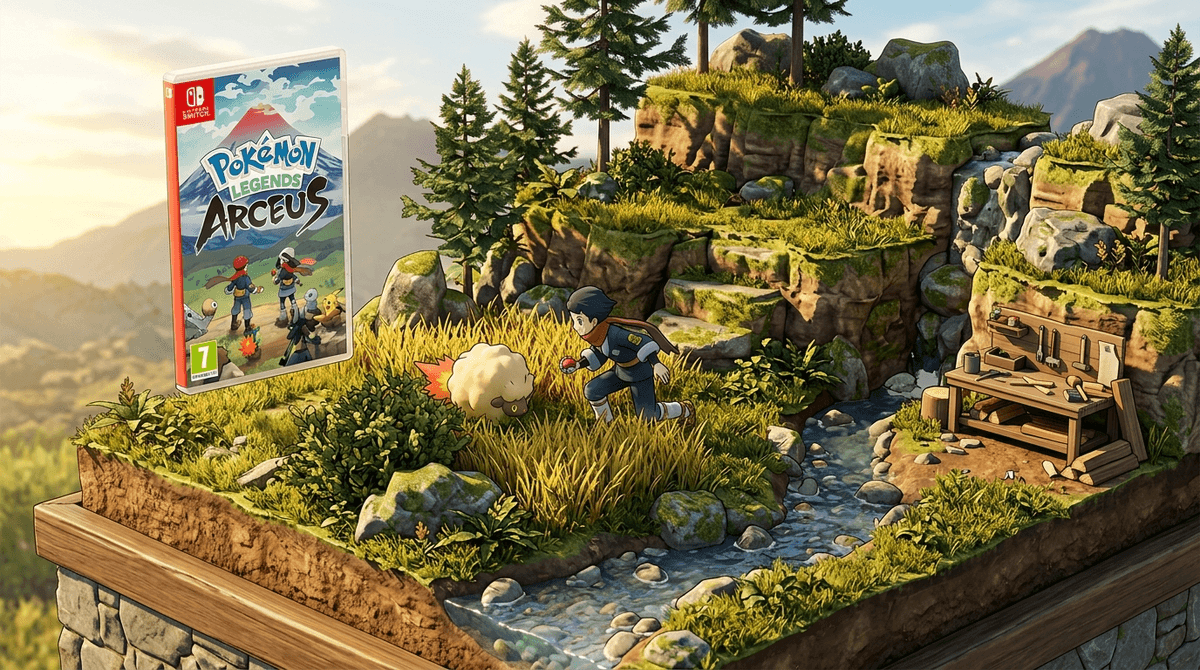
This isn't the hand-holding, turn-based battling your child is used to. Nintendo took the Pokémon formula and basically threw it in a blender with The Legend of Zelda: Breath of the Wild. You're dropped into a semi-open world set in ancient Sinnoh (before it was called Sinnoh), and you're actually exploring, crafting, and—here's the kicker—Pokémon can attack YOU directly.
That's right. Those cute little creatures can chase your character down and pummel you. It's a whole vibe shift from the safe, structured gym battles of previous games.
According to our community data, about 55% of families report their kids play video games, and many of those are Pokémon fans. But parents on forums and review sites consistently flag one thing: this game is harder.
The ESRB rates it E for Everyone with "Mild Fantasy Violence," but Common Sense Media parent reviews suggest it's better suited for ages 8 and up—and honestly, that's conservative. Reddit parents with 7 and 9-year-olds report their kids getting frustrated with the difficulty curve, especially if they haven't played more complex action-adventure games.
Here's what makes it tougher:
- Real-time dodging: Your character needs to physically avoid Pokémon attacks. No more just selecting moves from a menu while standing safely on the sidelines.
- Resource management: You're crafting Poké Balls, gathering materials, managing inventory. It's more survival-lite than traditional Pokémon.
- Less guidance: The game doesn't hold your hand. Objectives can be vague, and there's genuine exploration required.
- Combat complexity: The battle system blends turn-based with action elements. Kids need to understand when to engage, when to run, and how to use the new "strong style" and "agile style" move mechanics.
If your child struggles with games that require patience, strategic thinking, or handling repeated failures, this might lead to controller-throwing frustration.
IMDb's parents guide flags this as "more mature/dark than other Pokémon games," and they're not wrong. While there's no blood or graphic violence, the atmosphere is definitely more serious. You're essentially colonizing a wild frontier where people are genuinely afraid of Pokémon. Some of the lore gets into territory that's heavier than "let's be best friends with cute monsters."
There are also some genuinely tense moments where aggressive Pokémon can swarm you, and the music shifts to this anxiety-inducing chase theme. For younger or more sensitive kids, these sequences can be legitimately scary.
Ages 6-8: Probably too difficult and potentially frustrating. The reading level alone requires solid comprehension, and the combat mechanics will likely overwhelm younger players. If your kid is in this age range and Pokémon-obsessed, stick with Pokémon Brilliant Diamond/Shining Pearl or Let's Go Pikachu/Eevee.
Ages 9-11: This is the sweet spot if your child has experience with more complex games. They should be comfortable with:
- Reading and following multi-step quests
- Managing inventory and resources
- Handling failure and trying different strategies
- Some mild scary/tense moments
Ages 12+: Should be fine for most kids, especially if they enjoy open-world exploration games like Minecraft or Zelda titles.
Neurodivergent considerations: The game can be overwhelming for kids with ADHD or anxiety. Multiple objectives, open-ended exploration, and sudden combat encounters might be stressful. However, the ability to play at your own pace and the satisfying loop of catching and cataloging Pokémon might actually be soothing for some kids on the spectrum.
In-game purchases: The ESRB notes "In-Game Purchases," but these are minimal. There's DLC content available, but the base game is complete without it.
Online features: The game includes "Users Interact" functionality, but it's limited. Players can find lost items from other players' games, but there's no direct communication or competitive online play. This is one of the safer Pokémon games from an online interaction standpoint.
Time commitment: This is a 30-40 hour game if your kid wants to complete the main story, and potentially 60+ hours for completionists. That's a lot of screen time. Consider setting time limits if your child tends to hyperfocus on games.
Educational value: Surprisingly decent. The game requires reading comprehension, strategic thinking, resource management, and pattern recognition. The Pokédex completion aspect encourages observational skills and cataloging. It's not educational gaming per se, but it's engaging the brain more than mindless button-mashing.
Pokémon Legends: Arceus is a genuinely good game that represents a bold evolution for the franchise. But it's not for every Pokémon-loving kid, especially younger ones who are used to the gentler difficulty of traditional entries.
If your child is 10+, has experience with action-adventure games, can handle frustration, and is ready for something more challenging, this could be a great next step. The sense of exploration and discovery is genuinely rewarding, and the game respects players' intelligence.
But if your 7-year-old just wants to catch cute Pokémon and battle in straightforward gym matches, this isn't it. Save yourself the tears and stick with the mainline games or Pokémon Snap for now.
- Try before you buy: If you're unsure, see if your library has it available or if a friend can lend it for a test run.
- Co-play the beginning: Sit with your kid for the first hour or two. The opening is slow and tutorial-heavy, but it'll give you both a sense of whether the difficulty is manageable.
- Set expectations: Talk with your child about the fact that this game is harder and they might need to try things multiple times. Frame it as a challenge, not a "fun easy Pokémon game."
- Looking for alternatives? Check out our guide to best adventure games for kids or cozy games that won't frustrate.