

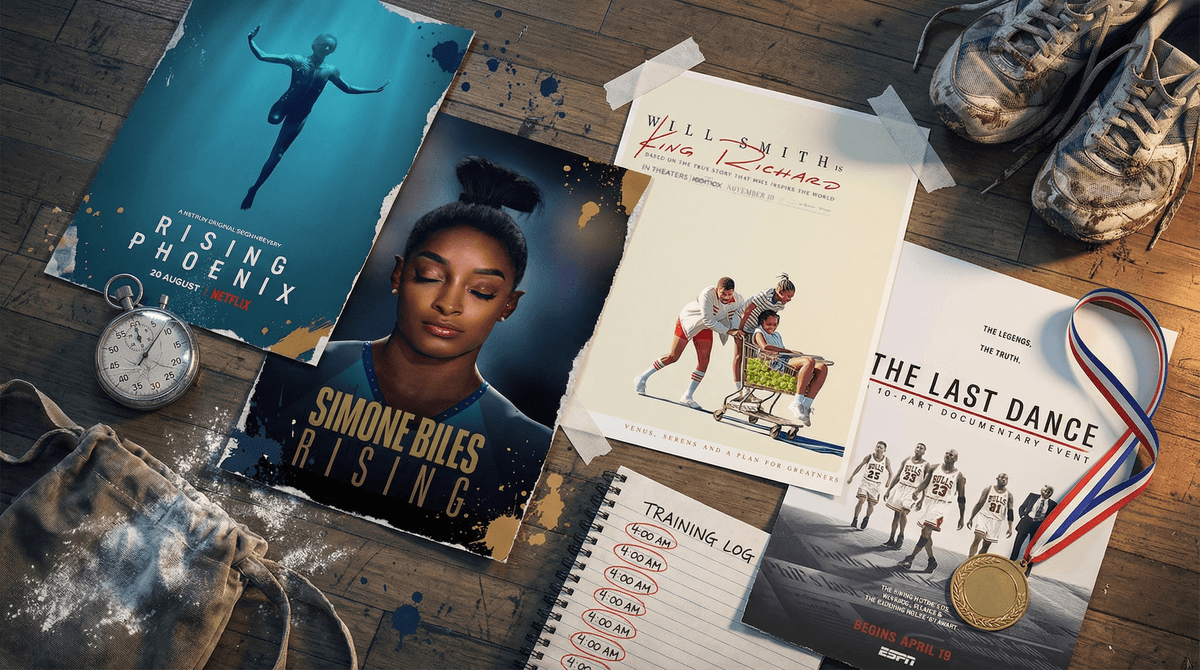
Sports documentaries and biopics tell real stories about athletes, teams, and pivotal moments in sports history. Unlike fictional sports movies (think The Mighty Ducks), these films follow actual people and events—from Michael Jordan's Bulls dynasty to Simone Biles' mental health journey to the Williams sisters breaking tennis barriers.
With 92% of families in our community using TV streaming services, and about 40% of families letting kids choose their own content on Netflix, these films are increasingly accessible. The question isn't whether your kids will encounter them—it's whether they're ready for what they'll see.
Sports docs hit different than regular movies. They're real. That athlete actually made that shot, overcame that injury, faced that discrimination. For kids who play sports or dream of going pro, these stories feel like blueprints.
The problem? Many of these films glorify a level of dedication that borders on obsession. They show 4am practices, playing through injuries, sacrificing friendships and childhood for excellence. The narrative is almost always: greatness requires everything.
The Last Dance is a perfect example. It's brilliantly made and undeniably compelling. It's also a masterclass in how Michael Jordan's relentless competitiveness came with real costs—teammates he berated, relationships he damaged, a childhood he never really had. But the film frames this as the necessary price of greatness.
Here's what concerns me about sports documentaries for younger viewers: they rarely show the thousands of kids who trained just as hard and didn't make it. They don't follow the 12-year-old who quit soccer at 14 because it stopped being fun. They focus on the 0.1% who "made it" and imply their path is replicable if you just want it badly enough.
This feeds into youth sports culture that's already pretty toxic. Kids are specializing in single sports younger and younger. Travel teams demand year-round commitment. Parents are spending thousands on private coaching. And burnout rates are climbing.
When a 10-year-old watches Rising Phoenix (about Paralympic athletes), they might feel inspired. But are they also internalizing the message that anything less than Olympic-level dedication means they're not serious enough?
Ages 6-9: Stick with lighter fare like The Mighty Ducks: Game Changers series or We Are the Champions (quirky competitions that keep it fun). At this age, sports should still be play.
Ages 10-12: This is when kids can handle more complex stories, but choose carefully. Breaking Boundaries: The Science of Our Planet features athletes but focuses on environmental activism. Cheer shows dedication but also community and joy (though preview it first—there's mature content in later episodes).
Ages 13+: Teens can engage with the full complexity. The Last Dance, Athlete A, Naomi Osaka all offer opportunities to discuss mental health, systemic abuse, and what success actually costs. But watch together and talk about what you're seeing.
When choosing sports documentaries, ask yourself:
Does this film show balance? Look for stories that include rest, play, and life outside the sport. Simone Biles: Rising does this well—it's as much about her learning to prioritize mental health as it is about gymnastics.
Does it acknowledge privilege? Some athletes had resources most kids will never access. That doesn't diminish their achievement, but it's context kids need. King Richard actually does this thoughtfully, showing both the Williams family's dedication and the systemic barriers they faced.
What's the attitude toward injuries? Films that glorify "playing through pain" are dangerous. We're learning so much about concussions in youth sports and long-term injury impacts—your kid doesn't need a documentary telling them to ignore their body.
Is failure part of the story? The best sports films show setbacks, losses, and moments of doubt. If it's all triumph, it's not the full picture.
Sports documentaries can be genuinely inspiring. They can show kids what's possible, introduce them to athletes who look like them, and spark conversations about dedication, teamwork, and overcoming obstacles.
But they can also sell a dangerous myth: that childhood should be sacrificed for future glory, that rest is weakness, that you're either all-in or you're not serious.
The key is co-viewing and conversation. Watch together. Pause and ask questions. "Do you think that was worth it?" "How do you think their teammates felt?" "What would you do differently?"
And maybe most importantly: help your kid see that the athletes in these films are statistical anomalies. Being inspired by them is great. Measuring yourself against them is a recipe for disappointment.
If you're looking for age-appropriate content across streaming platforms (about 50% of families in our community use Disney+ for family viewing together, and 32% supervise Amazon Prime viewing), check out our streaming guide for recommendations.
Want to talk through whether a specific documentary is right for your kid? Get guidance on any sports documentary title and get personalized guidance based on your family's values and your child's age.
And if your kid is already deep in competitive sports culture, let's talk about how to spot burnout signs before it becomes a bigger issue.