

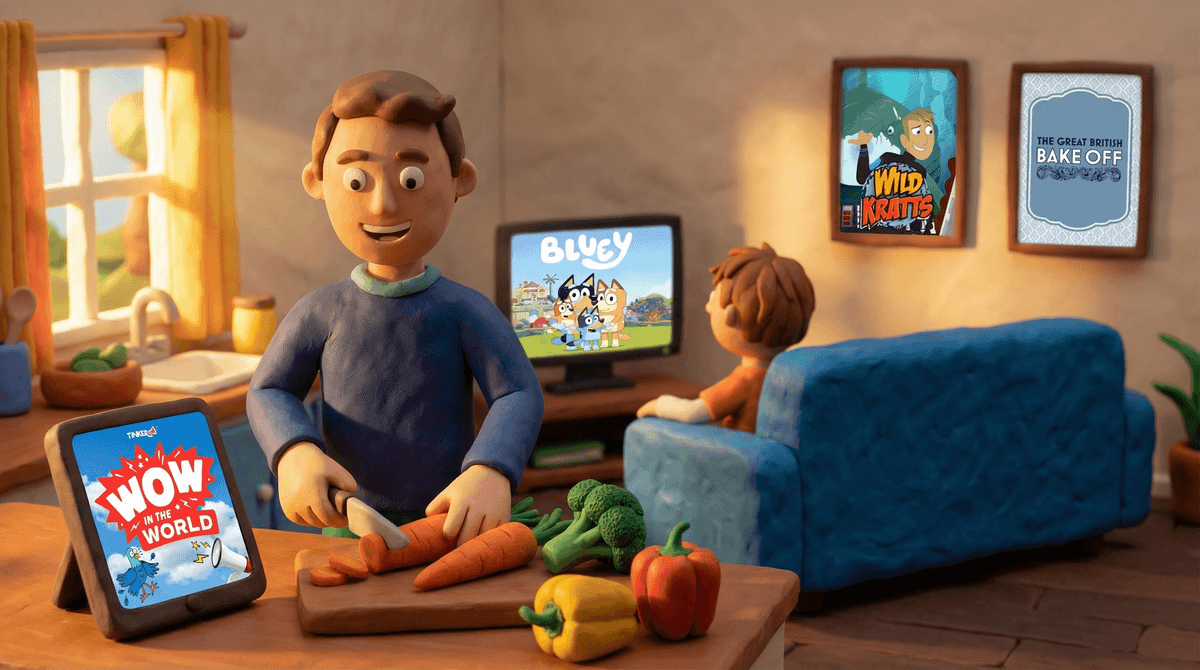
You know the scene: It's 5:30pm, you're trying to chop vegetables while simultaneously preventing a meltdown, the dog needs to go out, and someone just spilled juice on the homework that's due tomorrow. This is the witching hour, and let's be real—sometimes a screen is the only thing standing between you and complete chaos.
The dinner-prep screen time situation is one of the most common (and most guilt-inducing) daily decisions parents face. Unlike weekend movie time or the occasional long car ride, this is a daily routine that can easily slide from "20 minutes while I cook" to "wait, how is it 7pm and they're still watching?"
Here's the thing: putting on a show while you make dinner isn't lazy parenting. It's strategic parenting. The question isn't whether to use screens during this time—it's what to put on and how to keep it contained.
The dinner-prep window is uniquely challenging because:
You're genuinely busy and can't supervise closely. Unlike other screen time where you might be nearby, you're actively cooking with hot pans and sharp knives. You need them occupied, but you also need to trust what they're watching without constant monitoring.
It happens every single day. A 30-minute show five days a week adds up to 2.5 hours of weekly screen time just from dinner prep. That's not inherently bad, but it means the content quality actually matters. The difference between Bluey and YouTube autoplay compilations compounds over time.
The timing is terrible for transitions. Kids are tired, hungry, and at their least flexible. Turning off the screen right before dinner often triggers battles that defeat the entire purpose of the peaceful cooking time you just bought yourself.
Here's what actually works:
Choose Fixed-Length Content
This is non-negotiable. Never put on YouTube, streaming app homepages, or anything with autoplay during dinner prep. The goal is a defined endpoint that coincides with dinner being ready.
For 20-30 minute cooking sessions:
- One episode of Bluey (Ages 2-8)
- Avatar: The Last Airbender (Ages 7+)
- The Great British Baking Show (Ages 8+, and yes, watching people bake while you cook is somehow very meta and calming)
- Octonauts (Ages 3-7)
For 40-minute cooking sessions (the elaborate meal nights):
- Mythbusters Jr. (Ages 8+)
- Carmen Sandiego (Ages 7+)
- Hilda (Ages 6+)
The "Dinner Rotation" Approach
Here's a tactic that works surprisingly well: establish a weekly rotation of 3-4 shows. Monday is Bluey night, Tuesday is Avatar night, Wednesday is Octonauts, etc.
Why this works:
- Eliminates the "what should we watch?" negotiation when you're already stressed
- Kids know what to expect, reducing the "just one more episode" pleading
- You're not monitoring the same show every single night (because honestly, there's only so much of anything you can take)
- Creates a ritual that actually helps with the dinner transition
Audio-First Alternatives
Some families find that podcasts or audiobooks work even better than video for dinner prep, especially for kids 6+. The advantage? Kids can actually help with age-appropriate tasks (setting the table, tearing lettuce) while listening, rather than being completely zoned out.
Try:
- Wow in the World (Ages 5-10)
- Story Pirates (Ages 5-10)
- Brains On! (Ages 6-12)
Ages 2-5: Keep it to 20 minutes max. At this age, they genuinely don't need more, and shorter episodes make the transition easier. Daniel Tiger's Neighborhood and Bluey are your best friends here.
Ages 6-9: This is when you can stretch to 30 minutes and introduce more narrative-driven content. Wild Kratts, The Magic School Bus Rides Again, and Puffin Rock all work well.
Ages 10+: Consider transitioning to podcasts or audiobooks, or letting them read/draw while listening to music. If they're still watching, this is a good age for The Great British Baking Show or documentary-style content.
YouTube. Just don't. Even YouTube Kids. The autoplay is too tempting, the content quality is wildly inconsistent, and you're not watching closely enough during dinner prep to monitor what's actually playing. Learn more about why YouTube is particularly problematic for unsupervised viewing .
.
New shows during dinner prep. Introduce new content during times when you can watch together. Dinner prep is for established, trusted content only.
Anything that ends in a cliffhanger. You're setting yourself up for battles. This rules out a lot of serialized content during this time slot.
The biggest challenge isn't the screen time itself—it's turning it off. Here's what works:
The 5-minute warning. Set a timer on your phone and give a verbal warning: "One more episode, then dinner." Not negotiable, not a discussion.
The "we'll finish it tomorrow" promise. If they're mid-series, remind them you'll watch the next episode tomorrow. Then actually do it.
The immediate transition to the table. Don't let there be dead time between screen-off and sitting down. Have them help with the last dinner tasks (carrying napkins, filling water glasses) immediately after the screen goes off.
Dinner-prep screen time is one of those parenting situations where the perfect is the enemy of the good. Yes, ideally kids would be independently playing or helping you cook every evening. In reality, you need to get food on the table without losing your mind, and a well-chosen show is a legitimate tool for making that happen.
The key is being intentional about it: fixed-length content, established routines, and a clear transition plan. This isn't about zero screen time—it's about screen time that serves your family rather than derailing your evening.
And if you're feeling guilty about it? Consider this: a calm parent who actually enjoys making dinner while the kids watch one episode of Bluey is probably creating a better family environment than a stressed, resentful parent trying to achieve some impossible screen-free ideal while everything burns.
- This week: Pick 3-4 shows that match your typical cooking time and establish a rotation
- Set up your device: Remove YouTube, disable autoplay on all streaming apps, create a "Dinner Time" profile with only approved shows
- Try audio: Experiment with one podcast night to see if your kids (ages 6+) can stay engaged without video
Need help finding the right content for your kids' ages? Find the best shows for dinner prep time.