

TL;DR: The Quick Hits
If you’re in the "I just need 20 minutes to fold laundry without someone drawing on the walls" phase of parenting, here is the curated list of what to queue up and what to avoid in 2026.
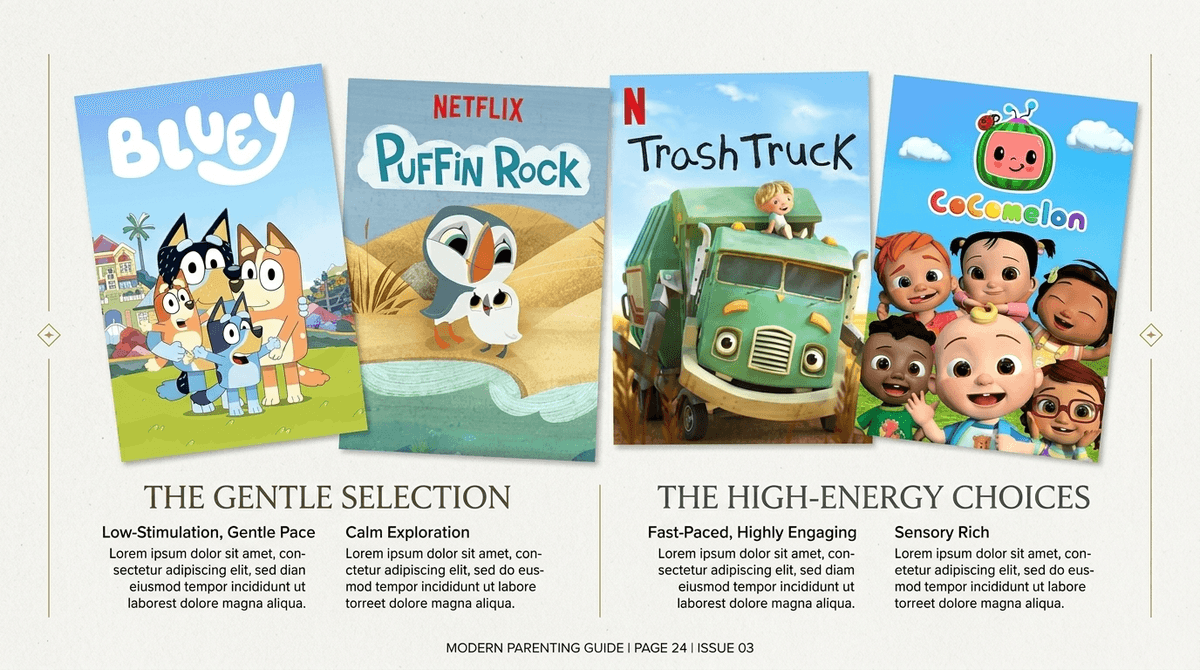
- The Gold Standard: Bluey — Emotional intelligence, parent-approved humor, and zero "zombie stare."
- The Best Low-Stim Options: Puffin Rock and Trash Truck.
- Actually Educational: Ask the StoryBots and Numberblocks.
- The "Proceed with Caution" List: Cocomelon and Blippi. These are high-dopamine, high-stimulation shows that often lead to "screen hangovers" (aka massive meltdowns when the TV turns off).
Find a watchlist based on your kid's interests
We’ve all seen it. You turn off the TV after thirty minutes of Cocomelon and your normally sweet preschooler transforms into a tiny, screaming demon. This isn't just "toddler stuff"—it’s often a physiological response to overstimulation.
When we talk about "brain rot" in the preschool context, we’re usually talking about pacing.
Many modern shows are designed with rapid-fire scene cuts (sometimes every 1-3 seconds), bright neon colors, and constant high-pitched sound effects. This triggers a dopamine loop that a three-year-old’s developing brain simply isn't equipped to handle. When the show ends, the dopamine drops, and the nervous system crashes.
In the Screenwise community, 68% of parents with kids under five report that "high-energy" YouTube-style content directly correlates with behavioral issues later in the day. This is why we focus on "low-stimulation" or "high-quality pacing" as the primary metric for a good show.
Learn more about the science of overstimulation and screen hangovers
There’s a reason Bluey is the most-watched show for this age group. It’s not just a "kids' show"—it’s a show about family dynamics that happens to be animated. The pacing is natural, the music is orchestral and calming, and the lessons on imaginative play are top-tier. It's one of the few shows where "co-viewing" doesn't feel like a chore.
If you want something that feels like a warm hug, this is it. It follows a boy named Hank and his best friend, a literal trash truck. It’s slow, sweet, and focuses on simple problems. It’s the antithesis of the "loud and fast" preschool trend.
Narrated by Chris O'Dowd, this show is visually stunning and incredibly quiet. It teaches basic biology and environmental themes without ever raising its voice. It’s the perfect "pre-nap" show.
This is for the "Why?" phase. StoryBots explains complex topics—like how ears hear or why the sky is blue—using catchy songs and celebrity cameos. It’s fast-paced, but in a way that is intellectually stimulating rather than just visually overwhelming.
If you want your kid to actually understand the concept of math (not just rote counting), Numberblocks is a miracle. It uses visual blocks to represent numbers, helping kids "see" addition and subtraction before they even start kindergarten.
Not every show on this list is "bad," but they are the ones most likely to cause that "zombie stare" or post-screen irritability.
Let’s be real: Cocomelon is digital candy. It’s designed to be hyper-engaging. While the nursery rhymes are harmless, the visual pacing is incredibly fast. If you notice your kid is impossible to distract while watching it, or has a meltdown when it’s over, it might be time to move it to the "once in a while" category.
Blippi is a polarizing figure. On one hand, he takes kids to cool places like museums and playgrounds. On the other hand, the character is manic, the editing is chaotic, and it’s essentially a giant advertisement for various play centers. Many parents find the "energy" of the show translates into "chaotic energy" in their living room.
Kids love the "unboxing" element of Gabby's Dollhouse, but that’s also the problem. It’s heavily rooted in consumerist culture. It’s not "brain rot" per se, but it is a masterclass in toy marketing.
Check out our guide on the "Cocomelon Effect" and why it matters
A lot of preschool content consumption has shifted from traditional TV (like PBS Kids) to YouTube Kids. This is where things get dicey.
The YouTube algorithm doesn't care about your child's brain development; it cares about watch time. This leads to "Surprise Egg" videos, "Finger Family" clones, and weird, AI-generated content that is designed solely to keep a toddler's eyes glued to the screen.
Even if you think they are watching something safe, the "Up Next" feature can quickly lead them into a rabbit hole of low-quality, high-stim "brain rot" that provides zero educational value and maximum agitation.
How to set up YouTube Kids for maximum safety
When choosing a show for your preschooler (Ages 2-5), use the S.L.O.W. method:
- Scene Length: Do the scenes last longer than 5 seconds? (Longer is better).
- Language: Is there actual dialogue, or just repetitive songs and sound effects?
- Objective: Is there a plot, or is it just "visual noise"?
- Well-being: How does your child act after the show is turned off?
If the "W" is consistently negative, the show isn't a good fit for your family right now, regardless of how many "educational" claims the creators make.
You might think your preschooler is too young for internet slang, but if they have older siblings or access to YouTube, you might start hearing them say things are "Ohio" (meaning weird or cringey) or talking about "Skibidi."
This usually happens through "Brain Rot" shorts—15-second clips that use trending sounds and nonsensical visuals. While a 4-year-old won't understand the context, they mimic the energy. If your preschooler is starting to use "Gen Alpha" slang, it’s a sign that their content diet is skewing too old or too "unfiltered."
Decode the latest Gen Alpha slang with our parent's dictionary
There is no "perfect" amount of screen time, and there is no shame in using a show to get a break. The goal isn't to be a "no-screens" family; it's to be an intentional one.
In 2026, the best thing you can do for your preschooler's digital wellness is to move away from the "algorithm-led" content (YouTube autoplay) and toward "curated" content (Netflix/Disney+ shows with actual writers and slow pacing).
Stick with Bluey, Trash Truck, and Numberblocks. Your kid's brain—and your own sanity—will thank you.
- Audit the Watchlist: Spend 10 minutes watching what your kid watches. If you feel a headache coming on, they probably do too.
- Set the Timer: Use a physical timer (not just the TV's internal one) to help kids transition away from the screen.
- Check the Data: See what other parents in your school district are allowing.
Take the Screenwise Survey to see how your family's media habits compare to your community