

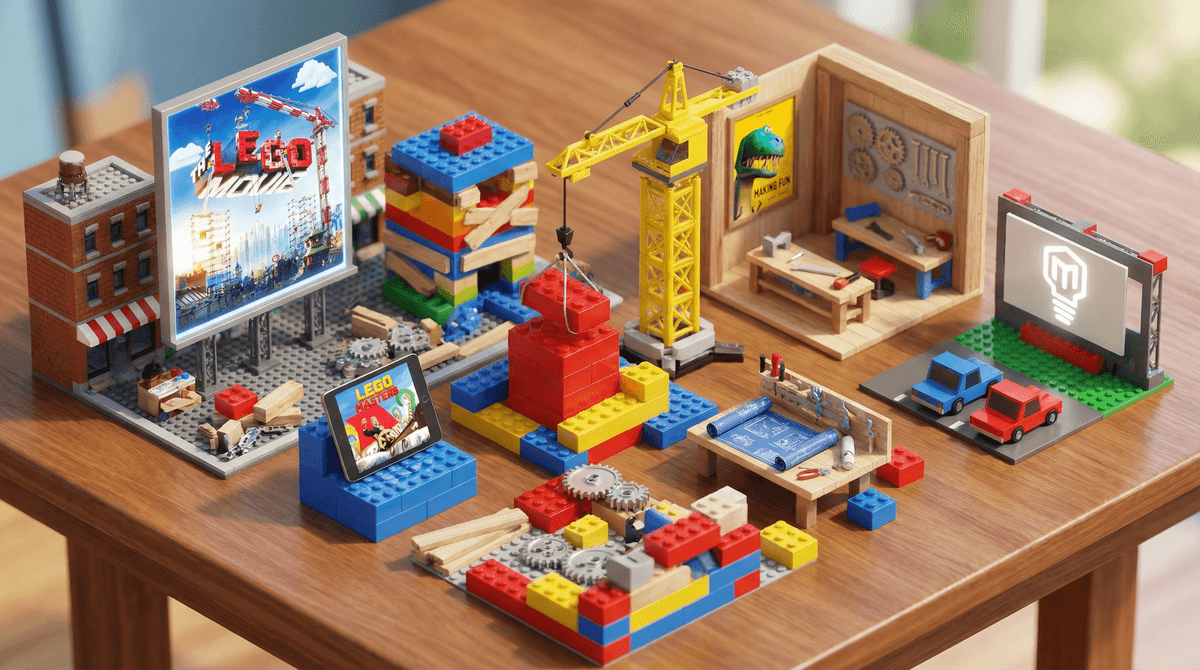
If your kid can spend three hours building an elaborate LEGO city or gets completely absorbed watching construction videos on YouTube, you've got a builder on your hands. The good news? There's actually a solid lineup of shows and movies that tap into that same creative energy—the satisfaction of seeing something come together piece by piece, the problem-solving, the spatial thinking.
We're talking about content that celebrates construction, engineering, creativity, and the process of making things. Some are explicitly LEGO-branded, others just share that builder's mindset. And honestly? This is one category where screen time can genuinely complement what kids are already doing offline with their blocks, cardboard boxes, and duct tape creations.
The appeal is pretty straightforward: builders love seeing the process. It's not just about the finished product—it's about watching how things go from idea to reality, how problems get solved, how pieces fit together.
There's also something deeply satisfying about systems and patterns. Kids who love building tend to be drawn to understanding how things work, whether that's the mechanics of a drawbridge or the structural integrity of a skyscraper. Shows that break down these concepts or showcase creative construction scratch that same itch as dumping out a bin of LEGO bricks.
Plus, a lot of building-focused content has natural stopping points. Unlike some shows that end on cliffhangers designed to trigger autoplay, many building shows wrap up a project in one episode. That can actually make it easier to enforce "one more episode" limits.
For Younger Kids (Ages 4-8)
LEGO Friends and LEGO City Adventures are solid starting points. They're bright, episodic, and explicitly LEGO-branded, which means kids might actually go build the scenarios they just watched. Netflix has a bunch of these series, and they're genuinely fine—not groundbreaking television, but not brain rot either.
Bluey deserves a mention here because while it's not explicitly about building, so many episodes involve creative construction projects—building forts, making elaborate pretend scenarios, problem-solving with everyday objects. It models the kind of imaginative building that happens in real life.
The LEGO Movie (2014) is still the gold standard. It's genuinely funny for adults, celebrates creativity over following instructions, and has that "everything is awesome" energy that makes kids want to dump out every LEGO bin they own. Ages 5+ can handle it, though some of the humor lands better with older kids.
For Middle Elementary (Ages 7-10)
LEGO Masters (the competition show) is a family favorite in many households. Real people, real builds, actual time limits and structural challenges. It's like a cooking competition show but with bricks. The builds are genuinely impressive, and kids get to see both spectacular successes and catastrophic failures—which is actually great for building resilience and understanding that creation involves iteration.
Project Mc² on Netflix centers on girls who solve mysteries using STEM skills, including a lot of building and engineering. It's got that "spy kids" energy but with more maker content.
The LEGO Batman Movie and The LEGO Movie 2 continue the franchise with the same creative energy. Batman skews slightly older (ages 7+) with more action sequences.
For Tweens and Teens (Ages 10+)
LEGO Ninjago has a surprisingly deep lore and long-running series that older elementary and middle school kids get really into. Fair warning: if they get hooked, there are like 15 seasons. You can learn more about managing binge-watching habits .
.
Making Fun on YouTube Premium (now available elsewhere) follows Jimmy DiResta and other makers as they build custom creations. It's real woodworking, metalworking, and fabrication—perfect for kids ready to graduate from LEGO to actual tools.
The LEGO Ninjago Movie works for this age group, especially if they're already into the series.
YouTube Channels Worth Knowing About
A lot of builder kids end up on YouTube watching construction content. Some channels worth knowing:
- Brick Builder and similar LEGO-focused channels show speed builds and MOCs (My Own Creations)
- Mark Rober for engineering projects and builds (generally appropriate, though check individual videos)
- Tested for maker content and Adam Savage's builds
The YouTube rabbit hole is real though. If your kid is watching building content on YouTube, it's worth having YouTube Kids set up for younger ones or using YouTube's supervised experience for older kids. Here's more on YouTube vs. YouTube Kids.
The LEGO-to-screen-to-LEGO pipeline is real. One of the best things about building-focused content is that it often sends kids back to their actual toys. They watch a build, get inspired, and go try to recreate it or make their own version. That's pretty rare with screen time, and worth encouraging.
Building shows can be genuinely educational. Content that showcases engineering principles, structural challenges, creative problem-solving, and design thinking is actually teaching skills. This isn't just passive entertainment—though it's also okay if sometimes it is just entertainment.
The competition format works well for many kids. Shows like LEGO Masters teach kids about time management, dealing with failure, collaboration, and creative constraints. Some sensitive kids might find the elimination aspect stressful, so gauge your individual kid.
Watch out for the commercial tie-in. LEGO-branded content is obviously designed to sell LEGO sets. Kids will 100% want the sets they see on screen. That's not necessarily bad, but it's worth acknowledging. You can talk about it directly: "Yes, that set looks cool! Let's add it to your birthday list" or "We're not buying new sets right now, but could you build something similar with what we have?"
Ages 4-7: Stick with the explicitly kid-focused LEGO shows and movies. Bluey, LEGO Friends, and The LEGO Movie are your sweet spot. Watch together when possible and use it as a springboard for actual building time.
Ages 8-11: LEGO Masters becomes a great family watch. The various LEGO movies work well. If they're on YouTube, set up supervised accounts and check in regularly on what they're watching. Building channels can quickly lead to gaming content or unboxing videos.
Ages 12+: They can handle most building and maker content, including more complex engineering shows. This is a good age to introduce real maker content beyond LEGO—woodworking, coding, robotics. Just maintain awareness of what they're watching, especially on YouTube where recommended videos can go sideways fast.
If you're going to have screen time (and let's be real, you are), building-focused content is a pretty solid choice. It reinforces the kind of creative, hands-on play that's genuinely valuable, it often has natural endpoints, and it can actually inspire offline activity.
The key is balance and intentionality. Watching a 20-minute episode of LEGO City Adventures and then building for an hour? Great ratio. Watching three hours of LEGO YouTube videos without ever touching an actual brick? Less great.
Set up a building-to-screen-to-building routine. Try: 30 minutes of building time, then one episode of a building show, then back to building. See if the screen time actually enhances the play rather than replacing it.
Curate a list together. Sit down with your kid and pick 3-5 shows or movies they want to watch. This gives them agency and helps avoid the endless scroll of "what should we watch?"
Use Screenwise to understand what's actually age-appropriate. Every kid is different, and community norms vary. Check out what other families are doing and get personalized recommendations based on your family's values and your kid's interests.
And remember: if your kid wants to watch LEGO Masters for the fourth time this week, that's probably fine. We've all got our comfort content. At least theirs involves structural engineering.