

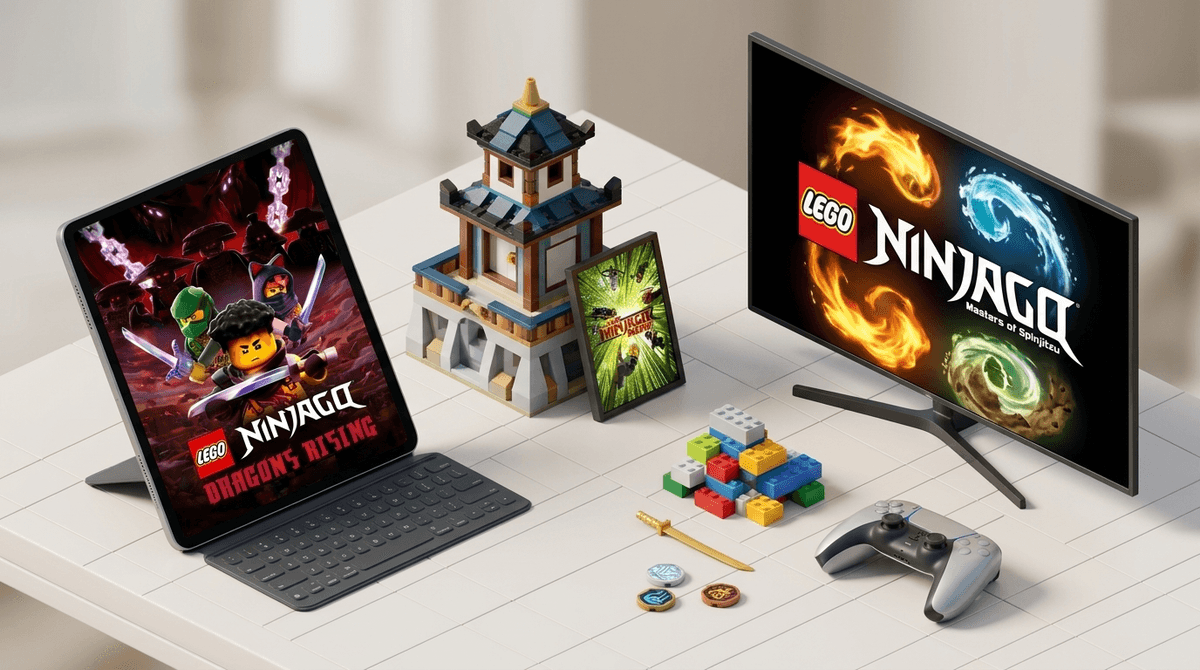
TL;DR: The Ninjago Survival Guide
If your kid is suddenly talking about "Elemental Powers," "The Merge," or asking for a $200 dragon for their birthday, you’ve entered the Ninjago phase. Unlike a lot of "toy-first" franchises, LEGO Ninjago actually has a surprisingly deep plot that’s been running since 2011. It’s not "brain rot" like Skibidi Toilet, but it is a massive ecosystem designed to keep your kid clicking and your wallet open.
Quick Links for the Essentials:
- The Gold Standard: LEGO Ninjago: Masters of Spinjitzu (The original 15 seasons)
- The Modern Era: LEGO Ninjago: Dragons Rising (The current reboot/sequel)
- The "Skip It": The LEGO Ninjago Movie (Funny, but messes up the lore kids actually care about)
- The Digital Playground: Roblox (Where the Ninjago roleplay lives)
At its core, Ninjago is a "science-fantasy" series about a group of teenage ninjas who protect their world from various threats (snakes, skeletons, ghosts, robots—you name it). It started as a way for LEGO to sell more plastic, but it evolved into a sprawling epic with a timeline more complicated than the MCU.
We are currently in the Dragons Rising era. A few years ago, the show underwent a "soft reboot." The world literally merged with other realms, and a new cast of characters joined the old favorites. If your kid is talking about Arin and Sora, they’re watching the new stuff. If they’re talking about Lord Garmadon, they’re watching the classics.
In current kid-speak, something "from Ohio" is weird, cringe, or just plain wrong. Ninjago, somehow, has remained "sigma" (cool/top-tier) for over a decade. Here’s why it sticks:
- The Lore: Kids love a deep dive. Ninjago has 15+ seasons of history, secret lineages, and evolving powers. It rewards them for paying attention.
- The Power Fantasy: Each ninja has an element (Fire, Earth, Ice, Lightning, Water, Energy). It’s the same psychological hook as Pokémon or Avatar: The Last Airbender.
- The "Merge": The current Dragons Rising storyline allows for infinite world-building, which keeps the content fresh.
See why kids are so obsessed with Ninjago lore
Ages 7+ This is the original series. It’s actually quite good. The writing is snappy, the stakes feel real (for a LEGO show), and it deals with themes like loss, redemption, and teamwork. It’s the opposite of "brain rot"—it requires a long attention span to follow the seasonal arcs.
Ages 7+ The new era. It’s flashier, the animation is better, and it introduces "tech" elements that appeal to kids who grew up on Minecraft. It’s a perfectly safe, high-quality choice for weekend binge-watching.
Ages 6+ Here’s the "No-BS" take: This movie is fine as a standalone comedy, but most die-hard Ninjago fans kind of hate it. It changed the voice actors, changed the characters' personalities, and ignored the show's history. If you’re looking for a family movie night, it’s okay, but don't expect it to help you understand the show your kid is watching.
Ages 7+ Available on Switch, PlayStation, and Xbox. Like most LEGO games, it’s "couch co-op" friendly, meaning you can play with your kid. It’s a button-masher, but it’s a great way to bond without the toxicity of online shooters.
If your kid is into Ninjago, they are almost certainly playing Ninjago-themed games on Roblox.
Here is where we need to be careful. There are official LEGO-branded experiences, but there are also thousands of "fan-made" games. Some of these are impressive feats of amateur game design—kids building entire worlds because they love the show. This can be a spark for teaching kids about game design.
However, many of these "Tycoon" or "Simulator" games are designed specifically to drain Robux. They use "dark patterns" (flashing lights, countdown timers, and social pressure) to get kids to spend real money on "Elemental Swords" or "Ninja Ranks."
The Screenwise Advice:
- Treat Robux like a real allowance.
- Sit with them while they play these fan-made games. If the game is just a treadmill designed to make them pay to win, it’s time to pivot them back to the physical bricks or the official LEGO Ninjago website.
Check out our guide on Roblox parental controls
LEGO Ninjago is a "retired set" nightmare. LEGO releases waves of sets several times a year. Once a set is "retired," the price on the secondary market (eBay/Amazon) triples.
This creates an intense FOMO (Fear Of Missing Out) in kids. They see a "Destiny’s Bounty" ship on a YouTube review, but it’s from 2017 and costs $500 now.
How to handle it:
- Focus on the "Legacy" and "Core" lines: LEGO frequently re-releases older designs under the "Legacy" or "Core" branding. Tell your kid to look for those—they are the same characters but at retail prices.
- The "One In, One Out" Rule: Ninjago sets are bulky. If a new dragon comes in, an old vehicle needs to be broken down and put into the "big bin" of generic bricks.
- YouTube Reviewers: Be aware of channels like Jazzy Skye or Ninja Kidz TV. While often harmless, these channels are essentially 20-minute commercials that make kids feel like they need every single set to be a "real" fan.
Learn more about managing LEGO spending and FOMO
- Ages 5-7: They will love the bright colors and the toys. The show might be a little scary at times (ghosts, skeletons), but it’s generally "cartoon violence"—lots of spinning, no blood.
- Ages 8-10: This is the sweet spot. They’ll start getting into the lore and wanting to play the games. This is the age to watch out for YouTube rabbit holes where creators use Ninjago characters in weird, unvetted "fan fiction" videos.
- Ages 11+: Most kids start to "age out" here, but the "Dragons Rising" era is trying to keep them engaged with more complex themes.
Safety Note: The biggest risk with Ninjago isn't the content itself—it’s the community. Whether it’s Discord servers for "Ninjago Roleplay" or the comments section on a YouTube "theory" video, these spaces are often unmoderated. Keep the conversation in the living room.
If you want to blow your kid's mind and show them you’re "culturally fluent," ask them these three questions:
- "Which element would you want? I think I’d be Ice because I’m chill, or maybe Earth because I’m grounded." (Get ready for a 20-minute lecture on why they’d be the 'Master of Form').
- "Do you think Lloyd is a better leader than Master Wu was?" (This hits on the generational shift in the show).
- "Is the 'Merge' actually a good thing, or was the world better before?" (This is a deep-cut question for Dragons Rising fans).
LEGO Ninjago is one of the "good ones." It encourages creativity through building, it rewards deep thinking through its lore, and it champions themes of "found family" and persistence.
The "danger" isn't the ninjas; it’s the marketing machine. As long as you manage the Roblox spending and the LEGO store "needs," Ninjago is a safe, engaging world for your kids to inhabit. It’s a lot better than them watching a toilet with a head in it.
Next Steps:
- Check your Netflix settings to make sure they have access to LEGO Ninjago: Masters of Spinjitzu.
- Set a monthly "Robux Limit" if they are playing Ninjago games on Roblox.
- Find Ninjago-themed books for reluctant readers