

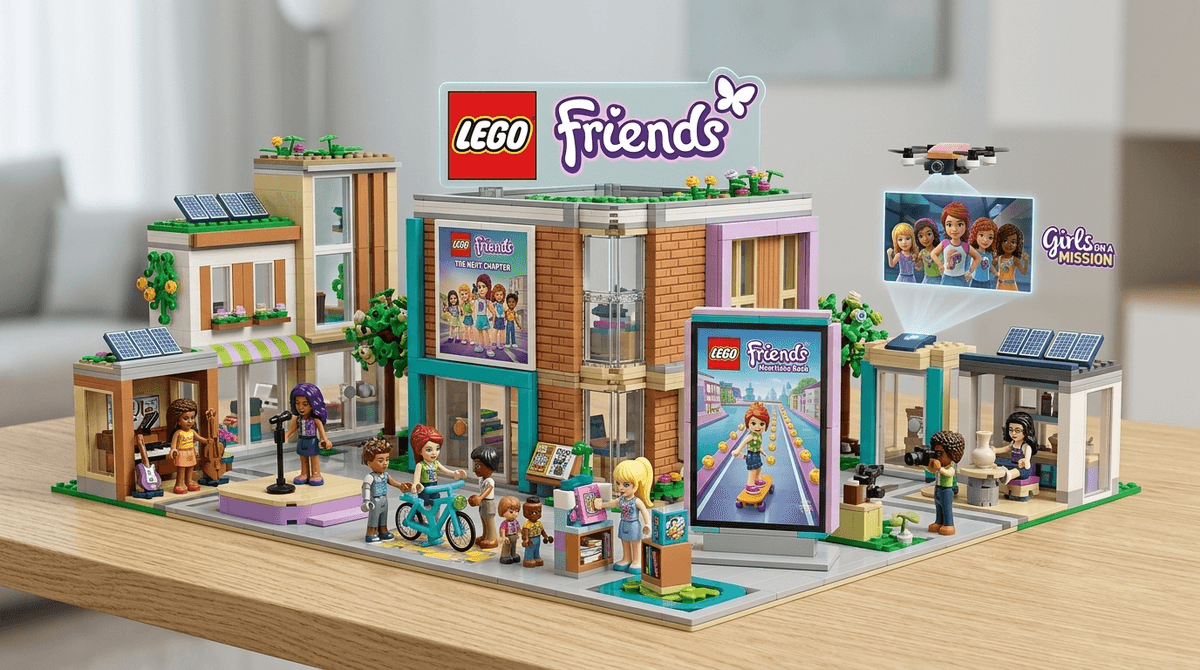
TL;DR: The 2023 LEGO Friends reboot isn't the "pink aisle" fluff you might remember. It’s a complete overhaul with a diverse cast of eight characters dealing with real-world issues like anxiety, neurodivergence, and limb differences. It’s a solid win for representation, though the move into mobile gaming and YouTube requires the usual parental side-eye for ads and engagement loops.
Quick Links:
If you’ve walked through a Target lately, you’ve seen the sea of teal and purple boxes. For years, LEGO Friends was the "girl version" of LEGO—a bit reductive, very sparkly, and focused on a core group of five girls who seemingly had no flaws other than occasionally losing a cupcake.
But in 2023, LEGO did something actually impressive. They nuked the original lineup and launched "The Next Chapter." They traded the perfection for a group of eight kids (yes, including boys this time) who are actually relatable. We’re talking about characters who struggle with social anxiety, kids who are neurodivergent, and characters like Autumn, who was born with a limb difference.
It’s a massive shift from "Let's go to the hair salon" to "How do we navigate a friendship when we have a massive misunderstanding?" As far as "toy-etic" content goes, this is about as high-quality as it gets, but there are some digital pitfalls you should know about.
The reboot centers on Heartlake High and a new generation of characters: Aliya, Autumn, Leo, Zac, Nova, Paisley, Olly, and Liann. Unlike the original series, which felt like a 22-minute commercial for a playhouse, the new series, LEGO Friends: The Next Chapter, actually tries to tell stories.
The franchise now lives across three main pillars:
- The Physical Sets: Still the core, though now much more gender-neutral in themes (think community centers and organic diners rather than just glitter cafes).
- The YouTube Series: High-production-value episodes that are free to watch but live on the world's most distracting platform.
- The Mobile Games: Apps like LEGO Friends Heartlake Rush that turn the brand into a "Subway Surfers" style experience.
It’s the "Friends" formula for the elementary school set. Kids are obsessed with the "lore" of the characters. They want to know why Nova is so obsessed with gaming or why Paisley is too shy to sing in public.
For kids aged 6 to 10, this is their version of a teen drama. It provides a framework for their own playground dynamics. Plus, the integration between the show and the sets is seamless. If they see Leo baking in an episode, they want the LEGO Friends Leo's Room set to recreate it. It’s effective marketing, but at least it’s marketing attached to decent storytelling.
This is the main "show" now. You can find it on the official LEGO YouTube channel.
- The Good: The writing is surprisingly sharp. It handles diversity without being performative. When a character is overwhelmed by noise or social pressure, it’s portrayed with genuine empathy.
- The Not-So-Good: It’s on YouTube. Even if you’re using YouTube Kids, the "Up Next" algorithm is always waiting to pivot your child from a wholesome LEGO episode to some weird unboxing video or "Skibidi Toilet" parody.
- Pro Tip: If you have Netflix, look for the older series LEGO Friends: Girls on a Mission. It’s a bit more "superhero-lite" and lives in a safer walled garden than YouTube.
This is a standard "endless runner" game. Your child picks a character and swerves through traffic to collect studs and fruits.
- The Verdict: It’s fine, but it’s "snack media." It doesn't encourage the creativity that actual LEGO bricks do. It’s a dopamine loop designed to keep them swiping.
- Safety Check: It has in-app purchases and ads for other LEGO products. It’s not "evil," but it’s definitely not teaching them entrepreneurship like a well-managed Roblox session might.
If you want a "good" LEGO app, this is it. It provides 3D digital instructions for sets. It’s a great way to bridge the physical and digital worlds without the "brain rot" of mindless scrolling.
Learn more about the difference between "active" and "passive" screen time
Ages 5-7: Stick to the physical sets and maybe the occasional episode of the show with you nearby. At this age, the YouTube comments (if they aren't turned off) and the fast-paced editing of the mobile games can be a bit much.
Ages 8-10: This is the sweet spot. They’ll appreciate the character nuances and the social drama. This is also a great age to start talking about how companies use "free" content (like the YouTube show) to sell products.
Ages 11+: Most kids start to outgrow the "Friends" aesthetic by middle school, moving toward Minecraft or more complex building sets like LEGO Technic.
The biggest risk with LEGO Friends isn't the content itself—it's the delivery method. Because the "Next Chapter" episodes are primarily on YouTube, your child is one click away from the broader, weirder internet.
LEGO does a decent job of moderating their own channel, but they can't control what the sidebar recommends. We’ve seen kids start with a LEGO Friends episode and end up watching "toy fail" videos or aggressive "influencer" content within twenty minutes.
Check out our guide on setting up a safer YouTube experience
I want to give credit where it's due: the 2023 reboot is a masterclass in modern inclusion.
- Autumn has a limb difference, and it’s just part of her character—not her entire personality.
- Nova is a gamer who can be a bit blunt and socially awkward, which resonates deeply with neurodivergent kids.
- The Boys: Adding Zac, Leo, and Olly to the core group fixed the "pink ghetto" problem. It’s now a show about a group of people, not just a "girl brand."
If your family values seeing a world that looks like the real one, the new LEGO Friends gets an A+.
Use the show as a springboard for "social-emotional learning" (the fancy term for "not being a jerk").
- Ask: "Why do you think Paisley was so nervous about the talent show?"
- Ask: "Nova was kind of mean to Liann in that episode. How do you think Liann should have handled that?"
- Ask: "Do you think we need to buy the $80 Community Center set just because we saw it in the show?" (That’s the tough one.)
Get conversation starters about social-emotional themes in media
LEGO Friends has evolved from a somewhat shallow, gender-stereotyped line into a thoughtful, inclusive, and genuinely engaging franchise. The "Next Chapter" series is high-quality storytelling that respects a child's intelligence.
However, stay vigilant about the "YouTube tax." If you can watch it on a smart TV in the living room rather than an unmonitored iPad, you’re winning. And if the mobile games start causing meltdowns when it’s time to turn them off, delete them and go back to the actual bricks. The bricks don't have "daily login rewards."
- Watch an episode of LEGO Friends: The Next Chapter with your kid. See which character they identify with—it’ll tell you a lot about their current social world.
- Audit the apps. If they have Heartlake Rush, check the "time spent" in your settings. Is it a fun 10-minute distraction or a two-hour black hole?
- Encourage "Free Building." Remind them that they don't have to follow the instructions. The best part of LEGO is taking the "Friends" sets and mixing them with Star Wars or Minecraft sets to create something totally weird and original.
Explore our full list of recommended building games and apps