

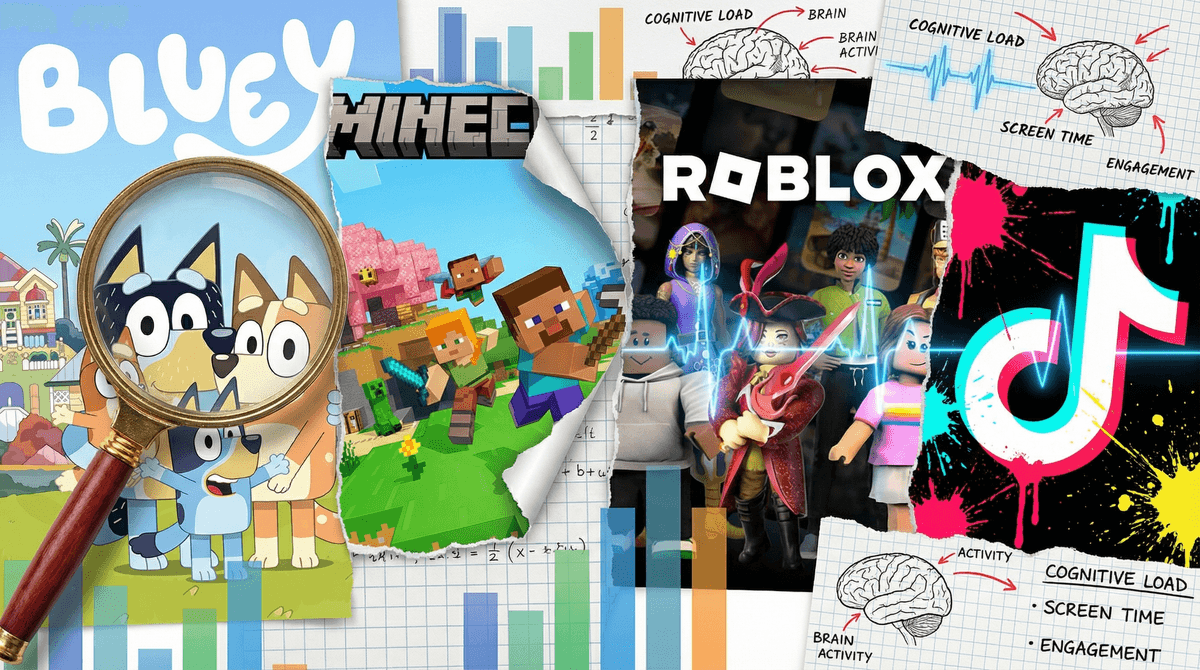
When you're trying to figure out if your 7-year-old should have a tablet in their room or whether Roblox is actually rotting their brain, you're probably hoping there's some definitive research out there with clear answers.
Here's the thing: there's a ton of research on kids and screens—decades of studies on everything from screen time limits to content effects to social media's impact on mental health. But if you're looking for simple, universal answers that apply to every kid in every situation, you're going to be disappointed.
Kids' media research encompasses studies on how children interact with digital content, how much time they spend on screens, what effects different types of content have on development, and how digital habits shape everything from sleep patterns to social skills. It includes work from pediatricians, psychologists, neuroscientists, education researchers, and sociologists. And honestly? They don't always agree with each other.
The research landscape is genuinely messy, and that's not because scientists are bad at their jobs—it's because studying kids and media is incredibly complex.
The problem with "screen time" as a metric: For years, the focus was on how much time kids spent on screens. The American Academy of Pediatrics had strict recommendations (no screens under 2, one hour max for 2-5 year olds, etc.). But newer research shows that what kids are doing on screens matters way more than the raw minutes. Twenty minutes of FaceTime with grandma is fundamentally different from twenty minutes of YouTube autoplay. An hour building in Minecraft hits differently than an hour of TikTok scrolling.
The correlation vs. causation nightmare: A lot of headlines about screen time research are based on correlational studies. "Kids who spend more time on social media report higher rates of depression!" Okay, but does social media cause depression, or are kids who are already struggling more likely to seek connection online? These are very different problems requiring very different solutions.
The moving target problem: By the time a longitudinal study on Instagram is published, kids have already moved on to BeReal or whatever's next. Research takes years; digital culture moves in months. This doesn't make the research useless, but it does mean you can't just look up "is [insert current app] safe" and expect a peer-reviewed answer from 2023.
The "it depends" factor: Kids are not a monolith. A shy 10-year-old might thrive connecting with fellow Percy Jackson fans online, while their extroverted sibling might need less screen time to avoid missing real-world social opportunities. Research can tell us about averages and trends, but your specific kid in your specific context is what actually matters.
Despite all the complications, there are some solid findings worth knowing:
Content quality is king: Studies consistently show that high-quality educational content (think Bluey or Brains On! podcast) can have neutral or even positive effects, especially when parents co-view and discuss. Passive consumption of random YouTube videos? Not so much.
Displacement matters more than you think: The biggest issue with excessive screen time isn't necessarily what screens do to kids—it's what they prevent kids from doing. Sleep, physical activity, face-to-face interaction, outdoor play, reading, creative play—these are all crucial for development. When screens crowd them out, that's when problems emerge.
Social media and teen mental health: This is the hot-button issue right now, and the research is genuinely concerning for adolescents, particularly girls. Heavy social media use is associated with increased anxiety, depression, and body image issues. But again—correlation, causation, and individual differences all apply. Some kids are more vulnerable than others.
The parent factor is huge: Research consistently shows that parental involvement, co-viewing, and active mediation make a massive difference. Kids whose parents talk with them about what they're watching, help them think critically about content, and set thoughtful boundaries tend to have better outcomes than kids with either no limits or rigid rules without discussion.
Age and developmental stage really matter: A 5-year-old's brain is fundamentally different from a 10-year-old's, which is different from a 15-year-old's. Research on "kids and screens" often lumps together vastly different developmental stages, which is like studying "food and humans" without distinguishing between toddlers and teenagers.
Here's the thing: you don't need to become an expert in media effects research to make good decisions for your family. But you can use research-informed principles:
Start with your specific kid: What are their temperament, their needs, their vulnerabilities? A kid with ADHD might need different approaches than a kid with anxiety. A socially confident 12-year-old might handle social media differently than a sensitive 12-year-old.
Ask what's being displaced: Is screen time replacing sleep? Physical activity? Family dinner? Homework? Or is it happening during genuinely free time when they'd otherwise be staring at the ceiling?
Quality over quantity: Thirty minutes of Stardew Valley where they're problem-solving and being creative is different from thirty minutes of mindless scrolling. The research backs this up.
Watch for warning signs: Is your kid's mood noticeably worse after certain apps or content? Are they sleeping less? More irritable? Less interested in things they used to love? These are more important data points than any study.
Stay involved: The research is clear that parental engagement matters. This doesn't mean hovering over their shoulder, but it does mean knowing what they're into, asking questions, and having ongoing conversations about their digital life.
Kids' media research is valuable, but it's not a recipe book where you can look up your situation and get exact instructions. It's more like understanding nutrition science—helpful principles that you apply based on your specific kid's needs, your family's context, and your values.
The most useful thing research tells us is this: it's complicated, and that's okay. You don't need perfect answers. You need to pay attention to your kid, stay curious about what they're doing online, and be willing to adjust as you learn what works for your family.
If you're trying to make a specific decision—whether your 8-year-old should have a phone, whether Fortnite is appropriate for your 10-year-old, whether YouTube is okay unsupervised—the research can inform that choice, but it can't make it for you. And that's actually good news, because you know your kid better than any study ever could.
Want to dig deeper into how research applies to your specific situation? Check out how to evaluate if content is age-appropriate or explore the difference between active and passive screen time.
The research is a tool, not a rulebook. Use it wisely, but trust yourself too.