

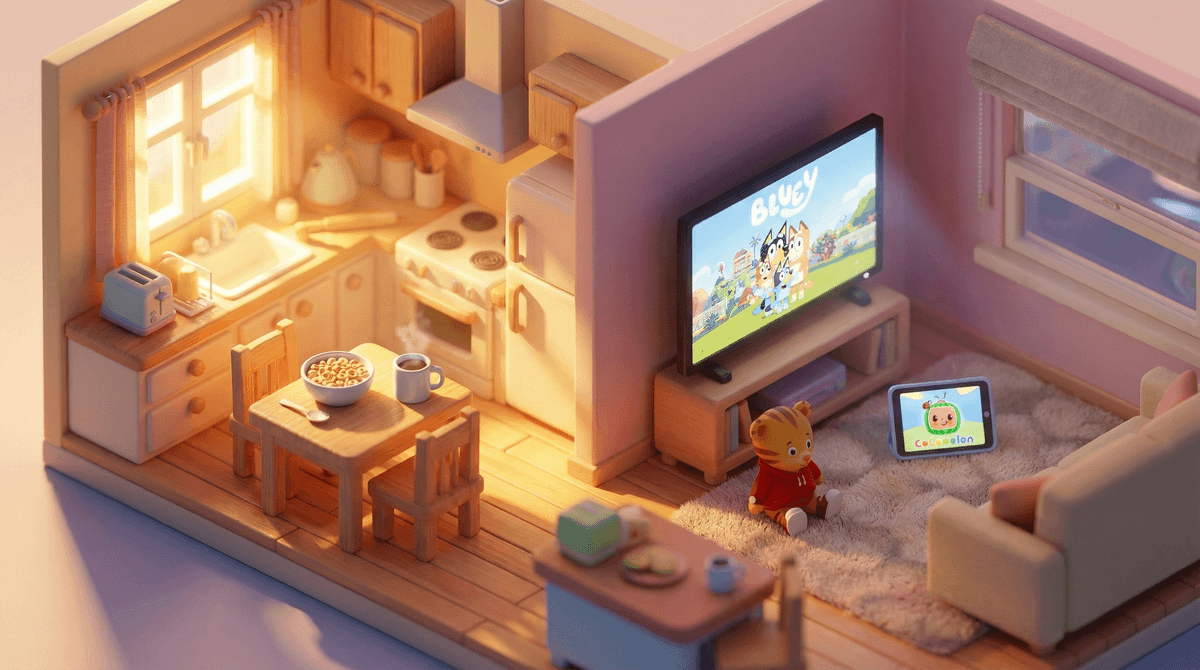
You know the drill. It's 6:47 AM. Your preschooler is awake (why are they always awake so early?), you haven't had coffee yet, and you need exactly 23 minutes to make breakfast, pack the lunchbox, find matching shoes, and convince yourself that dry shampoo counts as a shower.
So you do what millions of parents do: you turn on Cocomelon or Bluey or whatever keeps your kid glued to the couch while you execute Operation Get Out The Door.
The morning screen routine is that sacred window of video time before preschool that buys you the peace you need to function. And look, there's absolutely nothing wrong with needing that. The question isn't whether you should feel guilty (you shouldn't). The question is: how do we make this work without the dreaded screen-fog meltdown when it's time to turn it off?
Here's the thing about morning screens: they're not inherently bad, but the transition off screens is where things get dicey. You've probably experienced it — that glazed-over zombie state when you try to turn off the TV and suddenly your sweet preschooler transforms into a tiny rage monster who "NEEDS TO SEE WHAT HAPPENS NEXT."
This isn't your kid being difficult. This is neuroscience.
When kids watch videos (especially the hyper-stimulating ones with bright colors, fast cuts, and catchy songs), their brains get flooded with dopamine. Then you abruptly cut off that dopamine stream and ask them to put on shoes and get in the car. It's like asking someone to sprint right after waking up from a nap.
The other issue? Morning screens can set the tone for the whole day. Some kids transition beautifully from screen time to preschool. Others arrive at school still mentally stuck in Gabby's Dollhouse, struggling to engage with circle time or play with friends. Teachers notice this — and they'll tell you that kids who watch screens right before school often need 20-30 minutes to "arrive" mentally.
Not all morning shows are created equal. Let's be real about what we're working with:
The Overstimulating Stuff (Cocomelon, Blippi, most YouTube Kids content): These are designed to be hypnotic. Bright colors, constant movement, repetitive songs. They work — your kid will sit there like they're in a trance. But the transition off these shows is often brutal. If you're using these, you need a solid exit strategy (more on that below).
The Calmer Options (Bluey, Daniel Tiger's Neighborhood, Sesame Street): These have actual storylines, slower pacing, and emotional content that engages kids differently. They're not perfect for transitions, but they're gentler on the nervous system. Bluey episodes are only 7 minutes, which makes them easier to time out.
The "Wait, This Exists?" Category (StoryBots, Elinor Wonders Why): Educational content that's actually engaging without being overstimulating. These are your secret weapons.
Ages 2-3: At this age, the AAP recommends limited screen time (under an hour total per day), and honestly, the morning routine might be eating up most of that budget. If you're going to do morning screens, keep it to one short episode (15 minutes max) and co-view when possible. Yes, I know that defeats the purpose of getting stuff done, but even just sitting nearby and occasionally commenting helps their brain process what they're seeing.
Ages 4-5: They can handle a bit more, but the transition issue becomes more pronounced because they're more invested in storylines. This is the age where "just one more episode!" battles begin. Consider setting a timer they can see, or using the "two episodes, then we're done" rule.
The Buffer Zone Method: Stop screens 10-15 minutes before you need to leave. Use that time for something physical but low-key — getting dressed, brushing teeth, a quick dance party to one song. This gives their brain time to downshift before the transition to school.
The Predictable Episode Rule: Instead of letting them watch "until it's time to go," pick a specific number of episodes. "You can watch two Blueys, then we turn it off." When kids know what's coming, the meltdown risk drops significantly.
The Audio Transition: After screens turn off, keep the vibe going with audio in the car. Story Pirates or Wow in the World can bridge that gap without the visual overstimulation.
The Breakfast Bribe: Some families flip the script — breakfast happens before screens, and screen time is the reward for getting mostly ready. This way, if there's a meltdown, you're not late because they're already dressed.
The No-Screen Morning (Hear Me Out): I know, I know. But some families find that once they rip off the band-aid and go screen-free in the morning, things actually get easier after a rough adjustment week. Kids might play with toys, look at books, or (gasp) just eat breakfast without entertainment. This isn't for everyone, and it's definitely not for every season of life, but it's worth considering if the morning screen battles are making things worse instead of better.
Your kid's teacher can tell. Not in a judgy way, but preschool teachers genuinely notice which kids watched screens before school. They're often the ones who struggle to settle into activities or seem "revved up" during morning circle time. If your child's teacher mentions this, it's not a criticism of your parenting — it's data you can use.
The content matters less than the transition. Honestly, whether it's Cocomelon or Bluey matters less than how you handle the turning-off part. A calm transition off Cocomelon beats a chaotic transition off educational content.
This is a phase. The morning screen routine that works for a 3-year-old might be a disaster for a 5-year-old, or vice versa. Be willing to experiment and adjust. What worked last month might not work now, and that's completely normal.
Some kids are more sensitive to screen transitions than others. If your kid consistently melts down after screens, that's not a character flaw — that's just how their nervous system works. They might need more buffer time, or they might genuinely do better without morning screens at all.
Morning screens before preschool are not a moral failing. They're a tool. Like any tool, they work better when you use them thoughtfully.
If the current routine is working — your kid transitions smoothly, arrives at school ready to engage, and you get out the door with your sanity intact — then keep doing what you're doing. Seriously. Don't fix what isn't broken.
But if mornings are a battlefield, if your kid is arriving at school in a fog, or if you're just exhausted by the whole dance, it might be time to experiment. Try the buffer zone. Switch to calmer content. Test a screen-free morning for a week and see what happens.
And remember: the goal isn't perfection. The goal is getting everyone out the door in one piece, with enough emotional bandwidth left for the actual day ahead.
This week: Pay attention to your kid's mood and behavior in the 10 minutes after screens turn off. Are they chill or chaotic? That's your baseline data.
This month: Experiment with one small change — different content, a buffer zone, a predictable episode limit. Give it at least 5 days before deciding if it's working.
Long term: Check in with your kid's teacher about how they're settling into the school day. Their perspective can help you figure out if the morning routine is helping or hindering.
And if you want to dig deeper into alternatives to YouTube for preschoolers or how to handle screen time transitions , we've got you covered.
You've got this. Even if "this" sometimes means Cocomelon and dry shampoo. 🎵