

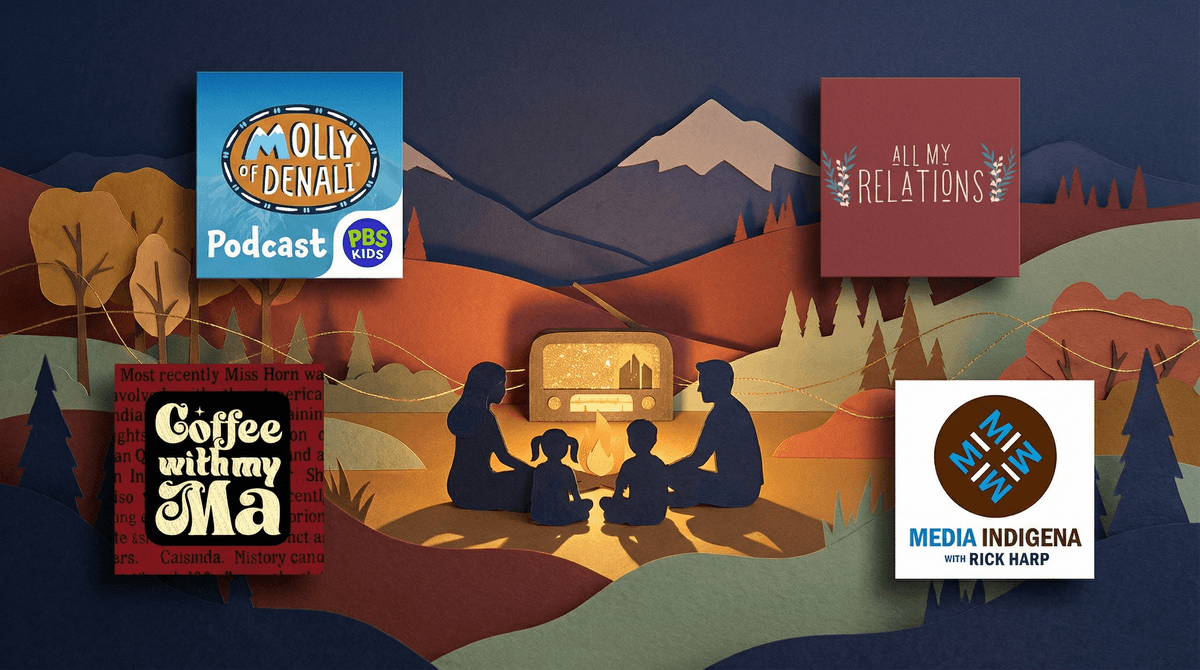
We talk a lot about screen time and digital wellness, but let's be real: not all audio content is created equal. Podcasts with Indigenous voices are shows created by, featuring, or centered on Indigenous peoples, their stories, cultures, and perspectives. These aren't anthropology lectures or "educational content" in the dusty textbook sense—they're authentic storytelling, contemporary conversations, history told by the people who lived it, and cultural knowledge shared on Indigenous terms.
Think of it this way: if your kid can recite every Bluey episode but has never heard a story told by an Indigenous person, there's a gap there. And podcasts are honestly one of the most accessible ways to start filling it.
These shows range from folklore and traditional stories to contemporary Indigenous perspectives on everything from science to pop culture. Some are specifically made for kids, others are family-friendly, and some are more geared toward teens and adults but offer valuable listening for families ready to engage with more complex topics.
Here's the thing: representation matters, and so does whose voice tells the story. Most kids grow up consuming an overwhelming amount of media created from a very narrow cultural perspective. Even when Indigenous peoples are included in mainstream content, they're often historical figures, stereotypes, or side characters in someone else's story.
Podcasts with Indigenous hosts and creators flip that script entirely. Kids (and parents) hear:
- Contemporary Indigenous life that isn't stuck in the past
- Diverse Indigenous cultures (there are 574 federally recognized tribes in the U.S. alone, plus hundreds more Indigenous nations globally)
- Stories told with cultural authority rather than filtered through a non-Indigenous lens
- Language preservation efforts and the beauty of Indigenous languages
- Critical thinking about history, land, and whose stories get told
And honestly? These podcasts are often just better than a lot of the mindless content kids consume. They're engaging, well-produced, and offer something genuinely enriching without being preachy.
The landscape is growing but still limited. Unlike the explosion of general kids' podcasts, Indigenous-created podcasts are fewer in number—which makes sense given historical barriers to media production and funding. But what exists is often exceptional quality.
Age ranges vary widely. Some shows are designed specifically for young kids, while others tackle topics like treaty rights, missing and murdered Indigenous women, or colonialism that are more appropriate for teens and adults. Always preview first.
Cultural protocols matter. Some stories are seasonal (meant to be told only in winter, for example), some are sacred and not meant for general audiences, and some are shared specifically to educate non-Indigenous listeners. Respect those boundaries when they're mentioned.
Not all Indigenous content is labeled clearly. You might find amazing shows that don't have "Indigenous" in the title but are created by Indigenous people. Look for creator bios and "about" sections.
For younger kids (ages 5-10):
Kookum's Kitchen is a gorgeous series featuring Elder Maria Campbell sharing Métis stories, recipes, and teachings. It's gentle, warm, and perfect for family listening.
Ancestral Voices (by Makwa Creative) features Indigenous stories told in both English and Indigenous languages—a beautiful way to expose kids to language diversity.
For middle grade (ages 8-13):
Molly of Denali Podcast extends the PBS show with Alaska Native stories, language lessons, and cultural insights. If your kid liked the show, the podcast is a natural next step.
Warrior Women Project shares stories of Indigenous women leaders, activists, and change-makers—great for kids ready to hear about real-world impact.
For teens and family listening:
All My Relations is one of the most well-known Indigenous podcasts, hosted by Matika Wilbur and Adrienne Keene. It tackles contemporary issues affecting Indigenous communities with depth and nuance. This is for older teens or family listening where you can discuss complex topics together.
This Land (Season 1 and 2) investigates the Supreme Court case that redefined tribal sovereignty in Oklahoma and explores Indigenous land rights. It's investigative journalism at its best—think Serial but centered on Indigenous issues.
Coffee with My Ma features conversations between host Jade Harper and her mom about residential schools, intergenerational trauma, and healing. It's heavy but important for teens ready to understand this history.
For parents:
Indigenous in Music explores Indigenous artists across all genres. Great for expanding your own playlists and discovering music to share with kids.
Media Indigena covers Indigenous perspectives on current events—helpful for parents wanting to understand issues more deeply so you can talk about them with your kids.
Car time is podcast time. Swap out one music session per week for a podcast episode. Start with something story-based like Kookum's Kitchen.
Make it a conversation. After listening, ask: "What did you think?" "What was new to you?" "What questions do you have?" Don't lecture—just listen to what they noticed.
Follow up with books, art, or food. If a podcast mentions a traditional food, look up a recipe together. If it references a book, check if your library has it. Extend the learning naturally.
Don't make it a "special lesson." The goal isn't to turn this into Indigenous Peoples Day homework. Just normalize hearing Indigenous voices as part of your regular media diet.
Acknowledge your own gaps. It's okay to say "I don't know much about this either—let's learn together." Model curiosity, not authority.
If your family can spend hours listening to Wow in the World or watching Bluey, you can absolutely make space for podcasts with Indigenous voices. It's not about guilt or checking a box—it's about expanding the range of stories and perspectives your kids encounter.
The digital world is vast, but it's also often very narrow in whose voices get amplified. Podcasts with Indigenous creators offer something genuinely different: authentic storytelling, cultural richness, and perspectives that challenge the default narratives kids absorb everywhere else.
Start with one episode. See what resonates. And remember: this isn't about becoming an expert in Indigenous cultures—it's about making sure your kids grow up knowing that Indigenous peoples are here, now, creating incredible content and telling their own stories.
Pick one podcast from the list above and listen to an episode this week. That's it. Don't overthink it.
If your kids are curious and want more, explore other ways to incorporate Indigenous perspectives into your family's media habits. If they're not immediately hooked, that's okay too—try a different show or come back to it later.
And if you're looking for more podcast recommendations across different topics, check out our guide to the best podcasts for kids by age.