

Look, we all want our kids to see themselves in the stories they consume. But here's the thing that's equally important: we want them to see other kids too. Kids who don't look like them, don't live like them, don't have families that match their own.
Podcasts with diverse characters are audio shows that feature protagonists and supporting characters from different racial, ethnic, cultural, religious, and family backgrounds. They include kids with disabilities, neurodiverse kids, LGBTQ+ characters and families, immigrant experiences, and all the beautiful variety that actually exists in the world.
The magic of podcasts is that they're pure story. No visual stereotypes, no casting limitations, no budget constraints on "diverse" settings. Voice actors can play anyone. A fantasy world can have a deaf protagonist. A mystery series can feature a kid navigating two cultures. And because it's audio, kids' imaginations fill in the details in ways that can be deeply personal.
Here's what the research keeps showing us: kids who encounter diverse characters in media develop stronger empathy, better perspective-taking skills, and more nuanced understanding of people different from themselves. This isn't "nice to have" — it's foundational social-emotional learning.
But there's another piece that's equally crucial: representation for kids who rarely see themselves. When a kid hears a story about someone who shares their experience — whether that's having two dads, speaking Spanish at home, using a wheelchair, or being adopted — it's validating in a way that's hard to overstate.
And podcasts? They're sneaky good at this because kids consume them differently than video content. They listen while drawing, before bed, on car rides. The stories seep in. Characters become companions. And because there's no visual component, kids often connect with characters on a deeper, more emotional level.
The podcast landscape for kids has exploded in the past few years, and some shows are doing genuinely impressive work with representation:
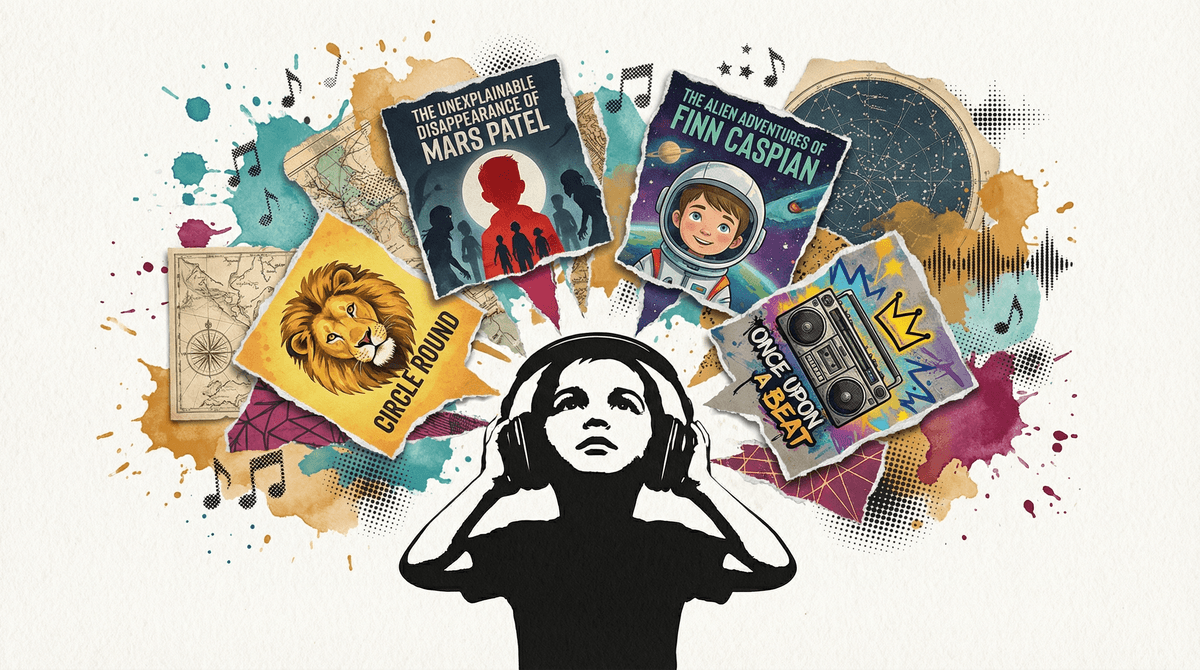
The Unexplainable Disappearance of Mars Patel (Ages 8-12) features an Indian American protagonist and a beautifully diverse friend group where their backgrounds are part of who they are, but not the "point" of the story. It's just... normal. Which is exactly what we need.
Six Minutes (Ages 8-14) has a multiracial cast and includes characters with different abilities in a thriller that keeps kids absolutely hooked. The diversity is woven into the fabric of the story naturally.
Finn Caspian: Science Fiction for Kids (Ages 5-10) features characters from various backgrounds and includes matter-of-fact representation of different family structures in its space adventure setting.
Once Upon a Beat (Ages 6-10) retells classic fairy tales with diverse characters and hip-hop music. Cinderella might be Latina, Jack might be Black — and it's done with genuine care and cultural authenticity.
The Alien Adventures of Finn Caspian and Circle Round (Ages 4-10) both draw from folktales and stories from cultures around the world, giving kids exposure to narrative traditions beyond Western European fairy tales.
Ages 4-7: Look for shows that normalize diversity without making it "educational." Eleanor Amplified features a Black female radio reporter solving mysteries. Sparkle Stories includes characters from various backgrounds in gentle, imaginative tales.
Ages 8-11: This is the sweet spot for serialized adventure podcasts with diverse casts. The Radio Adventures of Dr. Floyd and Book Club for Kids both feature diverse hosts and guests discussing books with diverse characters.
Ages 12+: Older kids can handle more complex explorations of identity and culture. Terrible, Thanks for Asking (with parental guidance) and This American Life episodes can spark incredible family conversations about lived experiences different from your own.
Not all "diverse" content is created equal. There's a difference between tokenism (one character of color in an otherwise homogeneous cast who exists to teach lessons about racism) and authentic representation (diverse characters who are fully realized people with their own stories, motivations, and arcs).
Look for shows where:
- Diverse characters are protagonists, not sidekicks
- Cultural backgrounds are depicted with specificity and respect
- Creators include people from the communities they're representing
- Diversity exists across multiple dimensions (not just racial)
The "own voices" question matters. When possible, seek out podcasts created by people from the communities being represented. A podcast about a Mexican American kid created by Mexican American writers will almost always have more authenticity and nuance than one created by people outside that experience.
Your comfort level isn't the goal. Sometimes you'll hear perspectives or experiences in these podcasts that challenge your worldview. That's... kind of the point. If your kid is listening to a story about a family with two moms and you're not sure how you feel about that, maybe that's worth exploring rather than hitting stop.
For younger kids (4-8): Keep it simple and normalize differences. "Yeah, Finn's family has two dads! Some families have two moms, some have two dads, some have one parent, some have grandparents raising them. All kinds of families!"
For middle elementary (8-11): Start asking questions that build empathy. "How do you think Mars felt when the other kids mispronounced his name? Have you ever felt left out like that?" Connect the story to their own experiences and feelings.
For tweens/teens (12+): Go deeper. "What did you think about how that character navigated being the only one who looked like them? Do you think that happens at your school?" Listen more than you talk. Their observations might surprise you.
Diverse character podcasts aren't about checking boxes or being performatively woke. They're about giving kids access to the full spectrum of human experience through story — which is literally how humans have built empathy and understanding since we started sitting around fires telling tales.
The best part? Unlike video content where you're fighting for their attention against algorithmically-optimized dopamine hits, podcasts work with kids' natural rhythms. They can listen while doing other things. They can replay favorite episodes. They can let their imaginations run wild.
Start with one show that sounds interesting. Listen to an episode together. See what resonates. And then let your kid explore from there.
Ready to find the perfect podcast for your kid? Check out our full guide to kid-friendly podcasts with recommendations by age and interest.
Want to go deeper on representation in media? Our guide to talking to kids about diversity in media has conversation starters and age-appropriate approaches.
Looking for more audio content? Audiobooks vs. podcasts for kids breaks down the differences and when each format works best.