

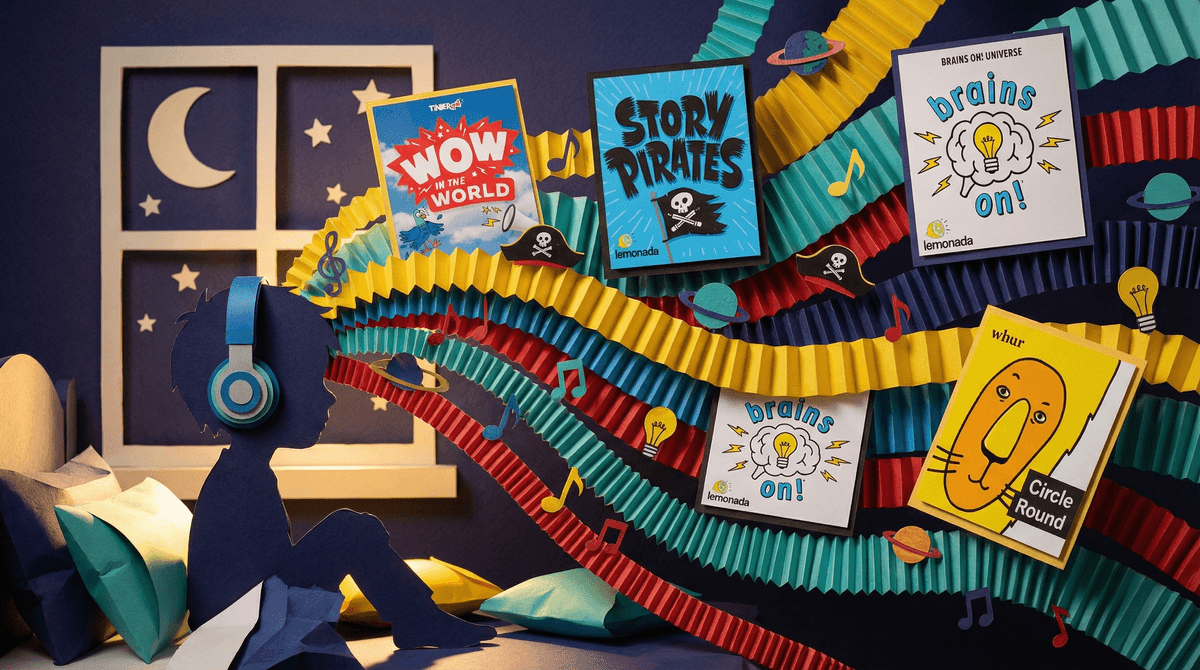
Kids podcasts are audio shows designed specifically for children—no screens required. They range from silly story adventures to science explainers to calming bedtime tales. Think of them as the spiritual successor to old-school radio shows, except your kid can listen on a smart speaker, in the car, or on a hand-me-down phone without a data plan.
The kids podcast space has absolutely exploded in the past few years. Shows like Wow in the World, Story Pirates, and Brains On! have millions of downloads and dedicated fan communities. And honestly? This is one digital trend that deserves the hype.
Screenwise Parents
See allFor kids, podcasts hit that sweet spot of entertainment that feels independent and grown-up. They can listen while building with Legos, drawing, or just zoning out on the couch. No one's telling them to "stop staring at the screen." The good ones are genuinely funny, engaging, and make learning feel like eavesdropping on something cool.
For parents, podcasts are the rare screen-free win. They can fill the void during long car rides without resorting to tablets. They encourage imagination and active listening—skills that feel increasingly rare when everything else is visual and fast-paced. Plus, many shows sneak in actual educational content without the "eat your vegetables" vibe.
The best part? Unlike YouTube, where one wrong click leads to unboxing videos or Skibidi Toilet remixes, podcasts are generally much easier to control. Most podcast apps don't have algorithms pushing random content at your kids.
Ages 3-6: Look for shorter episodes (10-15 minutes max) with clear narratives and sound effects. Circle Round does folktales beautifully, and Tumble Science Podcast for Kids keeps science concepts simple and fun. At this age, you'll probably need to help them navigate the app and choose episodes.
Ages 7-10: This is the golden age for kids podcasts. They can handle longer episodes (20-30 minutes), more complex stories, and shows that blend education with entertainment. Brains On! is phenomenal for curious kids who ask "why" about everything. The Past and The Curious makes history genuinely entertaining. Story-driven shows like The Alien Adventures of Finn Caspian hook kids who love narrative.
Ages 11+: Tweens and teens can graduate to shows that tackle bigger concepts. But Why: A Podcast for Curious Kids handles questions about everything from death to democracy. Some kids this age also start enjoying "adult" podcasts that are still appropriate—think Radiolab or This American Life episodes.
Not all kids podcasts are created equal. Some are genuinely educational and well-produced. Others are basically ads for toys or poorly disguised content marketing. And yes, there are podcasts that are just... not good. Low production value, annoying hosts, or content that's supposed to be funny but misses the mark entirely.
Check the sponsors and ads. Many kids podcasts are ad-supported, and some ads are more appropriate than others. Some shows (especially on networks like NPR) are ad-free or sponsor-supported in a way that's less intrusive.
Podcasts can be habit-forming in a good way. Unlike the dopamine hit of TikTok or YouTube, podcasts encourage sustained attention. Kids learn to follow a story or argument for 20-30 minutes. That's not nothing.
You can't completely set-and-forget. While podcasts are generally safer than video platforms, you should still preview shows before handing them over, especially for younger kids. Some shows tackle mature themes (death, war, puberty) that might be fine for your family but worth knowing about first.
The "educational" label is sometimes generous. Yes, Wow in the World teaches science concepts. But it's also loud, chaotic, and some parents find it grating (kids love it though). Meanwhile, story podcasts might not teach facts but absolutely build literacy and imagination. Both have value—just know what you're getting.
1. Pick a platform. Most families use Spotify, Apple Podcasts, or a smart speaker (Alexa, Google Home). For younger kids, consider a dedicated kids podcast app like Kinderling or setting up a kid-friendly playlist in your main app.
2. Start with a sampler. Try a few different shows to see what clicks. Some kids love the high-energy chaos of Story Pirates, others prefer the calmer vibe of Circle Round.
3. Make it routine. Podcasts work best when they're part of a regular rhythm—morning breakfast, car rides, quiet time after school, or bedtime wind-down.
4. Listen together sometimes. Especially with educational podcasts, listening together gives you natural conversation starters. "Wait, did you know that about octopuses?" becomes a dinner table topic.
Kids podcasts are one of the rare digital parenting wins that actually lives up to the hype. They're screen-free, they encourage imagination and listening skills, and they can genuinely entertain and educate without the algorithmic chaos of video platforms.
Are they a replacement for reading together or outdoor play? No. But they're a solid addition to your family's media diet, especially if you're trying to reduce passive screen time without just creating a void of boredom.
The key is being intentional about what you introduce—just like you wouldn't hand your kid the TV remote and walk away, take a few minutes to preview podcasts and set up a curated list. After that? Let them explore, get obsessed with weird science facts, and maybe even learn something while you're stuck in traffic.
Next Steps: Check out our guide to the best educational podcasts for kids or browse our full collection of kids podcast reviews to find something perfect for your family's vibe.