

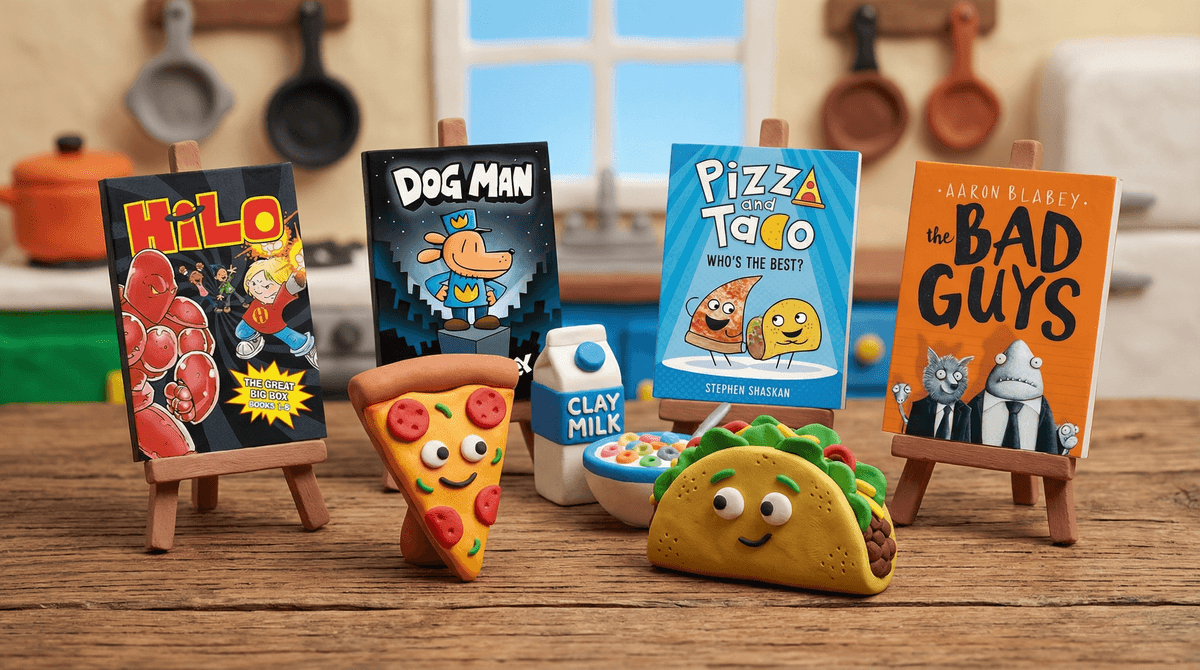
Pizza and Taco is a graphic novel series by Stephen Shaskan that follows two best friends who happen to be, well, a slice of pizza and a taco. These books are pure wholesome chaos—think silly debates about who's the best food, adventures involving magic wands and haunted houses, and the kind of friendship problems that feel huge when you're seven but are actually pretty sweet.
The series launched in 2021 and has become a staple in elementary school libraries and Scholastic Book Fair hauls. If your kid came home clutching one of these books with that "I NEED the rest of the series" energy, you're not alone. These books hit that sweet spot for early chapter book readers who are ready to graduate from picture books but aren't quite ready for Dog Man levels of plot complexity.
The humor is delightfully absurd. Pizza and Taco argue about whether a hot dog is a sandwich (it's not, fight me). They get superpowers. They worry about whether they're cool enough. The jokes are silly without being annoying—no potty humor for the sake of it, just good-natured food puns and friendship drama.
The format is perfect for emerging readers. These are graphic novels with short chapters, lots of illustrations, and dialogue bubbles that make kids feel like they're reading "real books" without the intimidation factor. The text-to-image ratio is ideal for kids who are building reading stamina but still need visual support. Teachers love these for reluctant readers—kids who say they "hate reading" will often devour these.
The friendship dynamics are genuinely relatable. Pizza and Taco bicker, make up, get jealous of each other, and work through their problems. It's not preachy "here's how to be a good friend" content—it's just two characters navigating the messy reality of caring about someone while also being your own person. Kids see themselves in these conflicts, whether it's feeling left out, worrying about being weird, or trying to figure out who you are.
Ages 5-8: Perfect sweet spot. This is the target audience, and it shows. The humor, the conflicts, the reading level—all calibrated for early elementary. First and second graders especially lose their minds over these books.
Ages 9-10: Still enjoyable but might feel "young." Third and fourth graders who loved the series at 7 might still pick them up for comfort reads, but they're probably ready for more complex series like Hilo or The Bad Guys.
Reading level: Officially listed at Lexile GN270-350L, which translates to late first/early second grade independent reading or kindergarten/first grade read-aloud territory.
These books are genuinely wholesome. No hidden agenda, no concerning content, no "wait, what did they just say?" moments. The biggest conflict is usually something like "Pizza feels bad because Taco made a new friend" or "They can't agree on what game to play."
They're actually funny. Not just "funny for kids"—there are jokes that land for adults too. The self-awareness about being anthropomorphic food items, the meta humor, the way they tackle philosophical questions like "What makes something cool?"—it's clever without trying too hard.
The diversity is casual and natural. The supporting cast of food characters includes all kinds of cuisines and backgrounds, presented without fanfare. It's just... normal. Which is exactly how it should be.
They might spark some interesting conversations. My favorite thing about this series is how it creates openings to talk about friendship, identity, and belonging without feeling like a "lesson." When Pizza worries that they're not cool enough, or when Taco feels jealous—these are real emotional experiences your kid is probably navigating too.
The series is ongoing. As of 2026, there are eight books in the main series, plus some spin-offs and activity books. Good news if your kid gets hooked: there's plenty of content. Bad news for your wallet at the book fair: there's plenty of content.
Pizza and Taco is exactly what you want in an early reader series: engaging, age-appropriate, actually well-written, and genuinely supportive of reading development. These aren't books you need to pre-screen for content concerns or worry about. They're books you can hand to your kid and know they'll both enjoy them and benefit from them