

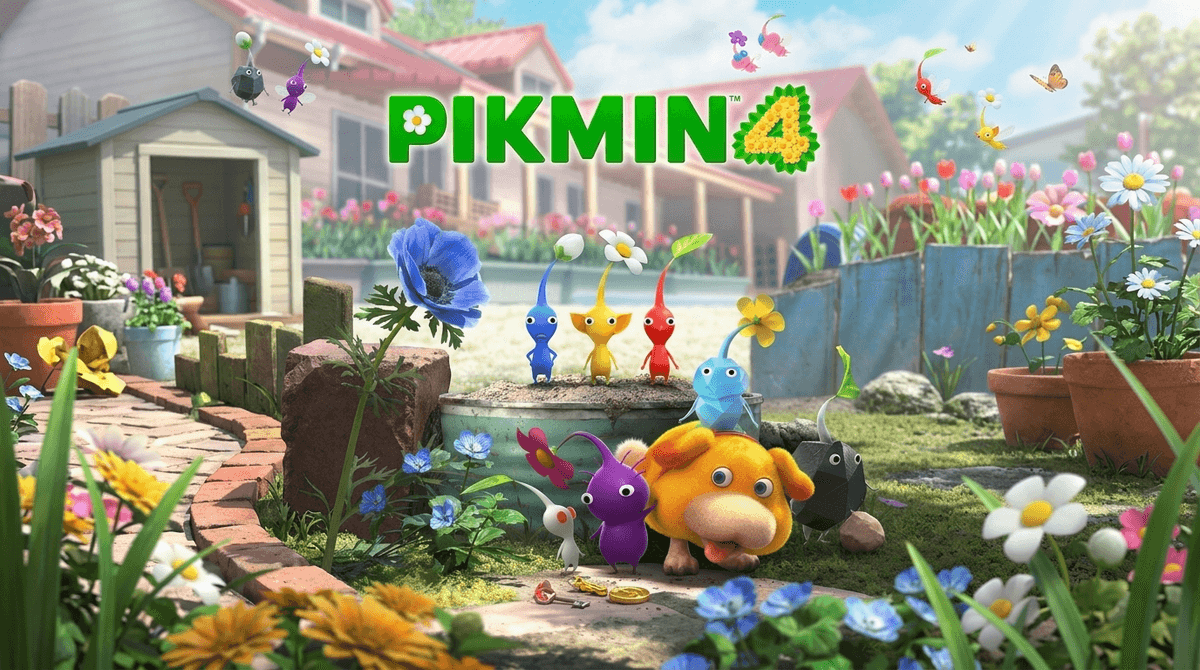
TL;DR: Pikmin 4 is a rare "triple-threat" in gaming: it’s genuinely fun, visually stunning, and teaches high-level executive function skills like multitasking and efficiency (what the game calls "Dandori"). It’s a single-player (mostly) experience on the Nintendo Switch with zero microtransactions, no online chat risks, and a high "WISE" score for intentional parents.
Check out our full breakdown of the best strategy games for kids
Find more Nintendo Switch recommendations
If you haven’t seen it over your kid’s shoulder yet, Pikmin 4 is a real-time strategy (RTS) and puzzle game. You play as a tiny customizable space explorer who has crashed on a planet that looks suspiciously like a giant, overgrown version of a suburban backyard.
To survive and rescue other "castaways," you lead a small army of "Pikmin"—plant-like creatures with different abilities. Red ones are fireproof, Blue ones can swim, Yellow ones handle electricity, and so on. In this fourth installment, Nintendo also added Oatchi, a two-legged "Space Dog" who acts as a mount, a heavy-lifter, and a secondary protagonist.
Unlike the high-octane chaos of Fortnite or the sandbox aimlessness of Roblox, Pikmin is about order. It’s about looking at a pile of tasks and figuring out the most logical way to check them off before the sun goes down.
If you take one thing away from this guide, let it be the word Dandori.
The game explicitly uses this Japanese term, which translates to "the art of organizing your tasks strategically and working effectively to execute plans." In the game, there are literally "Dandori Battles" where the goal isn't just to beat an opponent, but to out-plan them.
For a parent, this is music to the ears. While your kid thinks they are just trying to get a giant strawberry back to their base, they are actually practicing:
- Prioritization: Which task is most urgent?
- Delegation: Which Pikmin type is best for this job?
- Multitasking: Sending Oatchi to dig up a treasure while the explorer leads a group to build a bridge.
- Time Management: Every "day" in the game is about 15 minutes of real time. If you don't get your Pikmin back to base by sunset, they get eaten.
It’s basically "Project Management: The Game," but with adorable whistling plant-babies.
Learn more about how video games can improve executive function
It’s easy to see why this hits the sweet spot for the 7-12 age range. It offers a sense of autonomy and mastery.
- The Collection Loop: Kids love collecting things. Whether it's Pokemon cards or digital treasures, Pikmin 4 is full of "treasures" (which are actually everyday human objects like fidget spinners and Game Boys) that provide a constant dopamine hit.
- Oatchi the Dog: Let’s be real—the dog carries the game. You can upgrade his skills, pet him, and watch him carry 100 times his weight. It adds a "pet simulator" layer to the strategy.
- Low Barrier to Entry, High Ceiling: The early levels are easy and forgiving (especially compared to the older Pikmin 1-3 titles), but the "Dandori Challenges" later in the game will actually make them think.
- Rewind Feature: This is a huge win for emotional regulation. If a kid makes a massive tactical error and loses half their Pikmin army to a giant bulborb, they can "Rewind Time" a few minutes. It prevents the "rage quit" and encourages them to try a different strategy instead.
We talk a lot at Screenwise about "digital nutrition." If YouTube Shorts are the equivalent of eating a bag of sugar, Pikmin 4 is a balanced meal with a side of kale that actually tastes like candy.
It requires active engagement. You cannot "zone out" while playing Pikmin. You have to navigate 3D environments, manage resources, and solve environmental puzzles. It’s the antithesis of the passive consumption we worry about with social media.
Recommended Age: 7+
While the ESRB rating is E for Everyone, there are a few things to keep in mind:
The "Sadness" Factor
Pikmin are cute. They make little squeaking noises. When they die (and they will), they turn into little ghosts and float away with a tiny sigh. For very sensitive younger children (ages 5-6), this can actually be a bit upsetting. However, for most kids, it’s a lesson in consequences and managing resources.
Reading Level
There is a fair amount of dialogue and tutorial text. If your child isn't a confident reader yet, you’ll likely need to sit with them for the first hour or two to help them understand the mechanics.
Complexity
The "Night Expeditions" and late-game "Sage Leaf" trials can get genuinely difficult. If your child struggles with frustration, Pikmin 4 is a great place to practice "growth mindset" because of that rewind feature mentioned earlier.
This is where Pikmin 4 really shines for parents who are tired of being asked for "just ten more dollars" for skins.
- Zero Microtransactions: You buy the game once, and you own the whole thing. There are no "Pikmin Coins," no battle passes, and no loot boxes.
- No Online Interaction: There is no voice chat or text chat with strangers. There are online leaderboards for Dandori challenges, but that’s the extent of the "social" features.
- Co-op Mode (The "Pebble Pitcher"): Note that the 2-player mode is a bit lopsided. Player 1 does the heavy lifting, while Player 2 just aims a cursor to throw rocks at enemies. It’s great for a parent playing with a younger child, but might be disappointing for two siblings who both want to be the "main character."
Compare Pikmin 4 to other "cozy" strategy games like Animal Crossing
The best way to engage with a kid playing Pikmin 4 is to lean into the Dandori concept. It’s a great bridge to real-world skills.
- Ask about their plan: "What's your Dandori for this level? Are you going to clear the enemies first or build the bridge?"
- Use the terminology at home: (Half-jokingly) "Hey, let’s use some Dandori to get this playroom cleaned up. If you pick up the Legos while I put the books away, we’ll be done in five minutes."
- Discuss the trade-offs: "I saw you lost some Blue Pikmin in that water battle. Was there a way to use Oatchi instead to keep them safe?"
Pikmin 4 is one of the easiest "Yes" decisions a parent can make. It’s a premium, high-quality experience that respects the player's intelligence and the parent's wallet. It swaps the mindless "click-click-click" of many mobile games for thoughtful, strategic planning.
If your kid is asking for a new game and you want something that will actually build some brain cells while they're having fun, this is the one.
- Check the Screenwise Community Data: See what percentage of other parents in your school district are allowing Pikmin 4 compared to The Legend of Zelda: Tears of the Kingdom.
- Download the Demo: Nintendo offers a very generous free demo on the Switch eShop. Your child can play the first hour or two for free, and their progress will carry over if you buy the full game.
- Set a "Sunset Rule": Since the game is played in "days," it’s very easy to set screen time boundaries. "You can play two more game-days" is much clearer than "ten more minutes."
Get a screen time contract template for the Nintendo Switch
Explore our guide to the best Nintendo Switch parental controls