

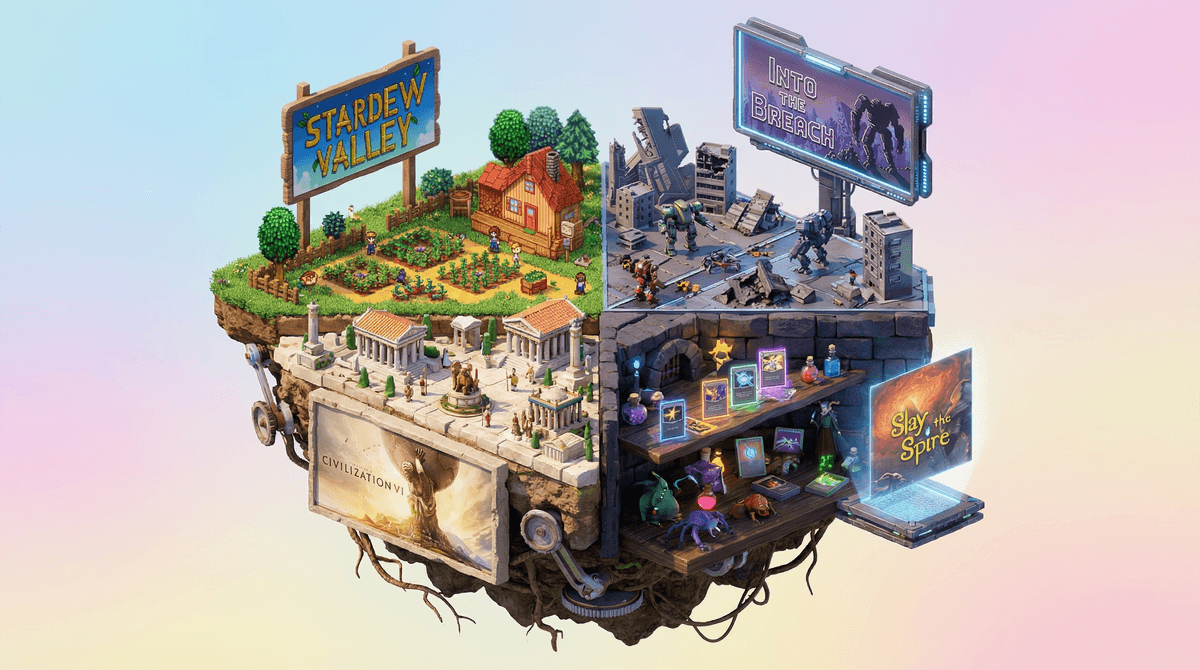
Strategy games are basically the chess of the digital age—except way more engaging for kids who think chess is "boring old people stuff." These are games where success comes from planning ahead, managing resources, and thinking through consequences rather than having the fastest reflexes or the most aggressive playstyle.
Unlike the frantic pace of battle royales or the button-mashing of platformers, strategy games reward patience and critical thinking. Whether it's building a civilization, managing a farm, planning tactical battles, or solving puzzles, these games make kids use their brains in ways that actually translate to real-world skills.
And here's the thing: strategy games can be genuinely educational without feeling like homework. They're teaching decision-making, resource management, spatial reasoning, and delayed gratification—all while kids think they're just having fun.
Let's be honest: strategy games aren't always the first choice for kids who've been raised on the dopamine hits of Fortnite or the endless scroll of TikTok. These games require actual patience, which can feel like a hard sell in 2026.
But here's what happens when kids do get hooked on a good strategy game: they develop this incredible sense of accomplishment that comes from executing a plan they came up with themselves. There's something deeply satisfying about looking at a thriving city you built from scratch, or winning a battle because you positioned your units perfectly three turns ago.
Strategy games also tend to have way less toxic behavior than competitive multiplayer games. When you're playing against AI or taking turns with friends, there's no one screaming slurs in voice chat. And many strategy games can be paused, which is a godsend for family life.
The challenge is finding the right entry point—games that are strategic enough to be engaging but not so complex that kids bounce off them in frustration.
Ages 6-9: Gateway Strategy Games
Plants vs. Zombies remains an absolute classic for introducing younger kids to tower defense strategy. It's colorful, funny, and teaches resource management and defensive positioning without feeling overwhelming. The progression is perfectly paced for this age group.
Pokémon games (especially the mainline titles) are secretly strategy games wrapped in adorable creature-collecting packaging. Building a balanced team, understanding type matchups, and managing resources teaches strategic thinking. Just be aware that some of the newer games have gacha mechanics that can encourage spending.
Sago Mini games offer gentle problem-solving for the youngest strategists, though they're more puzzle-adjacent than pure strategy.
Ages 8-12: Building the Strategic Mind
Minecraft in Survival Mode is genuinely a strategy game when played intentionally. Resource gathering, base building, planning expeditions—it's all there. The key is encouraging kids to set goals and plan rather than just wandering around punching trees forever.
Stardew Valley is phenomenal for this age group. It teaches time management, resource allocation, and long-term planning as you build up your farm. It's cozy and low-pressure but genuinely strategic if you want to optimize your farm layout and seasonal planning. No violence, no pressure, just thoughtful decision-making.
Civilization VI is the big leagues for 10+ kids who are ready for complex strategy. Yes, it involves warfare, but it's abstract and turn-based. The real education here is in understanding how different systems (science, culture, economy, military) interact. Fair warning: games can take HOURS, and "just one more turn" is a very real addiction.
Into the Breach is a brilliant tactical strategy game where you control giant mechs protecting cities from alien bugs. What makes it special: every battle is a puzzle with a solution, and you can see exactly what the enemies will do next turn. It teaches planning and consequence management beautifully. Appropriate for 10+.
Ages 12+: Advanced Strategic Thinking
Slay the Spire is a card-based strategy game that's essentially a masterclass in probability, synergy, and risk management. It's challenging but fair, and teaches kids to think about building systems rather than just individual moves.
XCOM 2 is for older teens who can handle the pressure. It's a tactical strategy game about defending Earth from aliens, and it's genuinely difficult. The strategic layer (managing your base and resources) combined with tactical combat missions creates a complex web of decisions. Note: it has violence and some intensity, so 14+ is probably the sweet spot.
Fire Emblem: Three Houses combines tactical combat with relationship-building and school management. It's anime-styled and has some romance elements (nothing explicit), but the strategic gameplay is top-tier. Good for 13+.
The Board Game Connection
Don't sleep on actual physical strategy games. Catan teaches negotiation and resource management. Ticket to Ride is perfect for younger strategists learning about planning routes and blocking opponents. Azul teaches pattern recognition and spatial strategy.
The face-to-face nature of board games also teaches social strategy—reading opponents, negotiating, handling loss gracefully—in ways that digital games often can't.
Time commitment is real. Strategy games, especially good ones, don't fit into 15-minute sessions. A single game of Civilization can take 4+ hours. This isn't necessarily bad—it's teaching sustained focus—but it does require planning around other responsibilities.
The learning curve can be steep. Many strategy games have complex systems that take time to understand. Your kid might need to watch tutorial videos or play through failures before things click. This is actually great for building frustration tolerance and growth mindset, but be prepared for the "this is too hard" phase.
Strategy games can be genuinely addictive in the "just one more turn" sense. The satisfaction of executing a long-term plan triggers real dopamine responses. Set clear time boundaries and stick to them.
Not all strategy games are created equal. Mobile strategy games in particular often use the "strategy" label to mask what are essentially pay-to-win gacha games. Clash of Clans and similar games have strategy elements but are really designed around waiting timers and in-app purchases. If you're looking for genuine strategic thinking, stick with premium games that you pay for upfront.
Many strategy games include warfare or combat, but it's usually abstract rather than graphic. A unit disappearing from a grid is very different from realistic violence. Still, know your kid's sensitivities.
Strategy games are probably the best genre of video games from a "skills development" perspective. They teach planning, systems thinking, resource management, and patience—all things that translate directly to academic and life success.
The trick is finding games that match your kid's current patience level and gradually increasing complexity. Start with something like Plants vs. Zombies or Stardew Valley, and work up to more complex games as they develop their strategic muscles.
And honestly? Playing strategy games together can be a fantastic bonding experience. Teaching your kid to think several moves ahead in Catan or discussing different approaches to building a civilization creates real conversations about decision-making and consequences.
Just be warned: once they get good at strategy games, they might start beating you. And they will absolutely gloat about it.
Try before you buy. Many strategy games have free demos or trial versions. Let your kid test whether they actually enjoy the slower pace before investing in a $60 game they'll play once.
Watch gameplay videos together. YouTube has tons of strategy game content. Watching someone play can help kids understand if a game's complexity level is right for them.
Consider starting with board games. Physical strategy games are often less expensive, easier to understand, and teach the same skills. Plus, they're naturally limited in screen time.
Set clear time boundaries. "One more turn" syndrome is real. Agree on stopping points before starting (like "after this battle" or "when the in-game day ends") rather than trying to pull kids away mid-strategy.
Want to explore specific games in more detail? Check out our guide to Minecraft as a learning tool or learn about age-appropriate gaming.