

Okay, so you know how some kids would rather eat broccoli than pick up a 300-page chapter book? Novels-in-verse might be your secret weapon.
These are full-length stories told through poetry instead of traditional prose. Think short lines, white space, emotional punches, and stories that somehow feel both faster to read and deeper to experience. Each page might have 50 words instead of 250, but those words hit different.
The format started gaining serious momentum in the late 90s with books like Monster by Walter Dean Myers, but it's absolutely exploded in the last decade. Now some of the most powerful, award-winning middle grade and YA books are written in verse—and kids who "don't like reading" are staying up past bedtime to finish them.
They look less intimidating. A kid opens the book, sees lots of white space, shorter lines, and thinks "I can do this." There's something psychologically powerful about flipping pages quickly and feeling like you're making progress.
The emotional intensity is wild. Poetry forces authors to distill feelings down to their essence. No flowery descriptions or long exposition—just raw emotion. Kids feel things deeply when they read these books, often in ways that surprise them.
They're perfect for reluctant readers. The format makes them accessible without feeling babyish. A 12-year-old who reads at a 4th grade level can pick up a novel-in-verse written for their age group and actually finish it. The content is age-appropriate, but the reading experience is more manageable.
They work for advanced readers too. Don't make the mistake of thinking these are "easy" books. The best novels-in-verse use sophisticated literary devices, tackle complex themes, and require real reading comprehension. Kids who love language appreciate the craft.
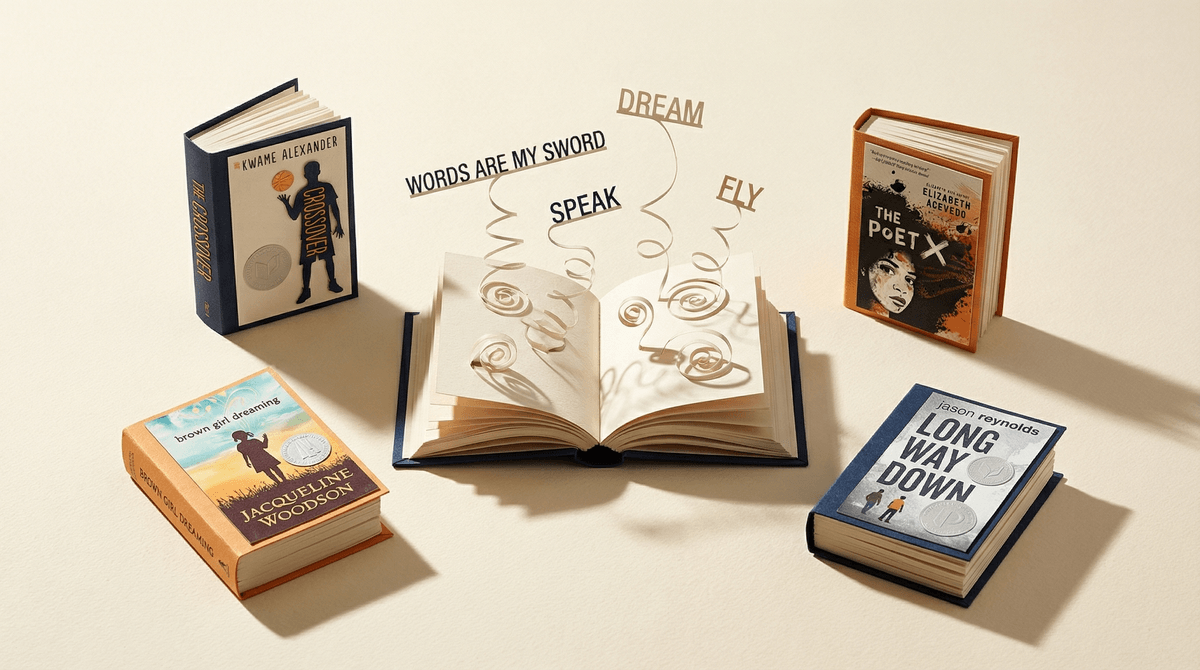
The Crossover by Kwame Alexander is probably the most famous modern example. Basketball, family, brotherhood, and a gut-punch ending. This book won the Newbery Medal and launched Alexander into superstar author status. Ages 10-14.
Brown Girl Dreaming by Jacqueline Woodson is a gorgeous memoir-in-verse about growing up Black in the 1960s and 70s. Woodson's writing is absolutely stunning, and kids connect with the universal feelings of belonging and identity. Ages 9-13.
Long Way Down by Jason Reynolds takes place entirely during a 60-second elevator ride. A teenage boy has a gun and is going to avenge his brother's death—but ghosts from his past appear on each floor. It's intense, it's powerful, and it will spark conversations about violence and cycles of revenge. Ages 13+.
Inside Out and Back Again by Thanhha Lai follows a Vietnamese girl fleeing Saigon in 1975 and starting over in Alabama. Based on the author's own experience, it's a beautiful story about immigration, loss, and resilience. Ages 9-13.
Clap When You Land by Elizabeth Acevedo tells the story of two girls who discover they're half-sisters after their father dies in a plane crash. Acevedo is a slam poet, and her rhythm and language are incredible. Ages 13+.
These books don't shy away from hard topics. Death, racism, violence, grief, family trauma—novels-in-verse often tackle the heaviest subjects. The poetry format somehow makes these topics feel more digestible, but you should still preview content if your kid is sensitive or you have specific concerns.
They're great conversation starters. The emotional directness of these books makes them perfect for talking with your kids about big feelings and tough situations. "What did you think about when..." becomes a natural question.
Reading level vs. content level can be tricky. A book might be readable for a 4th grader but deal with 7th grade themes. Check reviews on Common Sense Media or preview the book yourself if you're unsure.
They're often diverse and representation-rich. Many of the most celebrated novels-in-verse are by authors of color writing about their own experiences. This is a beautiful thing, but it also means some stories include experiences with racism, discrimination, and cultural identity that might be new territory for some families to discuss.
The audiobooks are often spectacular. Since these books are essentially poetry, the audio versions—especially when read by the authors—can be incredibly powerful. The Poet X read by Elizabeth Acevedo is a perfect example.
Elementary (Ages 8-10): Start with The Crossover, Brown Girl Dreaming, or Inside Out and Back Again. These deal with real issues but in ways that feel appropriate for this age.
Middle School (Ages 11-13): Pretty much any novel-in-verse is fair game, but preview books that deal with violence, sexual assault, or intense grief. Harbor Me by Jacqueline Woodson is beautiful for this age.
High School (Ages 14+): Long Way Down, The Poet X, and Clap When You Land are all excellent. These deal with mature themes but in ways that respect teen readers.
If your kid is struggling to find books that hook them, or if they're going through something hard and need a story that gets it, novels-in-verse might be exactly what they need. They're accessible without being condescending, emotional without being melodramatic, and they make reading feel less like homework and more like... feeling something real.
Start with The Crossover if your kid likes sports. Start with Brown Girl Dreaming if they're curious about history. Start with The Poet X if they're navigating identity and first love.
And then watch them actually want to tell you about what they're reading. That's the magic of these books.