


I’m not anti-screen. But I am cautious — and realistic.
The truth is: unlimited screens don’t serve kids well. They can interfere with sleep, attention, mood, and relationships. But in today’s world, it’s not realistic (or helpful) to avoid screens altogether.
So I look for a middle path. If kids are going to use screens, let’s make that time purposeful, creative, and supportive of their development.
I’ve tried a lot of apps and platforms (and ignored a lot of gimmicks). These are my five favorites right now — the ones I actually feel good recommending to parents and teachers.
1. Night Zookeeper
Use my link for a 7 day free trial and 50% off a one year subscription!
Who it’s for: Kids ages 6–12 who like stories, creativity, and games.
Why I love it: Night Zookeeper blends story-driven adventures with actual writing practice. Kids create characters, complete writing challenges, and play literacy games without realizing they’re working on grammar, vocabulary, and comprehension.
Over time, they’re building a portfolio of their own writing, all of which is reviewed by real tutors. The best part? It feels like play, not schoolwork.
Why it works: It gives reluctant writers a reason to write and confident writers space to flex their creativity. Teachers also get built-in progress tracking.
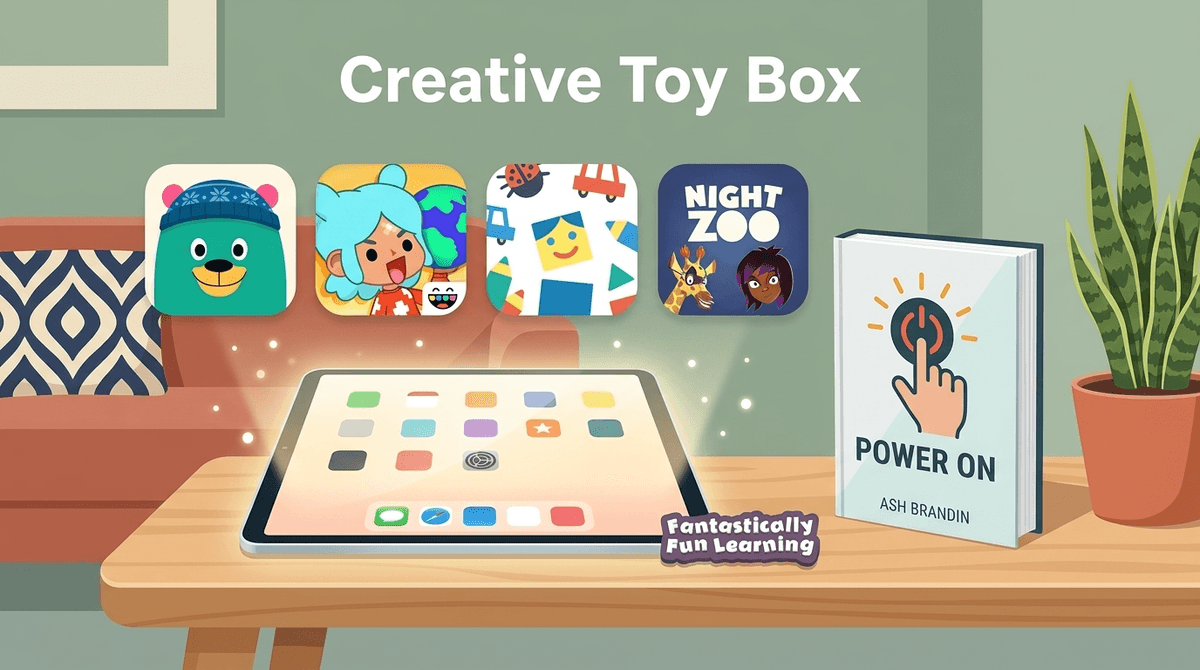
2. Pok Pok Playroom
Use my link for 25% off a monthly subscription!
Who it’s for: Toddlers through early elementary kids (ages 2–7).
Why I love it: Pok Pok is one of the most thoughtfully designed playroom apps I’ve seen. Award-winning and Montessori-inspired, there are no ads and no addictive tricks — just beautifully illustrated, open-ended activities.
Think of it as a digital toy box: kids can explore cause-and-effect, storytelling, and problem-solving through imaginative play.
Why it works: It’s screen time that mirrors real play, giving kids autonomy while encouraging curiosity and creativity.
3. Sago Mini
Use my link for 25% off a monthly subscription!
Who it’s for: Toddlers and preschoolers (ages 2–5).
Why I love it: Sago Mini is silly, lighthearted, and developmentally perfect for young kids. Each app lets kids explore themes — like pets, space, or neighborhoods—through adorable characters. It’s intuitive, safe, and playful, giving kids agency without overwhelming them.
Why it works: Kids get to “try on” different roles and explore the world in a safe, imaginative way. It’s also one of the few apps that keeps younger kids engaged without overstimulating them.
4. Khan Academy Kids
Who it’s for: Ages 3–8.
Why I love it: It’s free, research-backed, and designed by educators. There are stories, songs, and games for literacy, math, and even social-emotional learning. The interface is cheerful without being overwhelming.
Why it matters: If you’re going to spend screen time on “learning,” this one actually holds up. It’s trusted by teachers and aligns with standards and developmental goals.
5. Toca Boca
Use my link for 25% off a monthly subscription!
Who it’s for: Ages 4–10.
Why I love it: Toca Boca games are all about open-ended, imaginative play — like running a hair salon, cooking in a kitchen, or exploring a city. No scores, no time pressure — just exploration.
Why it matters: It’s one of the rare app suites that prioritizes creativity over competition or consumption.
Bonus: A Book I’m Loving Right Now
Available August 26th, 2025
I was lucky enough to get an advance copy of Ash Brandin’s ( @TheGamerEducator) new book Power On: Managing Screen Time to Benefit the Whole Family (out August 26, 2025), and I can’t recommend it enough.
If you’re interested in practical solutions to managing your family’s screen time, this book is for you.
What I appreciate about this book is that it doesn’t treat screens as the enemy. Instead, it reframes the conversation around tech, showing us that balance and boundaries are not only possible — they’re essential for the wellbeing of the whole family.
Brandin shares practical, easy-to-implement frameworks like:
-
ABCs of Screentime Management – Access, Behavior, Content
-
The S.T.A.R. Method – Settings, Time, Ads/App Store, Restrictions
-
N.I.C.E. Boundaries – Needs, Input, Consistent, Enforceable
These aren’t rigid rules — they’re realistic tools that actually work in busy households.
Why I recommend it: Too much parenting advice about screens is fear-based or unrealistic. Power On is calm, empowering, and deeply practical. It helps parents set boundaries that stick, without guilt, shame, or power struggles.
The Bottom Line
Screens aren’t going anywhere. But not all screen time is created equal.
The key is to be intentional — setting boundaries, modeling healthy use, and choosing resources that fuel creativity, curiosity, and connection.
These resources can help you do that.