

Movies That Teach Humility: Screen Time That Builds Character
Look, I'm not going to pretend that throwing on a movie is some revolutionary parenting move that'll transform your kid into a humble saint. But if they're going to watch something anyway—and let's be real, they are—why not choose films that actually give you something to work with?
Humility is one of those character traits that's incredibly hard to teach directly. You can't just say "be humble!" seventeen times and expect it to stick. But movies? Movies show what humility looks like in action, what it costs, and why it matters. And then you've got a shared reference point for actual conversations later.
The best humility-teaching films aren't preachy after-school specials. They're stories where characters genuinely learn they're not the center of the universe—and that realization makes them better, not diminished.
What to look for:
- Characters who fail and learn from it (not just "oops, lesson learned" but real consequences)
- Stories that value listening over talking
- Recognition that other people's experiences matter
- Growth that comes from admitting you were wrong
What to avoid:
- False humility that's really just self-deprecation
- "Humble yourself before authority" messages (that's obedience, not humility)
- Characters who are punished for confidence (we want humility, not insecurity)
For Younger Kids (Ages 5-9)
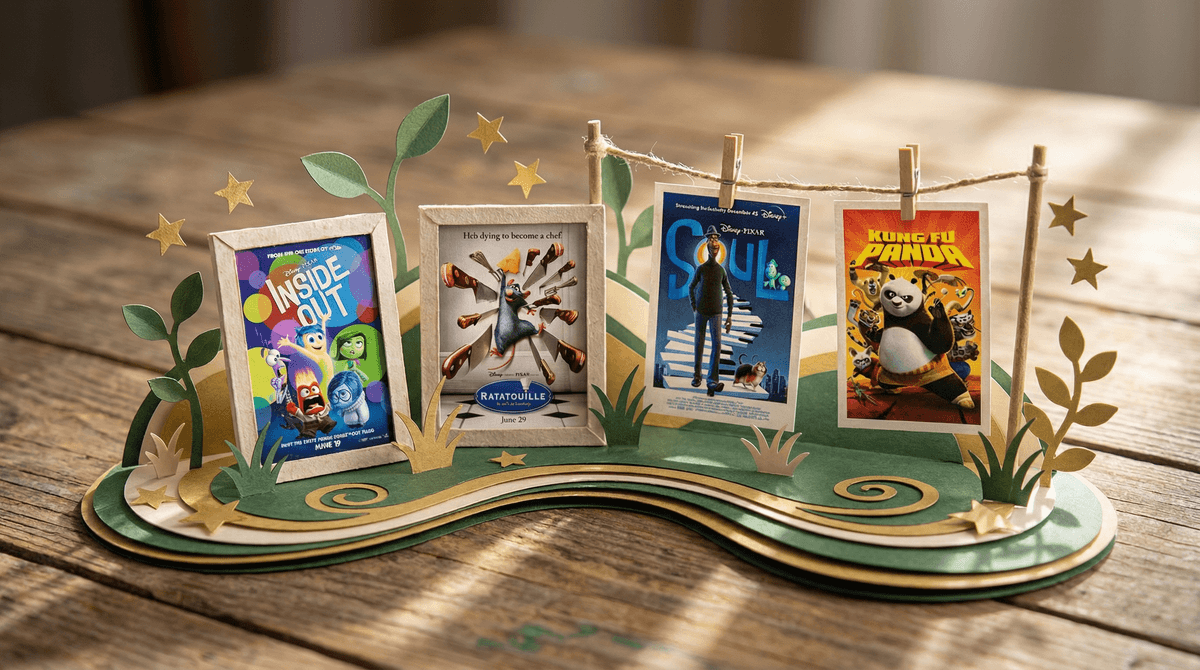
Ratatouille remains undefeated here. Linguini has to learn he's not the genius, Remy has to learn he can't do it alone, and even the critic Anton Ego gets a masterclass in humility. The line "Not everyone can become a great artist, but a great artist can come from anywhere" is chef's kiss for teaching kids that talent and worth aren't about status.
Kung Fu Panda gets it right too. Po starts out as a fanboy who thinks being the Dragon Warrior means being the coolest, strongest fighter. His journey to realizing there's "no secret ingredient" and that his worth isn't about being special—that's genuine humility. Plus the whole series reinforces it (though Kung Fu Panda 2 gets darker, heads up).
Encanto hits different because it's about a whole family learning they've been measuring worth wrong. Mirabel doesn't need a gift to matter, and the "gifted" family members learn their powers don't make them superior. "What else can I do?" is Isabela's humility breakthrough and it's genuinely moving.
For Middle Grades (Ages 9-12)
Inside Out (and honestly Inside Out 2 even more so) teaches emotional humility—the kind where you learn your feelings aren't facts and you don't have all the answers about yourself. Riley has to learn she's not "fine" and that asking for help isn't weakness.
The Mitchells vs. The Machines is phenomenal for this age. Katie has to learn her dad isn't just an embarrassing dinosaur, her dad has to learn Katie's interests matter even if he doesn't get them, and everyone learns that being "special" matters way less than being connected. Plus it's hilarious and doesn't feel like homework.
Coco teaches that your dreams matter but so do the people who came before you. Miguel learns his musical ambitions don't trump everything else, and the movie handles "honoring your family" without being authoritarian about it. (Also: have tissues ready.)
For Tweens/Teens (Ages 12+)
Spider-Man: Into the Spider-Verse is secretly a masterclass in humility. Miles has to learn he's not ready yet (and that's okay), Peter B. Parker has to learn he's not past his prime, and everyone learns they're not the only Spider-Person. "Anyone can wear the mask" is the ultimate humility message—you're not special because you're the chosen one, you're special because you choose to show up.
Soul goes deep. Joe Gardner has to learn that his jazz dreams don't make him more valuable than a middle school band teacher, and that "purpose" isn't about being exceptional. This one's genuinely philosophical and might go over younger kids' heads, but for teens wrestling with identity and achievement pressure? Gold.
Everything Everywhere All at Once is rated R (language, some violence, mature themes) but for older teens it's incredible. Evelyn learns she's not the worst version of herself across the multiverse—but she's also not the best, and that's fine. The "nothing matters so be kind" message is existential humility at its finest. Check the guide to see if it works for your teen.
Don't do the "so what did we learn?" interrogation the second the credits roll. That's how you kill the vibe and ensure they never want to watch movies with you again.
Instead, try:
- Wait a day, then bring it up naturally: "I keep thinking about when Miguel realized he'd been wrong about Ernesto..."
- Connect it to real life without being obvious: "That reminds me of the Spider-Verse thing where Miles wasn't ready yet but he showed up anyway"
- Ask genuine questions: "Do you think Remy was wrong to want credit for his cooking?"
- Share your own struggles: "I have such a hard time admitting when I'm wrong, like when Linguini had to tell Colette the truth"
The goal isn't to extract a lesson. It's to make humility a concept they can reference and recognize.
Some movies try to teach humility but fumble it:
The Lion King has Simba learning responsibility, sure, but the "remember who you are" message is more about reclaiming his rightful throne than actual humility. It's fine, just know what you're working with.
Frozen has Elsa learning to accept herself, which is great, but Anna's arc is more about recognizing red flags in relationships than humility. (Still a solid movie, just not really about this theme.)
Humility isn't about making kids think less of themselves—it's about helping them think about themselves less, period, and recognize that other people's experiences, feelings, and needs matter too.
These movies won't do the work for you. Your kid isn't going to watch Ratatouille and spontaneously start acknowledging their mistakes. But they give you a shared language, memorable moments you can reference, and characters who model what growth actually looks like.
And honestly? Some of these movies might teach you something about humility too. Soul definitely got me in my feelings about whether I've been measuring my worth by the wrong metrics.
- Start with where they are: Younger kids? Ratatouille. Teens dealing with achievement pressure? Soul.
- Watch together: You can't have conversations about movies you haven't seen
- Don't force it: If a movie doesn't land, move on—there's no perfect film that'll magically instill character
- Look for patterns: After a few of these, your kid might start recognizing humility themes on their own
Want more character-building screen time? Check out movies that teach empathy or shows that model good friendships.
And if you're wondering whether your family's movie choices align with your values, Screenwise can help you figure that out with personalized recommendations based on what matters to your family.