

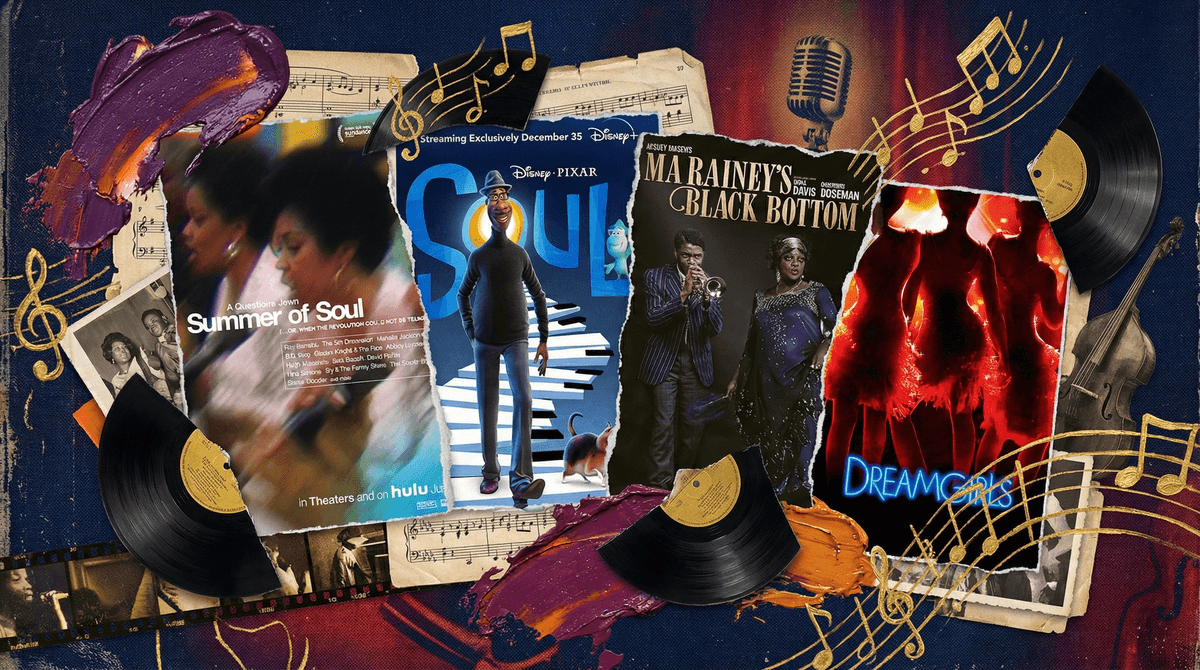
Movies about Black music aren't just biopics with great soundtracks—they're stories about innovation, resistance, community, and the artists who literally shaped American culture. We're talking films that trace the roots of jazz, blues, gospel, R&B, hip-hop, and soul, often set against the backdrop of segregation, civil rights, and ongoing struggles for recognition and respect.
These movies range from documentaries like Summer of Soul (which uncovered forgotten footage from the 1969 Harlem Cultural Festival) to dramatized biopics like Ray and Dreamgirls, to fictional stories like Soul that explore what music means to identity and purpose.
The best of these films do double duty: they're genuinely entertaining while also opening doors to conversations about cultural appropriation, systemic racism, artistic ownership, and why your kid's favorite genre probably wouldn't exist without Black artists who rarely got their due.
Here's the thing: most kids consume music constantly—on TikTok, in games, through streaming—but have zero context for where it came from. They might know Beyoncé but not Aretha Franklin. They've heard of Hamilton but not the Motown artists who pioneered the sound that influenced Lin-Manuel Miranda.
Movies about Black music give kids a way to understand that music doesn't just appear—it's created by real people in specific contexts, often as a form of survival, protest, or joy in the face of oppression.
These films also counter the sanitized, algorithm-fed version of music history kids get online. They show the messy, complicated, brilliant reality: the Apollo Theater as a proving ground, the Chitlin' Circuit as both opportunity and indignity, the way white artists and executives profited while Black artists struggled for credit and compensation.
Plus, honestly? A lot of these movies just slap. The music is incredible, the performances are memorable, and they're way more engaging than a history textbook.
Ages 8-12:
- Soul (PG) — Pixar's gorgeous meditation on jazz, purpose, and what makes life worth living. Great entry point for younger kids.
- Coco (PG) — While focused on Mexican culture and Día de los Muertos, it's a beautiful parallel story about music, family, and cultural memory.
- Respect (PG-13) — The Aretha Franklin biopic. Some mature themes but appropriate for mature tweens, especially with context.
Ages 13+:
- Summer of Soul (PG-13) — Questlove's documentary is pure joy and history. Footage you won't believe existed.
- Dreamgirls (PG-13) — Fictional but inspired by the Supremes' story. Great for discussing how the music industry exploits artists.
- Selma (PG-13) — Not strictly about music, but the role of gospel and protest songs is central to understanding the civil rights movement.
- Ray (PG-13) — Ray Charles biopic. Deals with addiction and adult themes but Jamie Foxx's performance is transcendent.
Ages 16+:
- What's Love Got to Do with It (R) — Tina Turner's story. Powerful but includes domestic violence—watch with your teen and be ready to talk.
- Straight Outta Compton (R) — The rise of N.W.A. Heavy language, violence, and mature content, but crucial for understanding hip-hop's origins and the LA riots context.
- Ma Rainey's Black Bottom (R) — August Wilson adaptation with Chadwick Boseman's final performance. Intense, theatrical, and a masterclass in how racism shaped the music business.
These films don't shy away from hard truths. Many deal explicitly with racism, segregation, police violence, exploitation, addiction, and abuse. That's not gratuitous—it's the reality these artists lived. But it means you need to know your kid's maturity level and be ready to provide context.
The music is the point, but so is the history. Use these films as jumping-off points. After Summer of Soul, pull up the artists on Spotify. After Ray, talk about why Ray Charles was controversial for blending gospel and R&B. After Straight Outta Compton, discuss why N.W.A.'s lyrics about police brutality are still relevant.
Watch for historical accuracy. Biopics take liberties. Respect compresses timelines; Dreamgirls is "inspired by" rather than factual. That's fine—just acknowledge it. If your kid gets interested, point them toward documentaries or biographies for the real story.
Consider co-viewing for older content. Films like What's Love Got to Do with It or Ma Rainey's Black Bottom are intense. Watching together gives you the chance to pause, explain, and process difficult scenes.
After watching, try these:
- "Why do you think this artist's music was considered controversial at the time?"
- "What does this movie show about who gets to profit from music?"
- "How did the political situation (segregation, civil rights, etc.) shape what the artist could do?"
- "What surprised you about how different music was created or performed back then?"
For older kids:
- "How does what happened to [artist] connect to conversations about representation in music today?"
- "What would have been different if this artist had been white?"
Movies about Black music are some of the richest, most culturally significant films you can watch with your kids. They're not just entertainment—they're education about creativity, resilience, and the artists who built the foundation for virtually every genre your kid listens to today.
Start with age-appropriate picks, be ready to provide context, and use these films as gateways to deeper conversations about history, justice, and art. Your kid might come for the music and stay for the story—and that's exactly the point.
- Check out our guide to music documentaries for kids for more options
- Explore movies about the civil rights movement to add historical context
- Curious about how to talk to kids about cultural appropriation in music? Start here
