

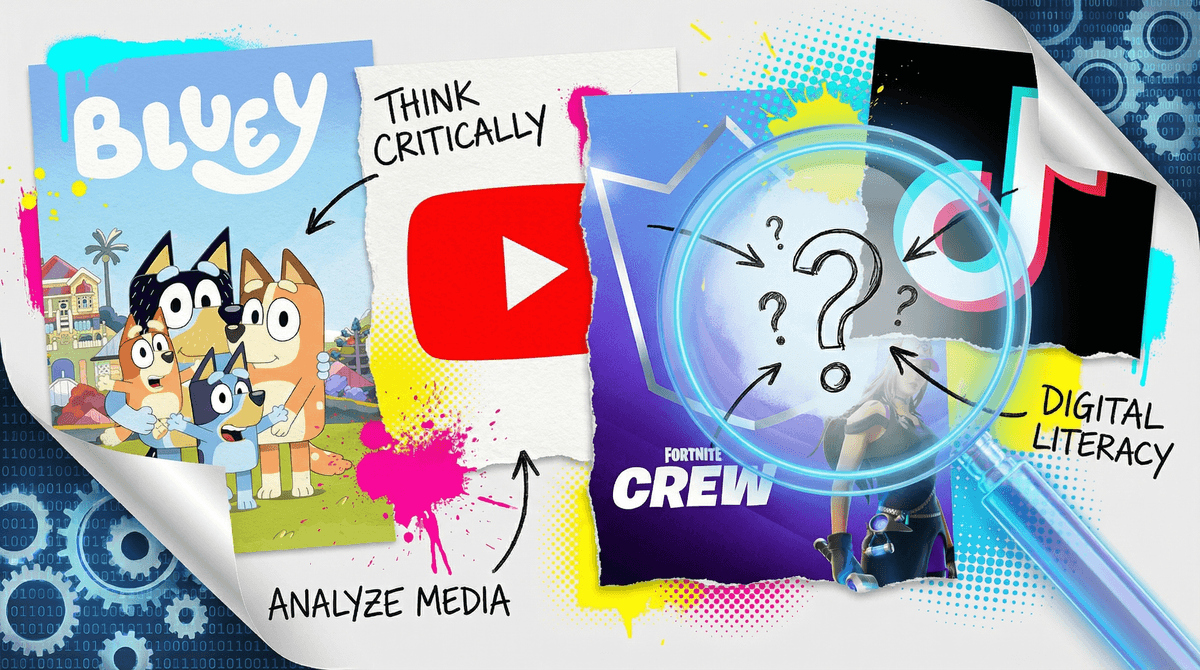
Media literacy is the ability to access, analyze, evaluate, and create media in all its forms. But let's be real—that textbook definition doesn't capture what we're actually talking about here.
Media literacy is teaching your kid to be a critical thinker about what they consume. It's helping them understand that every YouTube video, TikTok, TV show, ad, and game has been created by someone with a purpose. Sometimes that purpose is to entertain. Sometimes it's to sell. Sometimes it's to persuade. And increasingly, it's to keep eyeballs glued to screens for as long as possible.
Think of it this way: we teach kids not to believe everything they hear from strangers. Media literacy is teaching them not to believe everything they see on a screen—even when it comes from their favorite creator or looks really, really convincing.
Your kids are growing up in a media landscape that would make our childhood brains explode. They're not just watching cartoons on Saturday morning—they're consuming content 24/7 from YouTube creators, TikTokers, streaming platforms, games with embedded ads, and AI-generated content that's getting harder to distinguish from reality.
Here's the thing: most of this content is designed by very smart people to be as addictive and persuasive as possible. Algorithms learn what keeps your kid watching. Creators learn what drives engagement. Advertisers know exactly how to make that toy/game/snack look irresistible.
Without media literacy skills, kids are basically walking around a digital world without a map, compass, or any sense that some people are trying to lead them in circles.
The stakes are real:
- Kids are being influenced by content that may not align with your family's values
- They're exposed to advertising disguised as entertainment (hello, unboxing videos)
- They're seeing manipulated images that distort their sense of reality
- They're encountering misinformation that can shape their worldview
- They're learning social behaviors from content that's optimized for clicks, not character development
Media literacy isn't about making your kid suspicious of everything (though a healthy dose of skepticism isn't bad). It's about giving them tools to think critically.
For younger kids (ages 5-8), it's basic stuff:
- Understanding that commercials are trying to sell them something
- Recognizing that not everything they see is real (yes, even if it's on YouTube)
- Talking about how shows make them feel and why
- Learning that people make choices about what to include in videos and what to leave out
For elementary-aged kids (ages 8-12), you're building on that:
- Identifying persuasive techniques in ads and content
- Understanding that influencers often get paid to promote products
- Recognizing when content is designed to make them feel a certain way
- Questioning the source of information
- Understanding that images and videos can be edited or manipulated
- Recognizing stereotypes and bias in media
For tweens and teens (ages 12+), it gets more sophisticated:
- Evaluating the credibility of sources
- Understanding algorithmic curation and filter bubbles
- Recognizing different types of bias and propaganda
- Understanding how data collection and targeted advertising work
- Critically analyzing the messages in media about body image, gender roles, success, etc.
- Creating their own media responsibly
The good news: you don't need a curriculum or a degree in media studies. You just need to start conversations.
Watch/Play/Consume Together
The single best thing you can do is co-view content with your kids and talk about it. Not every single thing—that's exhausting and not realistic—but regularly enough that it becomes normal to discuss what you're watching.
When you're watching Bluey with your 6-year-old, talk about why the show makes you laugh or feel good. When your 10-year-old is playing Roblox, ask about the ads they see or how the game encourages them to spend Robux. When your teen is scrolling TikTok, occasionally ask what they're seeing and what they think about it.
Ask Questions, Don't Lecture
Instead of explaining media literacy concepts, ask questions that help kids think critically:
- "Why do you think they made that character look that way?"
- "Who made this video? What do you think they want you to think or do?"
- "How does this make you feel? Do you think that's on purpose?"
- "Is this trying to sell you something?"
- "How do you know if this information is true?"
- "What's not being shown here?"
- "Why do you think the algorithm showed you this?"
Point Out Persuasion Techniques
Make it a game to spot persuasive techniques in the wild:
- Bandwagon: "Everyone's playing this game!"
- Scarcity: "Limited time offer!"
- Testimonial: "This famous person uses this product!"
- Emotional appeal: Content designed to make you feel excited, scared, or inadequate
When your kid recognizes these techniques, they become less effective. It's like learning a magic trick—once you know how it works, you can't be fooled the same way.
Talk About the Business Model
Kids need to understand that "free" content isn't actually free. Explain how YouTube creators make money from views and sponsorships. Discuss how games like Fortnite are free to play but make billions from in-game purchases. Help them understand that when a product is free, they are often the product (through their data and attention).
This isn't about making them cynical—it's about helping them understand the incentives behind the content they love.
Address Misinformation Head-On
Teach kids the basics of fact-checking:
- Check the source (who created this and why?)
- Look for evidence (are there facts to back this up?)
- Search for other sources (what do other credible sources say?)
- Check the date (is this current information?)
- Consider the bias (what perspective is this coming from?)
Make it practical: when your kid mentions something wild they saw online, don't just say "that's not true." Walk them through how to verify it. Learn more about teaching kids to spot misinformation .
.
Discuss Representation and Stereotypes
Media shapes how kids see themselves and others. Talk about:
- Who gets to be the hero in stories?
- What kinds of bodies, families, and lives are shown as "normal"?
- How are different groups of people portrayed?
- What messages are being sent about gender, race, success, beauty?
This doesn't have to be heavy or preachy. Just point things out: "Did you notice all the scientists in that show were men?" or "It's cool that this game has characters with different abilities."
Create, Don't Just Consume
One of the best ways to understand media is to make it. When kids create their own videos, podcasts, or digital art, they start to see the choices that go into every piece of content.
They learn that:
- Every shot is framed intentionally
- Editing changes the story
- Music affects the mood
- You can make things look very different from reality
Plus, creating content is just fun. Win-win.
Ages 5-7: Focus on the difference between real and pretend, and basic advertising awareness. Watch shows together and talk about feelings. Point out commercials during YouTube videos.
Ages 8-10: Introduce the concept of persuasion and how content creators make money. Start discussing how images can be edited. Talk about online safety and not believing everything you see.
Ages 11-13: Dive into algorithms, influencer marketing, and fact-checking. Discuss body image and social comparison. Talk about echo chambers and different perspectives.
Ages 14+: Explore media bias, propaganda, digital citizenship, and the ethics of content creation. Discuss surveillance capitalism and data privacy. Have real conversations about the media they're consuming and how it affects them.
"My kid just rolls their eyes when I try to talk about this stuff."
Yeah, that's developmentally appropriate for tweens and teens. Keep the conversations short and relevant. Instead of a lecture about media literacy, make a quick comment about something you're both seeing. Plant seeds, don't deliver sermons.
"I don't understand the content my kid is watching."
That's okay. Ask them to explain it to you. Kids love being the expert. And asking genuine questions ("Why is that funny?" "What makes this creator popular?") opens up conversations without you having to know everything.
"I'm worried I'll make them paranoid or ruin their enjoyment."
Media literacy doesn't have to ruin the fun—it can actually enhance it. Understanding how a magic trick works doesn't make it less cool; it makes it more interesting. Same with media. Your kid can love a YouTuber AND understand they're being sold to. They can enjoy a show AND recognize its messages.
"Where do I even start?"
Start small. Pick one thing: maybe this week you'll point out one persuasive technique in an ad. Next week, you'll ask about the source of something they saw online. You don't have to cover everything at once.
Media literacy isn't a one-time conversation or a unit you complete. It's an ongoing practice of helping your kid think critically about the content they consume—and that's probably the most important skill you can teach them for navigating the digital world.
The goal isn't to make them suspicious of everything or to ruin their favorite content. It's to give them the tools to be thoughtful consumers who can recognize when they're being manipulated, question what they see, and make informed choices about what they watch, play, and believe.
Start with small conversations. Ask questions. Watch together. Point things out. Over time, these skills become second nature—and your kid becomes someone who can navigate the digital media landscape with confidence and critical thinking.
Because in a world where everyone is competing for your kid's attention and trying to influence them, teaching them to think critically about what they consume isn't optional—it's essential.
Ready to put this into practice? Start this week:
- Pick one show, game, or piece of content your kid loves and watch/play it with them
- Ask three questions about it—who made it, why they made certain choices, and how it makes them feel
- Point out one persuasive technique you notice in ads or content this week
- Have a conversation about one piece of information they encountered online and how they'd verify if it's true
Want more specific guidance? Check out our guides on YouTube vs. YouTube Kids or teaching kids about online advertising.
And remember: you don't have to be perfect at this. Just being intentional about starting these conversations puts you way ahead of the game.