

Look, we all know those dinner table conversations about race, politics, identity, or current events can feel like navigating a minefield. Your 10-year-old asks why their friend's family is "different," your teen makes a comment that reveals they've been marinating in some questionable TikTok takes, or you realize your kid has zero context for why adults are so stressed about the news.
Here's the thing: movies, shows, and games are secretly your best co-parent for these conversations. Not because they do the work for you, but because they give you a shared experience to point at. Instead of "we need to talk about racism" (cue the eye rolls), you get "wait, let's pause this scene—what just happened here?"
Screenwise Parents
See allMedia creates what educators call a "third thing"—something you're both looking at together, rather than looking at each other. It takes the pressure off. Your kid isn't being interrogated, you're just... talking about a show. Except you're actually talking about everything that matters.
Kids are way more willing to discuss hard topics when they're discussing characters, not themselves or their friends. They can explore ideas, test theories, and even say things that might feel risky in direct conversation.
Plus, good media does something you can't always do in real time: it slows things down. A character makes a choice, you see the consequences, you have time to think. Real life doesn't always give us that luxury.
And honestly? Sometimes media explains things better than we can. I can give a whole speech about systemic inequality, or we can watch Zootopia and talk about why Judy Hopps calling another bunny "cute" is fine but a fox saying it isn't. The movie does half the work.
Before watching/playing:
- Pick media intentionally. Don't just stumble into these conversations—though sometimes the best ones happen by accident.
- Check reviews that specifically mention themes. Common Sense Media flags content for discussions about race, gender, violence, etc.
- Prime the pump: "This movie has some stuff about immigration that might be interesting to talk about."
During the experience:
- Pause liberally. This isn't a theater—you can stop and talk.
- Ask genuine questions, not quiz questions. "What do you think about that?" not "What did we learn?"
- Share your own reactions. "That scene made me uncomfortable because..."
- Let silence happen. Kids need processing time.
After:
- Circle back later. The best insights often come hours or days after.
- Connect to real life carefully. "Remember in that show when..." can open doors.
- Don't force a moral. Sometimes the conversation itself is the point.
Ages 6-9: Simple metaphors, clear lessons
- Encanto for family expectations and generational trauma (yes, really)
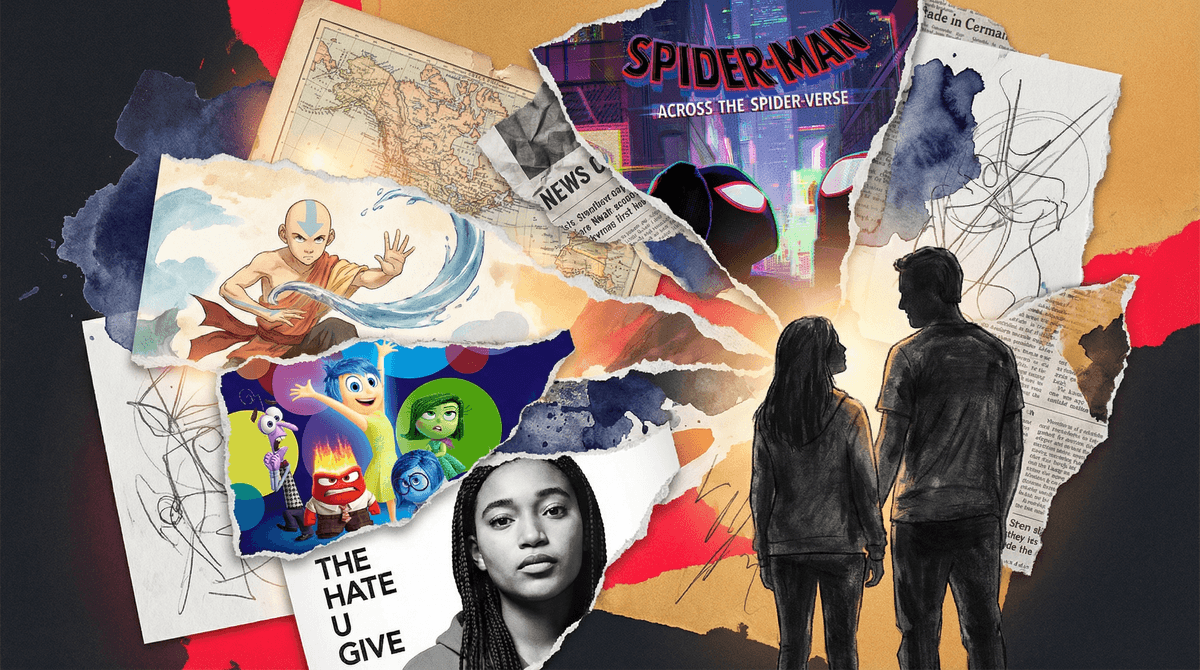
- Inside Out for emotional literacy and mental health
- The Bad Guys for stereotypes and second chances
- Bluey episodes tackle everything from infertility to class differences, wrapped in 7-minute packages
Ages 10-13: More complexity, real-world connections
- The Hate U Give (book or movie) for police violence and activism—intense but essential
- Turning Red for generational differences and cultural identity
- Wonder for disability, difference, and kindness (without being preachy)
- Roblox games like "Livetopia" where kids roleplay different identities—surprisingly rich discussion material
Ages 14+: Nuance, ambiguity, real stakes
- Everything Everywhere All at Once for immigrant experience and generational gaps
- Reservation Dogs for indigenous identity and representation done right
- The Last of Us (show, not game for younger teens) for LGBTQ+ relationships normalized in narrative
- Spider-Man: Across the Spider-Verse for identity, expectations, and what it means to be a hero
You don't need perfect answers. In fact, saying "I don't know, what do you think?" is often more valuable than a lecture. You're modeling how to sit with difficult questions.
Representation matters, but so does context. Just because a show has diverse characters doesn't mean it handles topics well. Learn more about representation vs. tokenism .
.
Your kid's reaction might surprise you. They might focus on something you didn't even notice, or completely miss what you thought was obvious. That's useful information about how they see the world.
Not every piece of media needs to be educational. Sometimes Bluey is just funny, and that's fine. But when you need it to do more, it can.
Gaming is underrated for this. Choice-based games like Life is Strange or Undertale force players to make moral decisions and see consequences. That's powerful.
Media isn't a replacement for direct conversation, but it's an incredibly useful tool for starting them. The best discussions about hard topics often begin with "remember that scene where..."
Start small. You don't need to tackle every issue in one sitting. One conversation about one moment in one show is progress.
Trust the process. Some of these conversations will be awkward. That's fine. Awkward is better than silent.
Use what they already love. Your kid obsessed with Avatar: The Last Airbender? That show is basically a masterclass in imperialism, cultural genocide, and redemption. You're already sitting on gold.
The hard conversations are hard because they matter. Media gives you a way in. Use it.
- Browse with intention: Next time you're picking something to watch together, check what themes it covers
- Create pause points: Make it normal to stop and talk during media time
- Follow their interests: If they're already into something, find the discussion hooks
- Check out our guide on conversation starters for different age groups for more specific question frameworks