

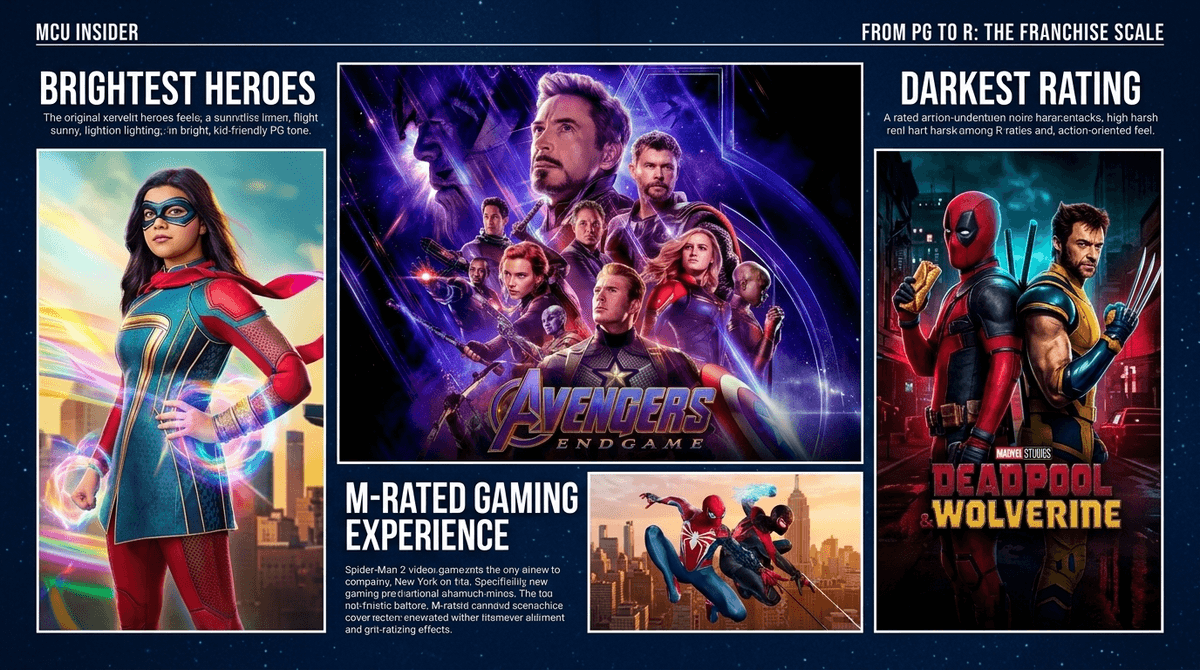
TL;DR: The MCU isn't just one big "family-friendly" bubble anymore. While the early days were safe PG-13 bets, the franchise has expanded into R-rated territory and gritty TV-MA shows. If you’re looking for the safest entry points, start with Ms. Marvel or Spider-Man: Homecoming. If your kid is begging to see the "funny red guy" in Deadpool & Wolverine, be prepared for a hard R-rating that no amount of "he’s a superhero" logic can hand-wave away.
If you’ve been living under a vibranium rock, the Marvel Cinematic Universe (MCU) is a massive collection of movies and shows that all exist in the same timeline. It’s basically the world’s most expensive soap opera, but with capes and multiversal travel.
What started with Iron Man in 2008 has grown into a sprawling web of over 30 movies and a dozen Disney+ series. For kids, it’s the ultimate "collect 'em all" experience. They don't just watch a movie; they learn the lore, track the Easter eggs, and discuss fan theories on YouTube.
It’s the modern-day mythology. Kids love the MCU because it offers a sense of continuity that most media lacks. In a world of "brain rot" content and 15-second TikTok loops, the MCU is one of the few things that actually asks kids to pay attention to a long-form story.
Plus, the "Ohio" of it all—the weird, the cosmic, and the multiversal—appeals to the current generation's sense of humor. Whether it’s a talking raccoon in Guardians of the Galaxy or a literal alligator version of a god in Loki, the MCU leans into the absurdity that kids find relatable.
Check out our guide on why kids are obsessed with superhero lore
Not all Marvel is created equal. We’ve broken this down by "vibe" and age-appropriateness so you don't accidentally traumatize your second-grader with a scene of a guy getting his head crushed by a car door.
The Gateway Heroes (Ages 7-10)
These are the titles that lean into the "fun" side of heroism with minimal "dark and gritty" overtones.
- This is arguably the most "intentional parent" friendly show in the bunch. It deals with family dynamics, religious identity, and the struggle of being a teen fan-girl. It’s bright, creative, and feels like a high-end Disney Channel show but with actual stakes.
- These are short, five-minute bites of pure physical comedy. Zero violence, all heart, and perfect for the younger siblings who want to feel included in the Marvel hype.
- While it’s PG-13, it’s "High School PG-13." The stakes feel personal rather than world-ending, and Tom Holland captures that "I’m just a kid trying to do my homework" energy perfectly.
The Meat and Potatoes (Ages 11-13)
This is the core of the MCU. Most of these are standard PG-13 fare—lots of CGI explosions, some mild swearing (the occasional "S-word"), and emotional moments that might actually make you cry.
- A masterpiece of world-building. It handles themes of isolationism, legacy, and social justice in a way that’s actually worth talking about at the dinner table.
- Incredible martial arts choreography and a story about breaking free from toxic family expectations.
- The "Final Boss" of movies. It’s long (3 hours), so make sure they’ve had their snacks, but it’s the payoff to a decade of storytelling.
The "Wait Until High School" Club (Ages 15+)
Marvel has started moving back into the "adult" space, especially with the stuff they inherited from Netflix and Fox.
- Warning: This is a hard R. We’re talking constant F-bombs, graphic dismemberment, and jokes that will have you explaining things you aren't ready to explain. Just because Deadpool is on a backpack at Target doesn't mean this movie is for kids.
- This was Marvel’s first "TV-MA" spotlight show. It’s violent, bloody, and much more grounded in street-level crime.
- Originally on Netflix, now on Disney+. This is a gritty crime drama. It’s fantastic television, but it’s dark. If your kid thinks Marvel is all "quips and lasers," this will be a rude awakening.

The MCU doesn't end when the credits roll. Your kids are likely interacting with these characters in their digital downtime too.
- A fast-paced card game that is genuinely addictive. It’s great for quick hits of strategy, but keep an eye on the in-app purchases. It’s easy to spend "real world" money on "digital variants" of cards.
- On the PS5, this is the gold standard. It’s like playing through a high-budget movie. It’s rated Teen for some violence and drug references, but the story about mentorship and responsibility is top-tier.
- If you have younger kids (ages 6-9), this is the way to go. It’s silly, creative, and you can play co-op with them.
One thing to watch out for is "content bloat." Because there is so much MCU content, kids can feel a weird pressure to watch everything just to stay in the loop. This can lead to "brain rot" behavior where they’re just mindlessly consuming mediocre shows (looking at you, Secret Invasion) just to understand the next movie.
It’s okay to tell your kids they can skip the bad stuff. They don't need to watch every single Disney+ series to enjoy the big theatrical releases. In fact, skipping the "homework" shows might actually help them enjoy the franchise more.
The biggest shift in the last two years is the Multiverse. It’s a confusing concept where different versions of characters exist in different universes.
- It’s a great jumping-off point to talk about choices and consequences (e.g., "What if I had made a different choice today?").
- It’s also an excuse for Marvel to bring back old actors, which is cool for us parents who grew up with the 2000s X-Men movies.
Safety Note: Disney+ has parental controls for a reason. With the addition of TV-MA content like The Punisher, you’ll want to make sure your kid’s profile is actually locked to the appropriate age rating. If you leave it wide open, Deadpool is only two clicks away from Bluey.
The MCU is a fantastic shared experience for families, but the "one size fits all" era is over. You have to be more deliberate now.
- For the 8-year-old: Stick to the animated stuff like X-Men '97 or the lighter live-action shows.
- For the 12-year-old: The core Avengers movies are great, but maybe pre-screen the "darker" Phase 4/5 movies like Doctor Strange in the Multiverse of Madness, which leans into horror elements.
- For the teen: Let them explore, but keep the conversation open about the more cynical "anti-hero" tropes in Deadpool & Wolverine.
At the end of the day, these are stories about people trying to do the right thing when the world is falling apart. That’s a pretty good message to have on in the living room—even if it comes with a side of CGI aliens and the occasional "Ohio" joke.
- Check the Ratings: Before hitting play on a new Disney+ Marvel show, check if it’s "Marvel Spotlight" (usually more mature) or core MCU.
- Talk about the "Why": Ask your kid why they like a specific hero. You’d be surprised how much their answer tells you about what they’re navigating at school.
- Play Together: Grab a copy of Marvel United for a family game night. It’s a cooperative board game that teaches teamwork far better than any movie can.