

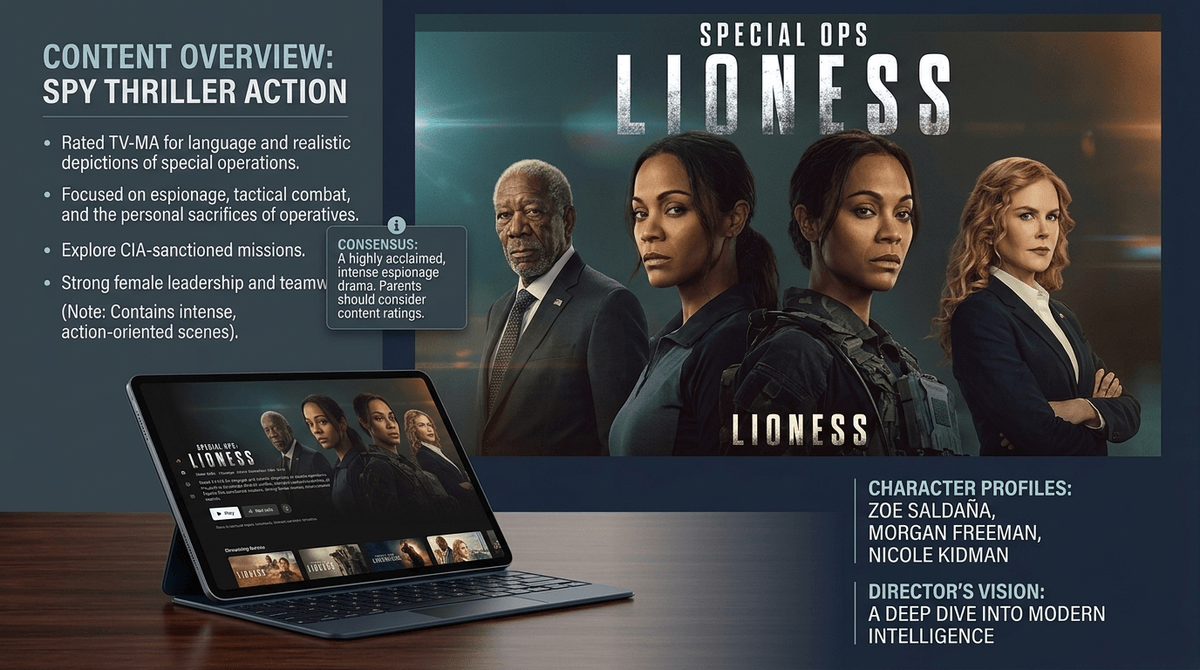
Special Ops: Lioness Episode 5 is where the tactical slow-burn finally catches fire, and if you’ve been following Taylor Sheridan’s work, you know he doesn’t do "lightweight" mid-season pivots. This episode is TV-MA for a reason—it’s heavy on the visceral tactical violence and even heavier on the psychological toll of the undercover mission, making it a high-intensity watch that’s best reserved for older teens and adults.
TL;DR: Special Ops: Lioness Episode 5 ramps up the mission’s stakes, trading setup for high-tension tactical sequences and the messy moral compromises characteristic of Taylor Sheridan’s writing. Expect significant violence and strong language that earns its TV-MA rating. For families with older teens, it’s a solid entry point for discussing the ethics of espionage and the personal cost of high-stakes military service, but it’s definitely not for the younger crowd.
By the time you hit Episode 5, the "getting to know you" phase of the mission is over. This is traditionally where Sheridan shifts from the internal politics of the CIA to the external reality of the field. The tension in this episode isn't just about whether the operative gets caught; it’s about the eroding mental state of everyone involved. Joe (Zoe Saldaña) continues to balance the impossible—managing a high-stakes asset while her own family life remains a tactical minefield.
If your kid is into military thrillers or tactical shooters, they’ll likely find the realism of the gear and the procedures compelling. Sheridan’s team clearly does their homework on the "how" of special operations. But the "why" is where it gets complicated. This episode doubles down on the idea that in this world, there are no clean wins. Every tactical success comes with a side of moral rot, and Episode 5 doesn't blink when showing that fallout.
The TV-MA rating is a hard floor here. If you’re vetting this for a teen, you’re looking at three main pillars: violence, language, and the "Sheridan Vibe."
- Tactical Violence: This isn't cartoonish or stylized action. It’s loud, sudden, and messy. Episode 5 features sequences that focus on the clinical nature of special ops—breaching, clearing, and the grim reality of what happens when a mission goes sideways.
- Language: The dialogue is peppered with heavy profanity. It’s used to establish the "grit" of the military environment, and it doesn't let up. If your household has a low tolerance for F-bombs, this will be a dealbreaker.
- Moral Gray Areas: The show thrives on the idea that the "good guys" have to do "bad things" to keep the world spinning. Episode 5 pushes the Lioness operative into a corner where her choices are either bad or worse. It’s compelling drama, but it requires a level of maturity to process without seeing the characters as simple heroes.
If you’ve decided your older teen is ready for this level of intensity, don’t just let the credits roll and walk away. Special Ops: Lioness is built for post-game analysis. The show asks a lot of its characters, and it should ask a lot of its viewers too.
Instead of asking "Did you like it?", try focusing on the friction points:
- The Cost of the Mission: Joe’s character is a masterclass in compartmentalization. Ask your teen how they think that level of secrecy affects a person’s ability to be a parent or a partner.
- The Ethics of the Asset: The whole Lioness program relies on befriending someone to betray them. Is that a "necessary evil," or does it cross a line that shouldn't be crossed?
- Tactical Realism vs. Entertainment: If they play games like Call of Duty or Rainbow Six Siege, talk about the difference between the "fun" of the game and the depicted stress of the real-world mission in the show.
If the high-stakes espionage of Lioness hits the right note for your family, there are other ways to explore these themes that might be a slightly different speed:
- Sicario: Also written by Taylor Sheridan, this is the gold standard for tactical tension and moral ambiguity. It’s even more intense than the show, so vet it first.
- The Terminal List: If they want more of the "military operator" vibe with a heavy dose of revenge plot.
- The Americans: For a deeper, long-form look at the psychological toll of living a double life as an operative.
- Best Shows for Kids: For when you need to pivot back to something the whole family can actually agree on.
Q: What age is Special Ops: Lioness appropriate for?
Special Ops: Lioness is firmly for ages 16 and up. The combination of graphic tactical violence, heavy profanity, and complex adult themes makes it a poor fit for younger viewers, even those who are used to action movies.
Q: Is Special Ops: Lioness Season 3 Episode 5 okay for a 13-year-old?
Probably not. While every kid is different, the psychological intensity and visceral nature of the violence in this episode are aimed at an adult audience. If you’re on the fence, watch it yourself first—the "ending explained" videos can give you a sense of the plot beats, but they don't capture the raw intensity of the scenes.
Q: Does Episode 5 have a lot of "cringe" moments for parents?
If by "cringe" you mean awkward sexual content, Sheridan usually keeps the focus on the mission and the political maneuvering. However, the domestic tension between Joe and her husband can be uncomfortable because it’s so grounded and realistic. The "cringe" here is the emotional kind—watching a family struggle under the weight of a parent's secret life.
Episode 5 is the turning point that proves Special Ops: Lioness isn't interested in being a standard "action of the week" show. It’s a heavy, well-produced, and often brutal look at the world of special operations. If you’re watching with your high-schooler, use it as a bridge to talk about the real-world complexities of the headlines they see every day. Just don't expect it to be a relaxing Friday night watch.
- Check out our digital guide for high schoolers for more mature-content vetting tips.
- Explore the best movies for kids if you need a palate cleanser after this episode.
- Find more Taylor Sheridan recommendations
