

Should You Keep Your Kids Off Social Media? The Real Pros and Cons
Look, I get it. You see the headlines about teen mental health, you watch your friend's kid spiral into comparison culture, and you think "maybe we just... don't?" But then your 12-year-old comes home saying they're the only one without Snapchat, and suddenly you're wondering if you're protecting them or isolating them.
The truth? There's no perfect answer here. But let's actually talk through what we're weighing when we decide to keep kids off social media—or let them on with guardrails.
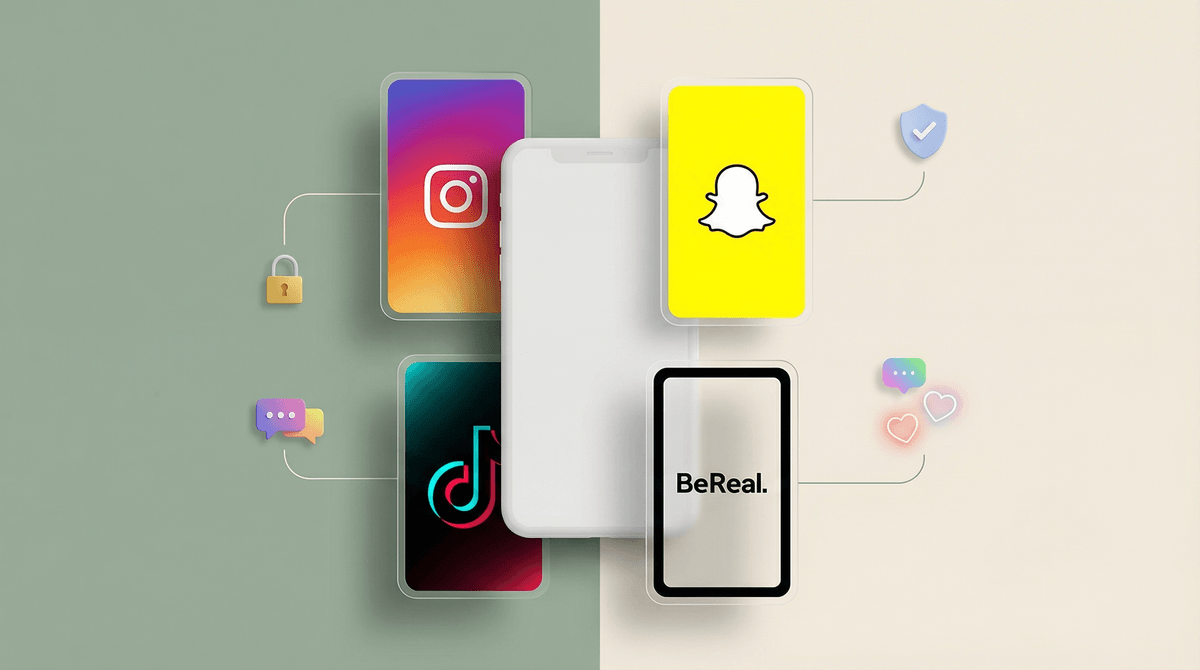
First, let's be clear about what "social media" means in 2026. We're talking about platforms where the primary purpose is posting, scrolling, and engaging with content from friends and strangers. Think Instagram, TikTok, Snapchat, and yes, even BeReal (which markets itself as "authentic" but is still very much social media).
We're NOT talking about Discord servers for their gaming friends, or Roblox chat, or texting. Those have their own considerations, but they're different beasts.
Most platforms officially require users to be 13+. That's not arbitrary—it's because of COPPA (Children's Online Privacy Protection Act). But we all know plenty of 10-year-olds with accounts using fake birthdates.
Let's start with why you might want to delay or restrict social media access, because the research here is... not great for the platforms.
Mental health concerns are real. The data on teen mental health and social media use shows correlations we can't ignore. Heavy social media use is associated with higher rates of anxiety, depression, and poor body image—especially in girls ages 11-15. The comparison culture, the filtered reality, the constant performance of your life for an audience—it's a lot even for adults with fully developed prefrontal cortexes.
Sleep disruption is basically guaranteed. Teens with phones in their bedrooms sleep less, and social media is designed to keep you scrolling. That "just one more TikTok" can easily become 2 AM before they realize it. And sleep deprivation in adolescence isn't just about being tired—it affects mood regulation, academic performance, and mental health.
FOMO is weaponized. Social media platforms literally engineer FOMO into their design. Streaks on Snapchat, algorithmic feeds that show you what you're missing, notifications designed to pull you back in—it's all intentional. Keeping kids off these platforms means they're not constantly aware of every social event they weren't invited to, every inside joke they're not part of.
You buy time for brain development. The adolescent brain is still developing impulse control and emotional regulation. Waiting until 14, 15, or even 16 means your kid has more cognitive tools to handle the psychological manipulation these platforms employ. They're better equipped to recognize when they're being played.
Predators and inappropriate content are real risks. Despite platform efforts, kids still encounter adults with bad intentions, are exposed to content that's way beyond their developmental readiness, and can stumble into communities that normalize harmful behaviors. Keeping them off means they're not navigating these risks .
.
But here's the thing—keeping kids off social media isn't without its own costs.
Social exclusion is painful and real. When your kid says "everyone has it," they might be exaggerating, but in many middle schools, being off social media means missing group chats where plans are made, inside jokes are born, and social bonds are reinforced. That isolation has its own mental health implications.
You lose the opportunity to teach digital literacy while you're still in the picture. If your kid gets their first social media account at 18 when they leave for college, they're learning to navigate it without you. At 13 or 14, you can still have conversations, check in, and help them develop healthy habits while they're under your roof.
They may just go underground. Lots of kids whose parents say "no social media" just create secret accounts. Now you've got the risks of social media PLUS the risks of deception and broken trust. And when something goes wrong, they won't come to you because they're not supposed to be on there in the first place.
Digital communication skills matter. Like it or not, knowing how to present yourself online, understanding digital communication norms, and navigating online social dynamics are legitimate life skills in 2026. Delaying all exposure doesn't teach these skills—it just postpones the learning curve.
Community norms matter for their wellbeing too. If 70% of their grade is on Instagram, being the odd one out has social costs. That doesn't mean you have to cave to peer pressure, but it does mean the decision has real tradeoffs you should weigh honestly.
Here's what research and experience suggest works better than either extreme:
Delay as long as you reasonably can. Every year you wait is a year of brain development. If you can hold off until 14 or 15 instead of 11 or 12, that's meaningful. But "reasonably can" includes considering your kid's actual social landscape, not just your ideal.
Start with the least toxic platform. Not all social media is created equal. BeReal is generally less harmful than TikTok. A private Instagram account with 20 real-life friends is different than a public account chasing followers. Learn about the differences between platforms before you pick your battles.
Use parental controls and monitoring thoughtfully. This doesn't mean reading every DM (that breaks trust), but it does mean using screen time limits, keeping devices out of bedrooms at night, and having access to accounts. Setting up parental controls on Instagram or TikTok can help you create guardrails.
Have ongoing conversations, not one-time lectures. Talk about what they're seeing, how it makes them feel, what's performative versus real. Make it normal to discuss social media like you'd discuss any other part of their life.
Model healthy use yourself. If you're doom-scrolling at dinner, your "social media is bad" speeches ring pretty hollow. Kids learn more from what you do than what you say.
Ages 10-12: For most kids, this is too young. The social pressure is real, but the developmental readiness isn't there. If you're facing intense pressure, consider compromises like a shared family account they can use with you, or a phone for texting friends without social media apps.
Ages 13-14: This is when many parents start allowing limited, supervised access. Private accounts, small friend groups, time limits, and regular check-ins. Start with one platform, not all of them. See how they handle it before expanding.
Ages 15-16: Most teens have some form of social media by now. The focus shifts from "whether" to "how"—teaching them to recognize manipulation, curate their feeds, take breaks, and maintain boundaries. They should have more autonomy but you're still involved.
Ages 17-18: You're preparing them to manage this independently. They need to have developed healthy habits and self-regulation before they're off to college or independent life.
Keeping kids off social media completely isn't inherently better or worse than allowing supervised access—it depends on your specific kid, your family values, your community norms, and your ability to stay involved.
The real question isn't "social media or no social media." It's "how do we help our kids develop into adults who can use these tools without being used by them?"
Some kids need more protection and structure. Some kids are more resilient and self-aware. Some communities make exclusion more painful than others. You know your kid and your situation better than any expert.
If you're leaning toward keeping them off: Have honest conversations about why, acknowledge the social costs, and find alternative ways to help them stay connected to friends. Group texts, Discord servers for specific interests, and real-life hangouts can help.
If you're allowing access: Start small, stay involved, and be ready to pull back if you see signs of harm. Set up those parental controls, establish clear rules about time limits and bedtime, and make it normal to talk about what they're seeing and experiencing.
If you're not sure: That's totally valid. You can wait. You can experiment with a trial period. You can say "not yet, let's revisit in six months." This isn't a one-time decision—it's an ongoing conversation that evolves as your kid grows.
Talk to other parents in your community about their approaches and consider what norms you want to help create, not just follow.
Whatever you decide, make it a thoughtful decision based on your kid and your values—not just fear, and not just peer pressure (yours or theirs).