

TL;DR
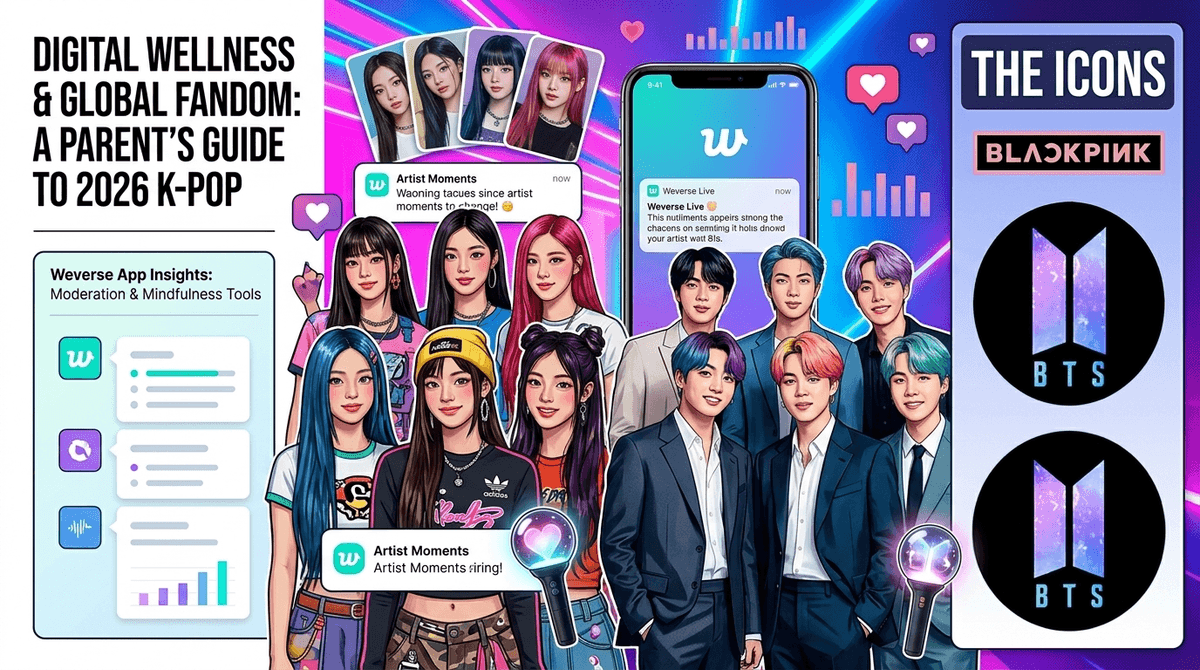
K-pop is no longer a "niche" interest; in 2026, it is the dominant global pop culture force. While the music is often high-quality and "cleaner" than Western Top 40, the digital ecosystem surrounding it—specifically Weverse and TikTok—is designed for "monetized intimacy." This means your child might feel a literal obligation to spend money and time to "support" their idols.
Quick Links for the 2026 Wave:
If you feel like your house has been invaded by a seven-member boy group or a five-member girl group, you aren't alone. 2026 is a massive year because the "Kings of K-pop," BTS, have fully returned from their mandatory military service, sparking a global frenzy that makes the original Beatlemania look like a quiet tea party.
But K-pop isn't just music. It's a lifestyle brand, a digital community, and a high-stakes hobby. Unlike Western artists who might drop an album and disappear, K-pop "idols" provide a constant stream of content: variety shows on YouTube, daily "live" streams, and direct-to-fan messaging.
For parents, the challenge isn't usually the lyrics—which are generally more PG-13 than what you'll hear on a standard Grand Theft Auto V radio station. The challenge is the digital wellness aspect: the pressure to "stream" songs to break records and the gamified spending inside fan apps.
See the most popular K-pop groups in your child's grade
Before we get into the "monetized intimacy" of it all, let’s give credit where it’s due. K-pop fans are some of the most digitally literate kids on the planet.
- Community: Being an "ARMY" (BTS fan) or a "Blink" (Blackpink fan) gives kids an instant global friend group.
- Aesthetics: The music videos are masterpieces of color and choreography. It’s "brain rot" proof in the sense that it’s high-effort art, not just someone screaming into a mic in a basement.
- Inclusion: K-pop has a massive following among neurodivergent kids and the LGBTQ+ community because of its focus on "found family" and expressive fashion.
This is the "everything app" for K-pop. Think of it as a mix of Facebook, Slack, and Amazon. Artists post "Moments" (like Instagram stories), and fans can comment.
- The Hook: If an idol "cheers" or replies to a fan's post, it's like winning the lottery.
- The Risk: It is a massive marketplace. Every notification is an invitation to buy a "membership kit" or a digital lightstick.
These are "private messaging" apps. You pay a monthly subscription (usually per artist) to receive "texts" from them.
- The Reality: The artist sends one message to thousands of people, but on your child’s phone, it looks like a 1-on-1 DM.
- The No-BS Take: This is the definition of monetized intimacy. It can lead to heavy parasocial relationships where a 13-year-old feels like a 24-year-old pop star is their actual best friend.
This is where "edits" live. Fans spend hours editing clips of their favorite idols to music. It’s creative, but it’s also a rabbit hole of endless scrolling.
Learn more about the difference between healthy fandom and parasocial obsession
1. The "Streaming" Culture
In K-pop, fans don't just listen to music; they "work" for the artist. They organize "streaming parties" where they play a new music video on YouTube on a loop for 24 hours to inflate the view count.
- Parent Tip: This often leads to kids staying up all night or keeping their phones running under their pillows. It’s not "brain rot," but it is sleep deprivation.
2. The Photocard Gambling (Gacha)
When you buy a physical K-pop album, it comes with a random "photocard" (a 2x3 picture of one member). Fans want to collect them all.
- The No-BS Take: This is essentially gambling for kids. They will buy 10 copies of the same album just to try and get the "rare" card of their "bias" (favorite member). Check out our guide to gacha mechanics and kids to see how this translates to digital spending.
3. "Fanwars" and Toxicity
K-pop Twitter (X) and Discord can get ugly. If one group wins an award over another, the "fanwar" begins. This involves "doxxing" (releasing personal info) or "cyberbullying" the other side.
- Parent Tip: Ask your child, "How does the community feel today? Is everyone being cool, or is there drama?" If there’s drama, it’s a good time for a digital fast.
Elementary School (Ages 7-10)
- Focus: The music and the dancing.
- Media: YouTube Kids is great for watching dance practices.
- Boundary: Keep them off Weverse and TikTok. The comment sections can be surprisingly mature or aggressive.
Middle School (Ages 11-13)
High School (Ages 14-18)
Check out our guide on setting app limits for social media
If you call it "that Chinese boy band," you’ve lost the conversation before it started. (They’re Korean, and the distinction matters deeply to the fans).
Try these openers instead:
- "Who's your bias (favorite member) in this group?"
- "I saw BTS is back. Are they releasing a new album, or just doing the variety show thing?"
- "I noticed you're watching the same video a lot—are you guys doing a streaming goal right now?"
By using the terminology, you show you've done your homework. You aren't judging the interest; you're just monitoring the digital habits surrounding it.
K-pop is a phenomenal way for kids to engage with a different culture, learn complex dance moves, and feel part of a global community. However, the industry is designed to exploit the "super-fan" through gamified spending and parasocial hooks.
The music? Great. The talent? Incredible. The Weverse notification at 3:00 AM telling your kid to buy a $50 "digital photocard"? That’s where we need to step in.
Next Steps for Screenwise Parents:
- Check the "Subscriptions" on your child’s Apple or Google Play account. Look for Bubble or Phoning.
- Watch a "Comeback" together. When a group like NewJeans drops a new video, watch it with them. Ask them why they like the aesthetic.
- Set a "Streaming" Curfew. Ensure phones are in the kitchen by 10 PM so the "streaming parties" don't kill their REM sleep.