

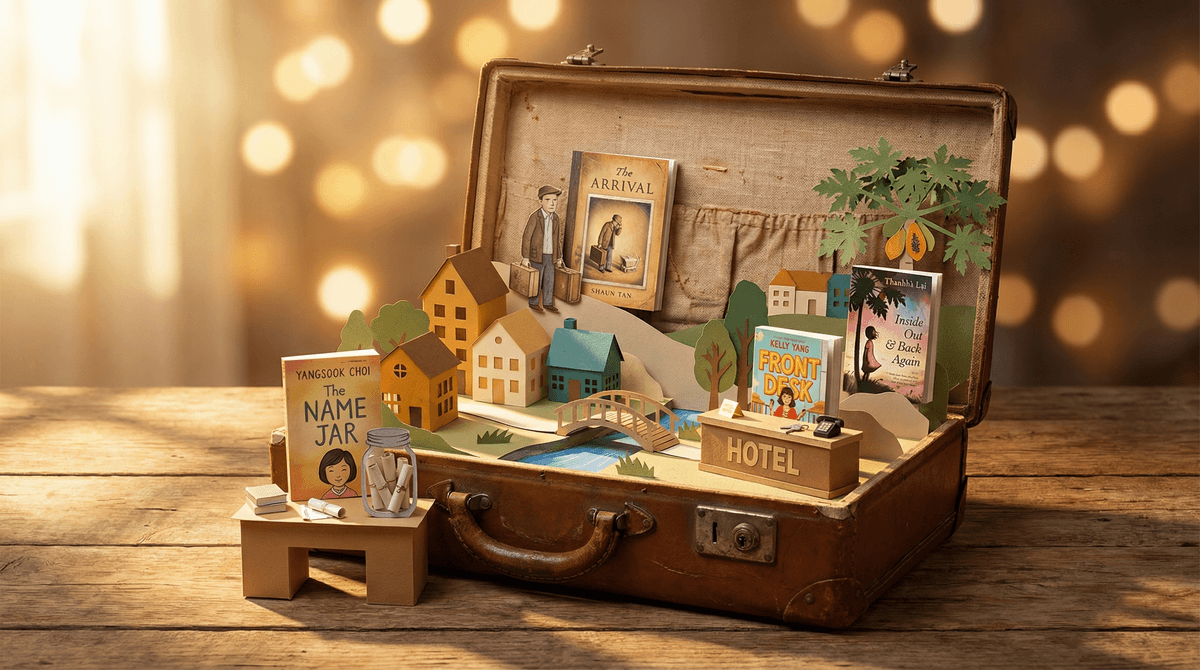
These are stories—fiction and nonfiction—that explore what it means to leave one place and build a life somewhere new. They're about identity, belonging, language barriers, cultural clashes, and the complicated feelings of being caught between two worlds. Some are about kids arriving in a new country. Others are about the children of immigrants navigating what it means to honor their heritage while fitting into American culture.
And honestly? These books are some of the most powerful tools we have for building empathy in our kids.
Whether your family has its own immigration story or not, these narratives matter. They help kids understand that "home" can be complicated, that accents and traditions aren't weird (they're beautiful), and that the kid sitting next to them in class might be carrying an entire world of experience they know nothing about.
Here's the thing: kids are naturally curious about difference. When they encounter someone who speaks another language at home, eats different foods, or celebrates different holidays, they have questions. Books give us a framework for those conversations that goes way beyond "everyone is different and that's nice."
These stories show the why behind the difference. They help kids understand:
- The courage it takes to start over - Leaving everything familiar isn't an adventure; it's terrifying and brave
- Language isn't just words - It's humor, memory, and connection to family and culture
- Belonging is complicated - You can love two places, feel at home nowhere, or eventually find your footing in both worlds
- Families make impossible choices - The decision to immigrate is almost always about creating better opportunities, often at enormous personal cost
And for kids who are immigrants or children of immigrants? These books are mirrors. They're validation that their experience—the weird sandwich at lunch, the grandparent who doesn't speak English, the feeling of being "too much" of one culture and "not enough" of another—is real, shared, and worthy of being the center of a story.
Picture Books (Ages 4-8)
The Name Jar by Yangsook Choi - Unhei has just moved from Korea and is anxious about how kids will react to her name. The classroom "name jar" becomes a beautiful exploration of identity and acceptance. Perfect for talking about names, belonging, and what makes us who we are.
My Name Is Yoon by Helen Recorvits - Yoon doesn't like how her name looks in English. She tries writing other words instead—CAT, BIRD—because in Korean, her name means "shining wisdom" but in English it just looks... different. Gorgeous for discussing how language shapes identity.
Mama's Nightingale: A Story of Immigration and Separation by Edwidge Danticat - This one's heavy but important. Saya's mother is in an immigration detention center, and they communicate through recordings. It's a gentle but honest look at family separation.
Middle Grade (Ages 8-12)
Inside Out and Back Again by Thanhha Lai - Written in verse, this follows Hà as her family flees Vietnam in 1975 and settles in Alabama. It's based on the author's own experience and captures both the loss and the resilience of starting over. The poetry format makes it accessible even for reluctant readers.
Front Desk by Kelly Yang - Mia's family manages a motel in California, and she basically runs the front desk while navigating school, racism, and her parents' struggles as immigrants. It's funny, it's heartbreaking, and it shows the reality of working-class immigrant life without sugar-coating anything.
Other Words for Home by Jasmine Warga - Jude leaves Syria for Cincinnati to stay with relatives while her father and brother remain behind. Another verse novel that explores what it means to be Arab American, to miss home, and to figure out where you belong.
Young Adult (Ages 12+)
American Street by Ibi Zoboi - Fabiola arrives from Haiti to live with cousins in Detroit after her mother is detained at the airport. It's gritty, it's real, and it doesn't shy away from the hard stuff—poverty, violence, and the gap between the American Dream and American reality.
The Arrival by Shaun Tan - This is a wordless graphic novel that follows a man leaving his family to find safety in a new country. The surreal imagery makes the familiar strange and the strange familiar. It works for any age, honestly, but teens will pick up on the deeper symbolism.
These books can bring up hard questions. Why do people leave their countries? Why can't families stay together? Why do some people treat immigrants badly? Have these conversations ready, or be honest that you don't have all the answers. Learn more about having tough conversations with kids .
.
Your own family's story matters. If you or your parents or grandparents immigrated, share those stories. Kids are fascinated by family history, and it makes the books feel even more real. If your family has been in the U.S. for generations, that's worth discussing too—who were the first to arrive, and what was that like?
Don't make it a "lesson." Just read the books. Let your kids absorb the stories. The empathy-building happens naturally when kids connect with characters, not when we lecture them about being nice to immigrants.
Representation matters for everyone. If your child is an immigrant or child of immigrants, seeing their experience reflected in books is huge. If they're not, reading these stories is how they learn that their experience isn't universal—and that's a good thing.
Books about the immigrant experience aren't just "diverse reading" or a box to check. They're powerful, necessary stories that help kids understand the world they live in. They build empathy, sure, but they also build awareness—of privilege, of struggle, of resilience, of what it means to belong.
Start with one book. Read it together. Talk about it. And then find another. Your kids will be better humans for it.
Pick a book from the list above and add it to your library hold list or cart. If you're not sure where to start, go with age-appropriate: picture books for elementary, verse novels for middle school, grittier fiction for high school.
Ask your kid's teacher or librarian for more recommendations. School librarians are absolute gold mines for this stuff and can suggest books that match your child's reading level and interests.
Make it a family conversation. After you read, talk about it. What surprised them? What would they do in that situation? How does it compare to your family's story?
And if you want more book recommendations across different themes and topics, check out our guide to building a diverse home library.